Aims Apac Reit bets on asset rejuvenation strategy to drive long-term value
The manager expects the net property income yield of its two properties to rise to over 7 per cent following rejuvenation works

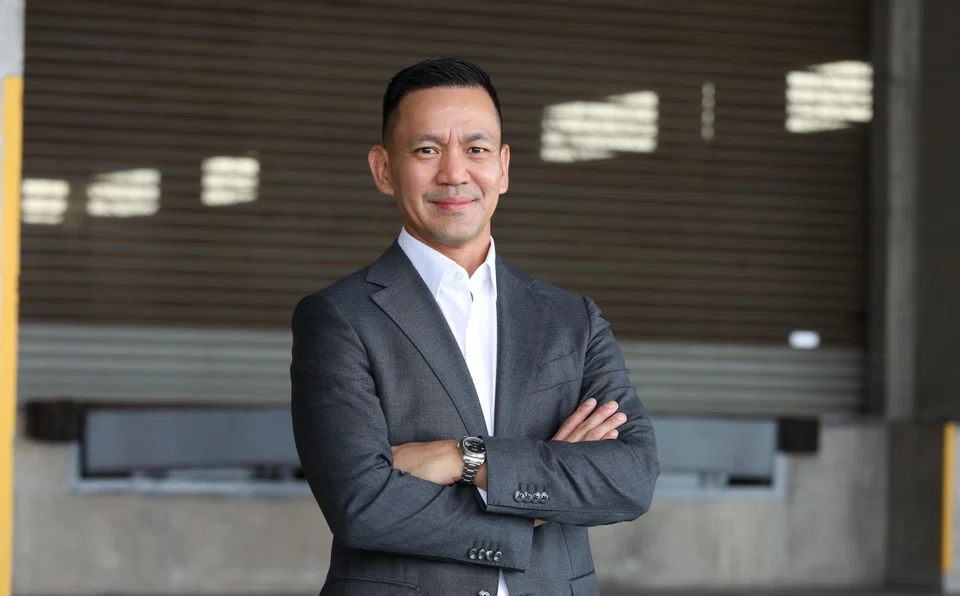
AIMS Apac Reit (AA Reit) will focus on rejuvenating and enhancing assets within its portfolio which have “potential for enhancement” to drive long-term value for its stakeholders.
These could be properties where increasing the floor area, or improving the building specifications, can help to attract and retain higher quality corporate tenants, said Russell Ng, chief executive officer of the real estate investment trust’s (Reit) manager.
For instance, in 2019, the Reit upgraded the general amenities for Optus Centre, its industrial asset in Australia. This resulted in it securing a 12-year master lease extension with its largest tenant.
AA Reit’s asset enhancement initiatives thus create value in two ways, said Ng. By improving the building specifications, outlook and presentation, the Reit can then attract and secure high quality tenants.
“(This) then really underpins the duration of the cash flow and the quality of the cash flow,” he said.
Yet, the Reit does not embark on such projects indiscriminately, said Ng. “We’re looking for reversion growth potential… There needs to be a clear pathway to value creation before we start any work.”
New lease of life
This is the case for AA Reit’s two ongoing rejuvenation projects in Singapore.
One is a two-storey warehouse at 7 Clementi Loop. Works are underway to upgrade the building’s specifications to meet the long-term requirements of the master tenant, a global storage information provider.
This includes upgrading it into a Green Mark Gold certified building, and fitting the property with new technology. The master tenant has signed a new 15-year lease.
This property was chosen as it was an older industrial building with low yields, said Ng – its passing rents were 30 per cent lower than market rental rates.
The second property, an industrial building at 15 Tai Seng Drive, was also picked because it had low passing rental rates.
Here, the plan was to reposition the property to capture better rental reversions, said Ng. “So we had a strategy to, again, improve the overall look and feel. We wanted to attract high-tech and high-value-added users… companies in electronics and advanced manufacturing.”
This project enabled AA Reit to secure an anchor tenant – global advanced manufacturing and technology group Accuron Technologies – ahead of commencing the works. Accuron will occupy a third of the new building for a lease of 10 years.
“This really underpins our strategy, because (Accuron) is really looking to come in and is also in a position to pay higher rents.”
The two asset enhancement projects are set to complete during the next financial year, which will boost the net property income (NPI) yield of the two properties to more than 7 per cent. (*see amendment note)
Extracting greater value
This asset rejuvenation strategy, which it first embarked on in 2011, is what has differentiated AA Reit from other industrial Reits, said Ng.
This has enabled the Reit to achieve high rental reversions. It reported rental reversion of 24.3 per cent in FY2024, up from 18.5 per cent a year ago.
Despite a high portfolio churn rate of around 20 per cent, the Reit has maintained high occupancy levels, said Ng. In FY2024, its portfolio occupancy was 97.8 per cent, compared to the peer average of 93.8 per cent.
This is aided by a “very proactive tenancy engagement strategy”, said Ng. AA Reit works with its tenants to understand their requirements and tailors its asset enhancement projects to fit their needs.
The Reit has also seen strong NPI growth as a result. For the first quarter ended Jun 30, NPI was up 6.6 per cent year on year to S$34.4 million, driven by sustained rental reversions of 12.8 per cent for the quarter.
Revenue for the period grew 9.7 per cent to S$47.3 million, from S$43.2 million a year ago.
Distributions to unitholders increased 7.3 per cent to S$18.4 million, from S$17.2 million, though distribution per unit fell 1.7 per cent to S$0.0226 due to an enlarged units base following equity fundraising.
For now, the Reit has one other potential enhancement project in the pipeline, said Ng. It is considering redeveloping an industrial asset in the JTC Food Zone.
“If we were to pursue it, we would probably do so in the next two financial years,” he added.
Selective acquisitions
While the Reit manager is “continuously assessing acquisitions all the time”, its main focus will still be its core markets where it has the expertise, track record and “boots on the ground”, said Ng.
“If you look at our acquisition track record, we’ve been very selective. We’re not a serial acquirer,” he said. “We’re very careful about selecting the right assets because every asset acts as a foundational asset within the broader portfolio, and that gives it that resilience and growth stability.”
In the recent high interest rate environment, it also “makes more sense” for the Reit to focus on organic growth by looking at what is within the portfolio.
That said, with rate cuts on the horizon, “the outlook for acquisitions is looking much more positive than the last couple (of) years”, said Ng.
Though there are no immediate deals on the horizon, he added: “I think acquisitions could be much more interesting for us.”
Any future moves – whether asset rejuvenation or acquisitions – will still be done in AA Reit’s two current markets of Singapore and Australia, said Ng.
The manager still sees opportunities in these two areas and prefers to stick to places where it has experience and expertise.
For Singapore, there is “still a lot of room” for growth given the continued investments by global multinationals across various sectors, he said.
As for Australia, the manager views it positively as there is still population growth, potential for greater e-commerce penetration, and more importantly, infrastructure growth which will boost industrial activity.
It is thus “not a priority at the moment” for AA Reit to explore opportunities in other markets such as South-east Asia.
Singapore and Australia still see enough deal flows, and are both transparent markets with “fairly healthy” risk-return metrics, noted Ng. Comparatively, emerging markets may have growth potential, but there is higher risk.
*Amendment note: A previous version of the story incorrectly stated that AA Reit’s asset enhancement projects will boost NPI by 7 per cent.