Aims Apac Reit posts DPU of S$0.047 in H1
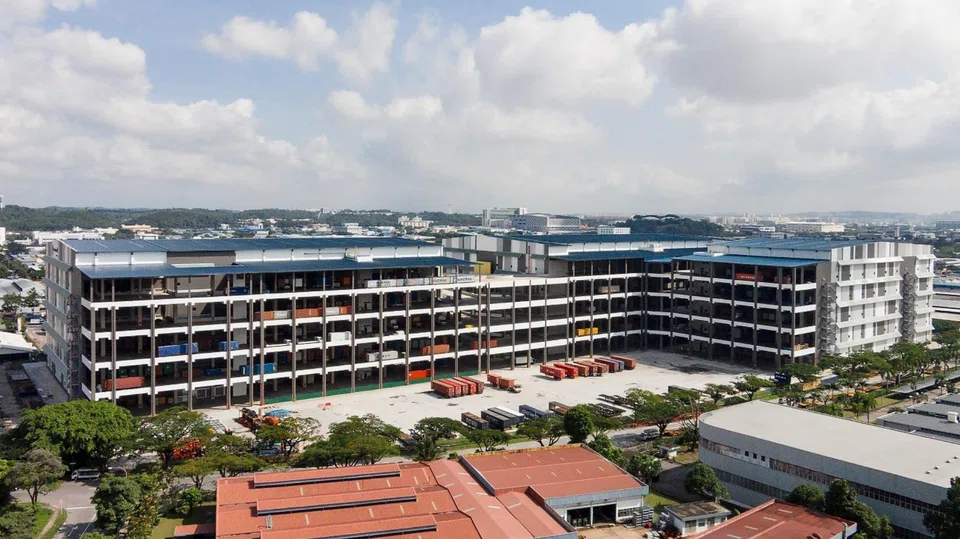
THE manager of Aims Apac real estate investment trust (AA Reit) has announced a distribution per unit (DPU) of S$0.047 for the first half of FY2023 ended Sep 30, marginally down from its DPU of S$0.0475 in the corresponding period a year ago.
The DPU for H1 FY2023 held steady amid an enlarged unit base, a 27.5 per cent increase in gross revenue to S$83.2 million and a 28.2 per cent rise in net property income (NPI) to S$61.1 million.
The rise in revenue and NPI were largely due to its acquisition of Australian supermarket and grocery chain Woolworths’ headquarters, as well as rental incomes and recoveries from its Singapore properties, the manager said.
Meanwhile, the amount distributable to unitholders inched up 0.4 per cent to S$33.7 million in H1 FY2023, from S$33.6 million in the same period last year.
Excluding the Reit’s one-off reversal of rental relief provision during the pandemic, its manager said that DPU would have gone up 0.9 per cent from the adjusted DPU of S$0.0466, while the amount distributable to unitholders would have hiked 2.3 per cent.
Overall growth was moderated by higher borrowing costs, especially to finance the acquisition of Woolworths’ headquarters; the depreciation of the Australian dollar against the Singapore dollar; and an increase in the amount reserved for distribution to perpetual securities holders, said AA Reit’s manager. Its property operating expenses also surged 25.8 per cent on the year to S$22.1 million from S$17.5 million, offsetting potential gains.
In an earnings call with The Business Times (BT), chief executive of the Reit’s manager, Russell Ng, said he intends to capitalise on a combinaton of fixed built-in escalation and rental reversions to help AA Reit improve its overall revenue projection.
Elaborating, he said that at least 50 per cent of AA Reit’s revenue is currently covered by built-in escalations averaging 3 per cent a year to combat inflation, and he intends to grow the pie of rental income covered by such a mechanism.
Rental reversions, he said, can be achieved through its multi-tenanted segment, which currently contributes 55.2 per cent of gross rental income.
“We like that combination between multi-tenancy and single user, because the other thing about multi-tenancy – when you have shorter leases, it allows you to go back to the market and have a renewal of our leases to market, so we have a mark to market,” he said.
Ng added that AA Reit has managed to see a sustained rental uplift, particularly within the logistics and warehouse segment, amid a tightening supply of good quality buildings.
The manager, meanwhile, said Australia’s industrial sector remains supported by infrastructure investment, supply chain volatility and higher online spending.
The Reit’s two business parks (Optus Centre and Woolworths’ headquarters in Sydney) and one light industrial asset (Boardriders’ headquarters in Gold Coast) are on triple-net leases with long lease terms ranging from 9 to 11 years, it pointed out.
Going forward, the manager added it intends to implement energy-efficient measures to alleviate rising energy costs and inflationary pressures, which are expected to add to operational expenses.
Ng told The Business Times that AA Reit is interested in the growing sustainability-linked loans market, but, given that its average loan maturity is about 3.5 years – which he calls “fantastic” under current market conditions – it may not be commercially viable to unravel its existing loans.
Nevertheless, he said the Reit’s manager is in “active discussions” with a couple of lenders on the possibility of converting their existing loans to green ones, since the Reit is working on concretely reducing its carbon emissions, which would qualify it for the green loans.
As at 3.04 pm, units of AA Reit were trading up 5.2 per cent or S$0.06 at S$1.22.