

AirAsia's food delivery flight here unlikely to unseat incumbents
Move could be to distract from its current problems within aviation sector or to maintain connectivity with customers

Singapore
IT WON'T be as easy as pie for AirAsia to eat the lunch of the leaders in Singapore's food delivery market, and the revenue it will generate is likely to be a drop in the ocean to the Malaysia-based loss-making budget air carrier.
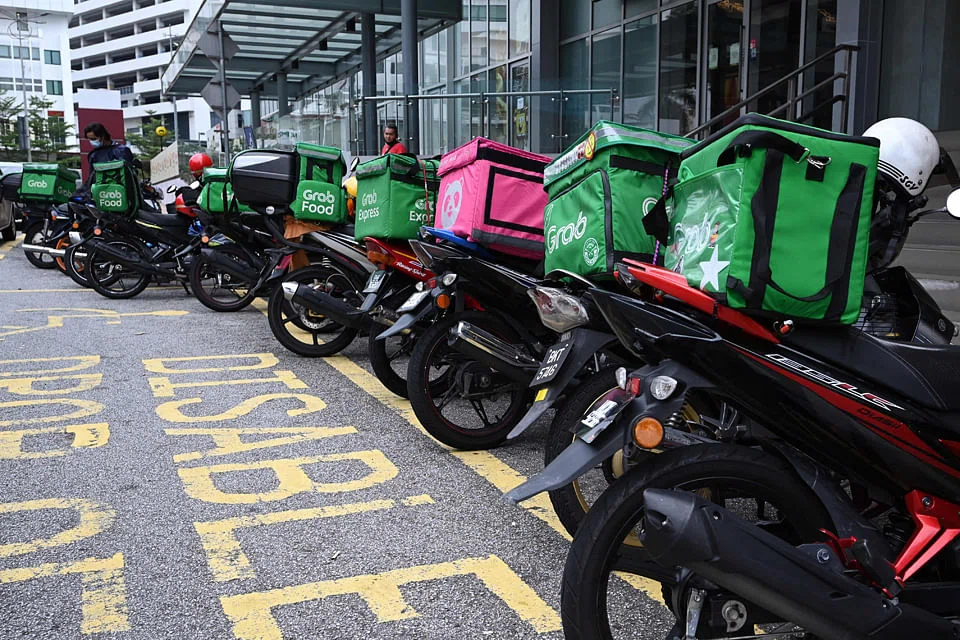
Li Jianggan, chief executive of venture builder Momentum Works, told The Business Times that it is tough for a new general platform to break into Singapore's competitive food delivery space, where Grab and Foodpanda already command 76 per cent of the market, and especially Grab has invested a lot to build up profitability factors.
He noted that AirAsia delivered 150,000 orders for the first quarter in Malaysia - a fraction of the overall market in the country, which is almost wholly occupied by Grab and Foodpanda.
Momentum Works estimated the Malaysia market to be worth US$1.1 billion last year, and the Singapore one, US$2.4 billion.
Mr Li said that a reasonable approach for AirAsia is to be a niche player, as there are small segment-focused players in Singapore that are profitable.
Shukor Yusof, founder of aviation consultancy Endau Analytics, noted AirAsia's move to open a restaurant in Kuala Lumpur dishing out inflight meals, and that it has also dabbled in other non-airline activities.
The Malaysia-based analyst commented: "Whatever revenue it gets certainly won't cover the costs of maintaining a grounded A320 (plane)."
He suspected the carrier is diversifying into non-aviation markets for other reasons: "It's part of AirAsia's move to be more engaged in the digital world but also, I suspect, to distract from its current problems within the aviation sector."
Bursa-listed AirAsia is among the hard-hit airline operators without a state bailout and hanging by a thread in the coronavirus pandemic, as air travel has evaporated amid strict travel restrictions.
The company last week said that there was equity injection from Hong Kong tycoon Stanley Choi, who has emerged as a substantial shareholder with an 8.96 per cent stake.
Lawrence Loh, associate professor of the National University of Singapore's Business School, does not see immediate synergy between AirAsia's food-delivery service and its existing business. He said: "Now they try to build their client base for their other business, so it's just to maintain connectivity with customers."
AirAsia's latest service will be available on its airasia food platform via its super-app, according to its press statement released last week.
Mr Li isn't clear about AirAsia's game plan for the super-app, but that whether its business model makes sense will depend on factors such as customer acquisition/retention costs, unit economics and ancillary opportunity to complement lower take rates or fees.
He noted AirAsia group is "very marketing-savvy with a well-known brand", and its being late to the party gives it the advantage of enjoying a market that is already educated. "Therefore they will probably generate enough buzz to get initial merchants and customers without spending much."
Tony Fernandes, AirAsia's chief executive, in a social media post last week publicising the entry into Singapore's crowded food-delivery space, did not see the group being a late-mover in the market: "Sceptics and naysayers were saying we'd never make it in the airline industry.
"It took me seven years to get approval to fly to Singapore, but better late than never. So I'd say we're way ahead of schedule on food. I'm sure we're going to get a great welcome."
TRENDING NOW

Grab CEO’s wife Chloe Tong on life with Anthony Tan and finding her purpose

He built the Vingroup empire. Now South-east Asia’s richest man is handing some key roles to his sons

Can Mark Shaw bring Singapore back to Orchard Road and the movies?

Ex-Sembcorp Marine CEO Wong Weng Sun acquitted of charges in Brazil corruption case

