

Airlines slashing prices amid pandemic because it's 'better than doing nothing'
The promotions they are dangling won't do much; analysts say industry consolidation is likely

Annabeth Leow
Singapore
WITH the aviation industry ravaged by the Covid-19 pandemic, carriers are turning to promotions such as "book now, fly later" and free flight changes to lock in passenger revenue. But there is only so much relief such business measures can offer, analysts said, darkly predicting events such as industry consolidation.
The International Air Transport Association (Iata) had estimated early this month that the deadly virus could erase US$113 billion in global passenger receipts this year, and Moody's analysts said they expected operating margins to narrow from a base case of 9 per cent to under 5 per cent.
But, since then, governments have unveiled more sweeping travel curbs, such as the United States' restrictions on entry from Europe's Schengen zone, and Singapore is expanding border controls that will affect travellers from Italy, France, Spain and Germany.
Airlines must now adjust schedules in response to daily developments, noted Pascal Martin, partner at OC&C Strategy Consultants in Hong Kong. He recommended that carriers tap promotions and special rates to "try to fill planes on still-active lines".
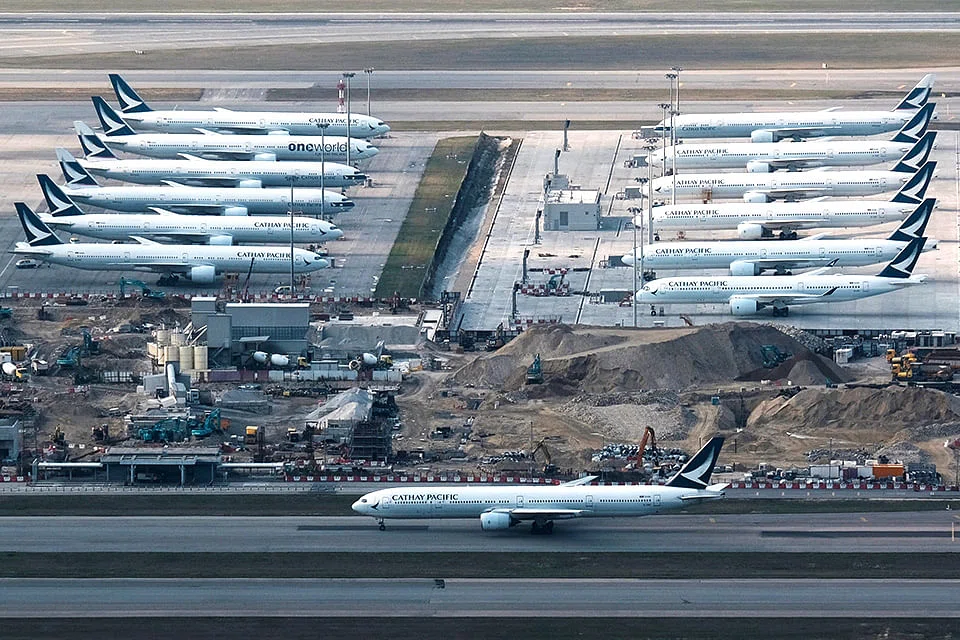
By way of example, "Cathay is doing a lot of that, concentrating passengers on fewer flights to keep the airplanes reasonably full, and diminish the fixed fuel cost burden", he said.
Besides bonus air miles for travel to North America, Cathay Pacific is dangling "Book Now, Travel Later" fares for flights from June 1 to Oct 28, and unlimited free changes to tickets booked from March 9 to April 20.
Australia's Qantas will let customers change international flight dates once for free for new tickets booked by March 31 for travel by end-June; its budget arm Jetstar is throwing in the option of a full refund in the form of a travel voucher. And Malaysia Airlines is touting discounts of up to 55 per cent - complete with a possible free date change - for travel until Jan 31, 2021.
But promotions can go only so far, said James Walton, the transportation, hospitality and services sector leader for Deloitte South-east Asia - even though markets like the Philippines and Australia are big enough that airlines are banking on shifting some international capacity to domestic tourism.
While carriers have focused on nudging flyers "to take advantage of heavily discounted fares and special location promotions", the spread of the disease and travel advisories has made the leisure market a harder sell.
These measures to save the business also come with a high cost.
"No one speaks of margins now, as airlines won't cover costs for some time to come," said Jochen Wirtz, a professor of marketing at the National University of Singapore. He predicted that "losses to the aviation industry will be eye-watering".
Asked how much the deals can support airlines, he deemed the discounts "not much, but ... better than doing nothing".
"As they are likely to have plenty of excess capacity, they are better off to sell cheap tickets now and hope that customers will, (in) this way, start travelling earlier."
Referring to the airlines' key strategy of cutting costs "to the bone", he warned: "It is likely that weaker airlines will go under, and those that are well-capitalised and well-run may come out of this crisis ahead."
Flagging the inevitability of consolidation, OC&C's Mr Martin added that "healthier players and leasing specialists" will get the chance to pick up aircraft fleets for a song from players who cannot afford to keep them.
As part of the Budget's Stabilisation and Support Package, the Civil Aviation Authority of Singapore last month unveiled a regulatory fee rebate that is expected to save Singapore carriers some S$6 million.
Now, after the US' overnight ban on European arrivals this week, the Iata called on Friday for government aid such as deferred tax payments, as well as lower airport and air navigation service-provider service charges. Measures such as public loans to local airlines and delayed fee payments "are particularly important to low-cost carriers", added Deloitte's Mr Walton.
British budget airline Flybe became Covid-19's first high-profile aviation casualty: It folded and entered administration last week.
READ MORE: SIA suspending New York route via Frankfurt from March to April
TRENDING NOW

Ex-Goldman trader builds mini pod shop in Singapore with offbeat hires

US says China to buy 10 million tonnes of coal in 2027 and 2028

Amberwood at Holland sells 23 of 70 units launched at average price of S$3,019 psf

He built the Vingroup empire. Now South-east Asia’s richest man is handing some key roles to his sons

