Alibaba shares plunge on SoftBank's stake sale report
 Add BT as a preferred source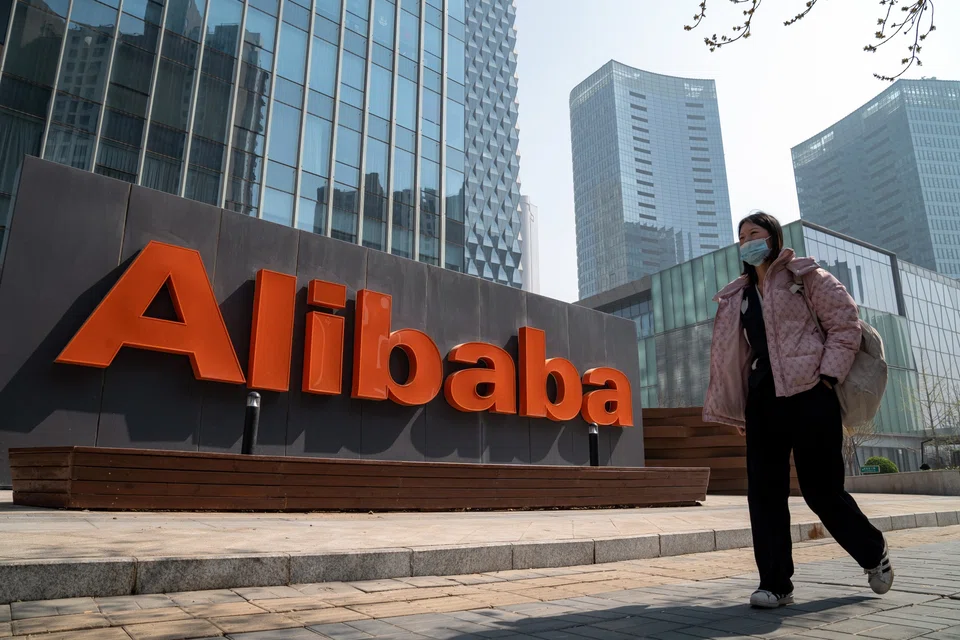
ALIBABA shares tumbled after Japanese technology investor SoftBank Group moved to sell almost all of its remaining shares in the Chinese e-commerce group, the Financial Times reported.
The sale would come as valuations of China’s big tech firms have started recovering this year after an end to two years of heightened regulatory scrutiny, providing a window for long-time investors such as SoftBank to reduce exposure to an economy battered by strict pandemic policies and Sino-US tension.
SoftBank’s share price closed down 1 per cent on Thursday (Apr 13), versus a 0.3 per cent rise in the broader market. Alibaba, one of the most valuable assets in SoftBank’s portfolio, tumbled as much as 5.2 per cent in Hong Kong after the report before paring the loss to 2 per cent.
That followed a 5.2 per cent Wednesday plunge for Tencent Holdings after the social media giant’s top shareholder, the Netherlands’ Prosus, said it may sell more of its shares, underscoring selling pressure on Chinese tech names.
SoftBank has been seeking ways to monetise its stake in Alibaba, which the Japanese conglomerate bought into more than two decades ago with just US$20 million spending.
“They have been clear that ... they need to monetise profitable holdings,” Jon Withaar, head of Asia special situations at Pictet Asset Management, said of SoftBank.
“Perhaps some expected that they may slow the pace of their selling in now that their Arm IPO is moving closer to completion, but ultimately everything they are doing is within the scope of what they have told the market.”
Neither SoftBank nor Alibaba responded to Reuters’ requests for comment. Alibaba’s US-listed stock fell 1.3 per cent in after-market trade on Wednesday.
SoftBank aims to list British chip designer Arm this year in an initial public offering (IPO) that would raise at least US$8 billion, people familiar with the deal told Reuters last month.

On Wednesday, the FT said forward sales based on filings at the US Securities and Exchange Commission showed SoftBank’s Alibaba stake would eventually fall to 3.8 per cent from almost 15 per cent.
The Japanese group, led by billionaire founder Masayoshi Son, has sold about US$7.2 billion worth of Alibaba shares this year through prepaid forward contracts, the newspaper said.
SoftBank said the transactions reflected a shift to “defensive mode” to address an uncertain business environment and that it would provide details in its quarterly earnings results announcement in May, the British newspaper reported.
“China’s regulatory environment in the Internet sector turned drastically tougher in recent years, and this is SoftBank simply responding to the changing environment, as it has already been doing,” said SBI Securities analyst Shinji Moriyuki. “It is well within the realms of expectations that the proportion of Chinese shares among its total investment will shrink further.”
SoftBank booked a US$34 billion gain last year by cutting its Alibaba stake to 14.6 per cent from 23.7 per cent, as the firm sought to shore up cash reserves amid steep losses incurred by its Vision Fund.
Vision Fund, which upended the tech world with big bets on startups, posted a staggering US$60 billion loss in calendar 2022 as market turmoil slashed portfolio firms’ valuations, prompting SoftBank to raise cash.
At the time, it also used prepaid forward contracts, a type of derivative contract that allows investors to hedge risk.
Alibaba has lost more than two-thirds of its value from highs touched in late 2020, hit by increased regulatory action in the technology sector that included a hefty fine on Alibaba and scrutiny of founder Jack Ma’s business empire.
The Chinese firm plans to split into six units and explore fundraisings or listings for most of them, marking the biggest restructuring in its 24-year history. REUTERS
Decoding Asia newsletter: your guide to navigating Asia in a new global order. Sign up here to get Decoding Asia newsletter. Delivered to your inbox. Free.
Share with us your feedback on BT's products and services