

Alta to open Middle East branches, sees private deal flow jumping 10 times
South-east Asian digital securities exchange for alternative investments expects expansion, more allocation to asset class to drive increase

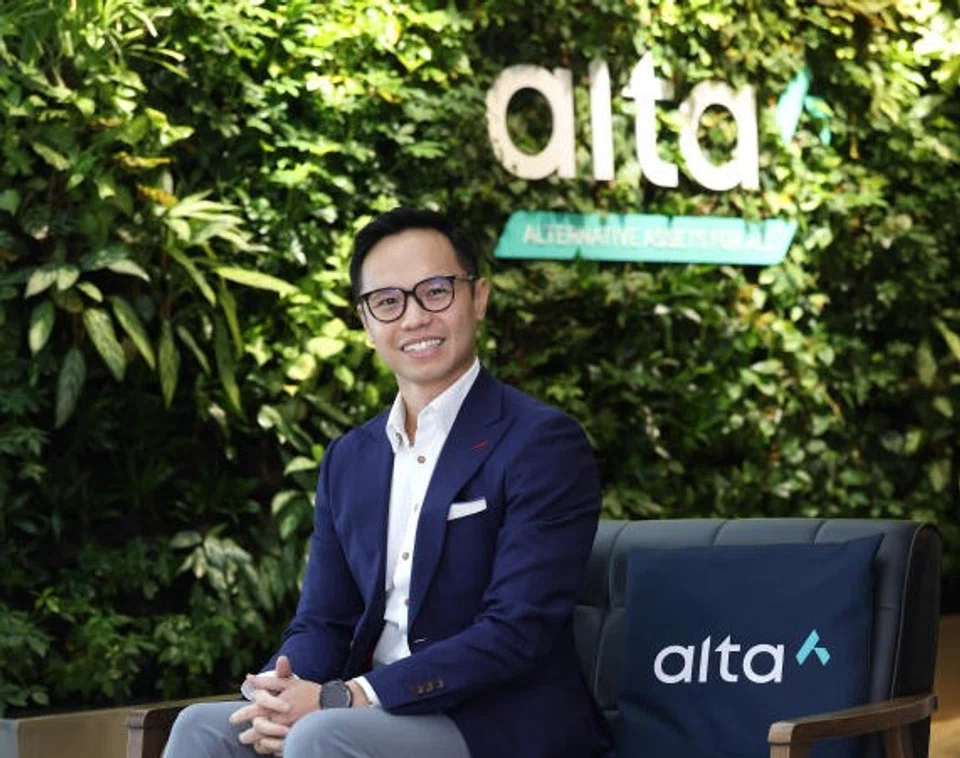
[SINGAPORE] The growing investor appetite for alternative assets is leading Alta Group, which runs a digital securities exchange for such investments, to set its sights on expanding to the Middle East.
The Singapore-based company, which claims its Alta Exchange is the largest such platform in South-east Asia, said it is likely to open up to two branches in the next few months. These could be either in Saudi Arabia or United Arab Emirates (UAE), Kelvin Lee, co-founder and chief executive, told The Business Times.
“We’re ready to go... deciding between Saudi Arabia or the UAE is the main question,” he said, adding that if Alta decided on the latter, it would be in Abu Dhabi, likely with 10 employees.
Known formerly as Fundnel, Alta was founded in 2015, with offices also in Malaysia, Indonesia and India.
Alta’s digital marketplace gives investors avenues to trade shares of early to late-stage private companies, and private equity and venture capital funds, through more than 70 companies and products.
It joins Singapore-based private markets platform ADDX in heading to the oil-rich region. In January, ADDX said it was optimistic it will open an office in the Middle East – its third globally – some time this year.
More Asian private wealth managers are setting up offices in UAE, particularly Dubai, which is emerging as a preferred wealth hub for many entrepreneurs and rich families in Asia. Apart from that, the golden visa programme in Saudi Arabia and UAE to attract foreign talents to live there is also drawing wealth to the region.
And this is on top of the more than US$4 trillion that Middle Eastern sovereign wealth funds have to deploy.
Alta is set to launch a syariah-compliant tokenised private credit fund in the second quarter of this year, in partnership with Hamilton Lane and Phillip Securities. Products like this could help draw Middle Eastern investors to Alta’s platform.
This is occurring when retail investors are planning to allocate more funds to alternative assets. These are assets that are not traded publicly, and include investments in areas such as private equity, private credit, venture capital and hedge funds.
Appeal of alternative assets
While these assets tout higher returns and lower volatility, experts cautioned about the lack of price transparency and liquidity.
In Singapore, access to such assets is limited to accredited investors – individuals who meet at least one of these criteria: a minimum annual income of S$300,000; net personal assets exceeding S$2 million with a maximum of S$1 million from primary residence; net financial assets of more than S$1 million; or holding a joint account with an accredited investor.
While investors are seeking to diversify into alternative assets, Alta Exchange is signing more member firms, which will help expand its reach and user base. These factors could drive the value of deals mandated on its platform to jump 10 times within the next five years, said Lee.
As at end-2024, the value of such deals that investors could access through Alta soared to US$53 billion, from US$6 billion four years prior. The amount of capital Alta’s investors pumped into alternative assets more than doubled to exceed US$802 million from US$394 million within the same timeframe.
“Just scaling to NH and now with Hanwha... they will bring issuers as well. And South Korea is a huge market,” he said.
Lee was referring to the two South Korean securities firms that joined Alta Exchange as member firms. Last October, Alta Exchange signed a memorandum of understanding with NH Investment & Securities. And last month, Pinetree Securities, the Singapore-based unit of South Korea’s Hanwha Investment & Securities, joined Alta Exchange as a member firm.
He is upbeat about the exposure to South Korea, given that investors there had queried Alta Exchange about the private tech companies trading on the bourse despite not being physically present in the country.
“We even had inquiries from them on NTUC Income,” he said, referring to the former name of Singapore-based Income Insurance, the insurance cooperative that was corporatised. He said the inquiries came before German insurer Allianz launched a 1.5 billion euro (S$2.2 billion) takeover offer that was subsequently rejected by the Singapore government.
Since early 2024, minority shareholders of Income Insurance who were estimated to own 26 per cent of the company can trade their shares on Alta due to a partnership between the exchange and Phillip Capital. Alta and Phillip Capital said then the listing was the largest of an unlisted company on a private securities exchange.
TRENDING NOW

Things to know about DBS’ incoming chairman Anthony Lim

DBS eyes prime brokerage business as Q3 profit falls 5% on weaker trading income

Royal Group and Sunset Hospitality abandon plans to open Casa Mett hotel off Orchard Road

George Yeo adds 100,000 Wilmar shares at S$2.97 apiece, taking stake to over 1 million shares

