

Amazon closes MGM deal after regulators decline to oppose it
 Add BT as a preferred source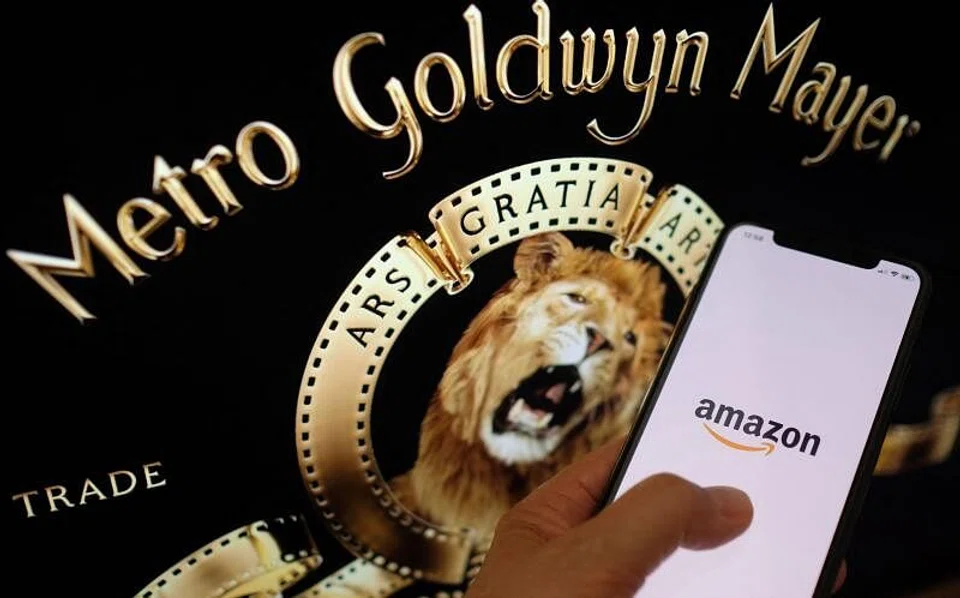
DeeperDive is a beta AI feature. Refer to full articles for the facts.
[WASHINGTON] Amazon.com said it closed the US$8.5 billion acquisition of film studio Metro-Goldwyn-Mayer (MGM) after regulators declined to challenge the deal, cementing the company's biggest takeover in 5 years.
The closing, announced on Thursday (Mar 15) in a statement on the company's website, marks the latest deal by a US technology giant to win approval despite criticism that the companies have been able to gobble up smaller firms with little pushback from competition enforcers.
European Union regulators signed off on the MGM deal on Tuesday after finding it posed no competition problems. In the US, the deadline for the Federal Trade Commission (FRC) to challenge the deal before the deal closed passed without the agency taking action. The FTC still has the authority to sue to block the deal in the future if a majority of commissioners vote to file a lawsuit. The commission is currently split between 2 Republicans and 2 Democrats, including chair Lina Khan, while US President Joe Biden's nominee for the fifth seat awaits Senate confirmation.
Amazon shares were little changed at US$3,062.67 at 9.35 am in New York.
Amazon agreed in May to buy MGM to deepen its library of streaming content, one of the perks of membership in the company's Prime delivery service. MGM, the studio behind the James Bond franchise, adds a back catalogue of 25,000 hours that Amazon could divvy up between its Prime Video offering, or its free-to-stream, ad-supported IMDb TV.
The takeover is Amazon's biggest acquisition since it agreed to buy Whole Foods in 2017 for US$13.7 billion. In 2020 and 2021, alone, Amazon spent a combined US$24 billion on video and music for its streaming services.
Navigate Asia in
a new global order
Get the insights delivered to your inbox.
Previously, Amazon has acquired smaller startups it perceived as a threat - footwear seller Zappos, for example, or Diapers.com parent Quidsi. Amazon also has snatched up-and-comers in new business lines, such as the game platform Twitch or Kiva, which makes warehouse robots.
About a month after the deal was announced, Biden named Khan to lead the FTC, putting a fierce critic of Amazon in charge of the agency. Khan rose to prominence in the antitrust world with a 2017 paper she wrote as a law student about Amazon's dominance. Titled Amazon's Antitrust Paradox, it traced how the online retailer came to control key infrastructure of the digital economy and how traditional antitrust analysis fails to consider the danger to competition posed by the company.
Bloomberg Intelligence analyst Jennifer Rie said in a research note that even if Khan is able to secure a majority vote to challenge the MGM deal, the agency would likely lose in court. The deal does not unduly concentrate any market or significantly alter the competitive dynamic in video content or streaming, Rie said. BLOOMBERG
Decoding Asia newsletter: your guide to navigating Asia in a new global order. Sign up here to get Decoding Asia newsletter. Delivered to your inbox. Free.
Share with us your feedback on BT's products and services
TRENDING NOW

Ministry of Home Affairs Permanent Secretary Pang Kin Keong to retire

Shelving S$5 billion office redevelopment plan proved ‘wise’ as geopolitical risks mount: OCBC chairman

Richard Eu on how core values, customers keep Singapore’s TCM chain Eu Yan Sang relevant

China pips the US if Asean is forced to choose, but analysts warn against reading it like a sports result

