

Amos sets out to run a tight ship
It is right sizing and selling off old inventory, hiring 'new talent', building up the sales team and expanding capabilities and capacity.

Anita Gabriel
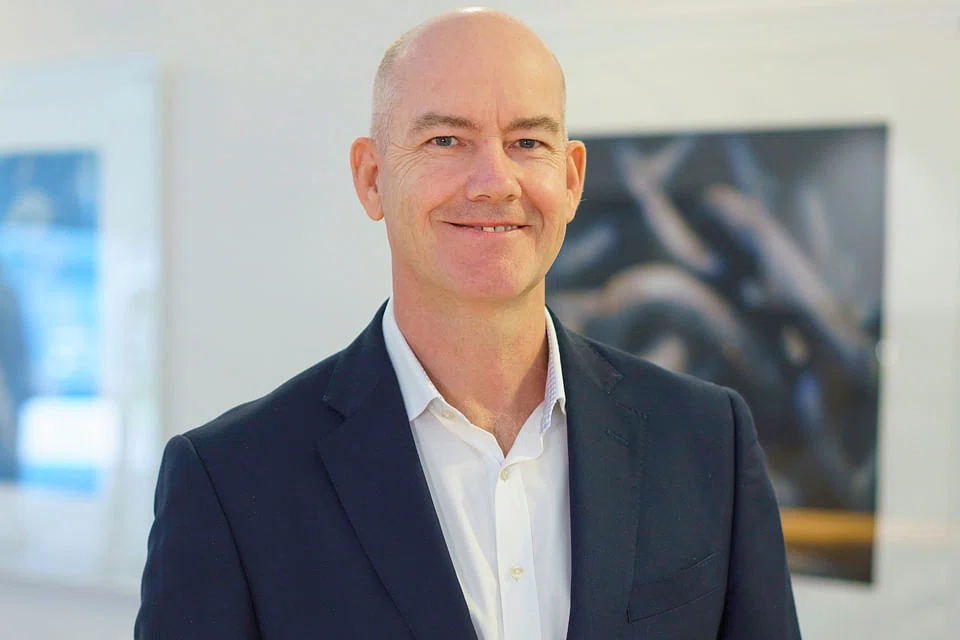
NINE months since the emergence of Amos Group on the Singapore Exchange following a nearly S$50 million reverse takeover of marine transportation supplier Amos International Holdings by struggling oil and gas contractor Gaylin Holdings - an exercise led by common controlling owners - a great deal of work has been done.
Yet, it still needs to grind away because profits remain elusive as gleaned from its latest quarter ended March this year, capping four straight fiscal years of losses.
"We have made it through the past months by actively cleaning up the business", says Amos chief executive Perry Kennedy. By that, he means right sizing and selling off old inventory - a legacy of Gaylin - hiring "new talent", building up the sales team and expanding capabilities and capacity.
Hope for the enlarged entity with customers spanning Singapore and across Asia, the Middle East and Europe could come in the form of a recovery in the offshore and marine space, though not as perky as earlier expected, further aided by building blocks it has put in place.
Two months back, Amos launched its upgraded flagship centre in 156 Gul Circle in Singapore - a five-storey 250,000 square foot warehouse and logistics control centre to better tap the opportunities in both offshore marine supply chain and logistics.
"The first thing is space. We have added 62,000 sq ft which is three more floors. It means we can store more and bulk buy...that makes our price points better and cheaper," says Mr Kennedy. "We are now the largest, most technologically advanced marine supplies, fulfilment and logistics centre."
The build-up is not just limited to its headquarters and largest operational hub in Singapore but also at its centres in Hong Kong, Shanghai and Busan, which are some of the world's busiest ports. Amos' network spans 11 key locations including the United Kingdom, Middle East, Malaysia and Indonesia.
Two become one
Since the RTO was done and dusted last October, Amos, which stands for All Marine Offshore Solutions, has "harmonised" the pool of vendors, reduced cost of goods - thanks to bulk buys - and widened its engineering capabilities and customer base.
According to Mr Kennedy, the group's active customer base for marine supplies has vaulted from 90 pre-merger to nearly 500 post-merger. Its customers include global ship owners and ship management companies and bigwigs in the global offshore oil & gas space, specifically rig and offshore support vessel operators and engineering, procurement and construction (EPC) contractors.
There has also been rationalisation with Amos divesting unwanted properties in Singapore. It expects the exercise to raise gross proceeds of S$20.5 million in fiscal 2020. Already, it has terminated three leased older properties in Singapore.
Mr Kennedy says the group has embarked on an enterprise resource planning (ERP) system to connect its businesses and people. This system, developed by Germany's SAP, cuts across all of Amos' subsidiaries and businesses, including manufacturing, inventory management, raw material purchasing and distribution.
"We have to bring (the) ERP system to tie it all up. It takes a lot of time to put all the pieces together - one platform across all locations", he says. The software integration has an added plus point in that Amos will be able to mine more reliable real-time analytics on customer interactions and trends.
Cross-selling, upselling
In 2019, the group's topline reversed gears with its marine business overtaking the offshore segment, contributing a bigger portion or nearly 60 per cent of total revenue of S$129 million. In the past, the offshore segment carried more weight on group revenue.
Much of that was because post-merger, the client base for the group's marine division expanded from transportation and shipping firms to oil and gas customers.
As one group, Amos is hoping to cross-sell as much as it can its logistics services as well as supplies to not just the traditional transportation firms such as merchant ships but also to oil and gas clients.
"We are cross selling ... bringing the oil and gas customers and introducing them to our marine supply capabilities," says Mr Kennedy.
Aiding this is its in-house "Alcona" product line of personal protection equipment, such as crew gear, daily consumables and tools which now also has an e-commerce platform.
"Alcona will be a good conduit for both segments. Everybody, all our clients, be it those transporting goods or offshore firms need clothes, safety equipment, spare parts and consumables ... the same stuff. I am saying let's get them both together."
TRENDING NOW

IOI Properties and CapitaLand Investment closer to acquiring One Raffles Place in joint bid

OCBC sheds S$8 billion in value as shares close nearly 6% down; analysts cautious on banks

Grab CEO’s wife Chloe Tong on life with Anthony Tan and finding her purpose

Crystal Jade closes four more outlets, cuts 120 jobs ahead of proposed sale

