

Analysts cautious as shadow of recession looms over markets

Yong Jun Yuan
MARKETS shed risk on Thursday (Sep 22), after investors were caught off guard by the US Federal Reserve’s hawkishness as the central bank raised its interest rate policy by 75 basis points overnight.
Most Asian stock markets closed lower, with Singapore’s Straits Times Index (STI) staying in the red for most of the day before closing up 0.04 per cent. Hong Kong’s Hang Seng index declined 1.6 per cent; both Japan’s Nikkei 225 index and South Korea’s Kospi declined 0.6 per cent.
At its close on Wednesday, the broad-based S&P 500 index shed 1.7 per cent to 3,789.93. The tech-heavy Nasdaq Composite index declined 1.8 per cent to 11,220.19.
While the overnight rate hike was largely predicted, markets did not appear to expect signals that the Fed was prepared to raise interest rates even more to stave off stubbornly high inflation — even at the risk of a recession.
JP Morgan Asset Management Asia-Pacific chief market strategist Tai Hui said that while the market had expected the Fed to raise the fed funds rate this year, in 2022, investors may have been taken aback by the central bank’s aggressive stance.
“The fact that the Fed has been continuously revising higher throughout 2022 in terms of their forecasts, it means that 4.6 per cent may not be the end of the story, that they may actually have to revise (the rate) higher still,” he said.
Janus Henderson Investors’ head of global aggregate strategies, Andrew Mulliner, also expressed doubts regarding the Fed’s unemployment and growth predictions. The Fed is predicting that real GDP for 2022 and 2023 will fall to 0.2 per cent and 1.2 per cent respectively from their previous estimate of 1.7 per cent in both years. Unemployment rates for 2022 and 2023 are expected to rise to 3.8 per cent and 4.4 per cent, up from their previous forecast of 3.7 and 3.9 per cent.
“The Fed’s projections for unemployment and growth seem optimistic, given the degree of monetary tightening, but only time will truly tell the degree to which this is wishful thinking,” he said.
Equities
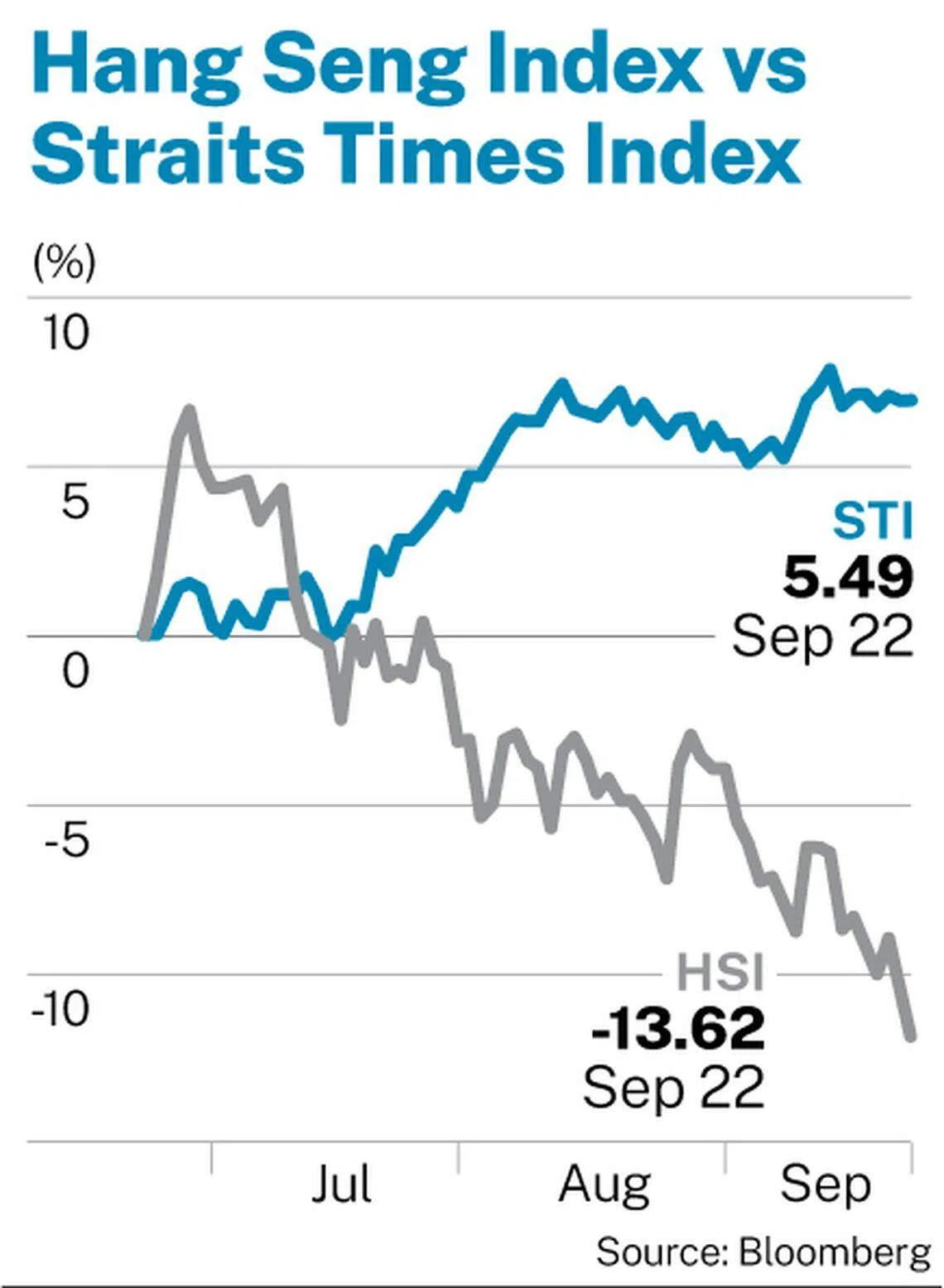
The prospect of a recession led analysts to be particularly cautious about equities, although bright spots remain in South-east Asia.
BlackRock analysts said that more interest has been focused on South-east Asia as more investors seek out value plays. In particular, the firm likes Indonesia and Vietnam as they reopen from Covid-19 restrictions.
BlackRock head of Asia-Pacific iShares investment strategy Thomas Taw said that a relatively thin supply of richly-valued tech plays in Singapore, Malaysia and Indonesia mean opportunities to find value investments in these markets.
“That’s actually being seen as quite a strong tailwind, so we definitely have seen investors looking more towards those kinds of value plays … I think Indonesia, for us, has probably been the one that has seen the most interest in South-east Asia,” he said.
UBS global wealth management chief investment officer Kelvin Tay said that the “higher-for-longer” interest rates expected will likely be a net positive for the banking sector in Singapore, which is likely to reap improved net interest margins.
All 3 local banks were in the red on Thursday. DBS closed down 0.03 per cent or S$0.01 at S$33.52; OCBC declined 0.3 per cent or S$0.04 to close at S$12.31, and UOB declined 0.5 per cent or S$0.15 to close at S$27.53.
“Furthermore, the higher US treasury yields will likely translate to higher Singapore government securities yields, which in turn will likely affect the Singapore real estate investment trusts (Reits),” he added.
Fixed income
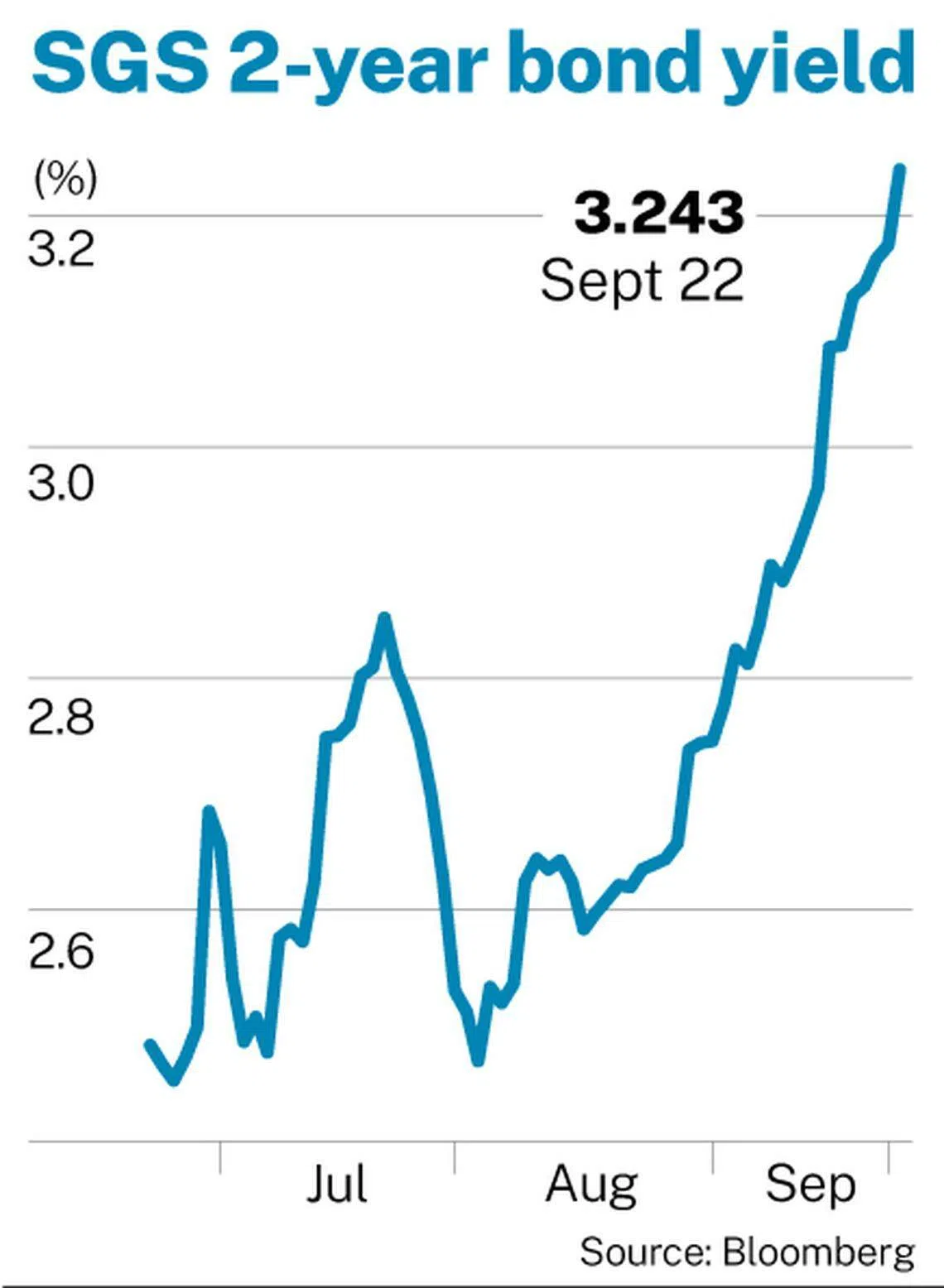
Analysts were more bullish on shorter-duration bond yields in light of the inverted yield curve. On Thursday, the 2-year Singapore government securities (SGS) bonds rose 7 basis points to 3.26 per cent, while the 10-year SGS bonds yield declined 1 basis point to 3.19 per cent.
JP Morgan’s Tai said that while bond prices face some downside risk, the short-term bond yields of 2 years or less would still put investors in a relatively good position.
“Right now, you’re getting 4 per cent in bond yields as a starting point. Even if bond yields move up another 25 or 50 basis points…the downside risk to the bond price, I think, is well mitigated by the bond yield,” he said.
Similarly, Luke Browne, Manulife Investment Management senior portfolio manager and head of asset allocation for Asia, said that shorter term yields on treasury bills in Singapore and the US look increasingly attractive.
“Bonds in and of themselves generally (have) defensive characteristics. Getting at the right part of the investment spectrum can value-add to portfolios,” he said.
Currencies
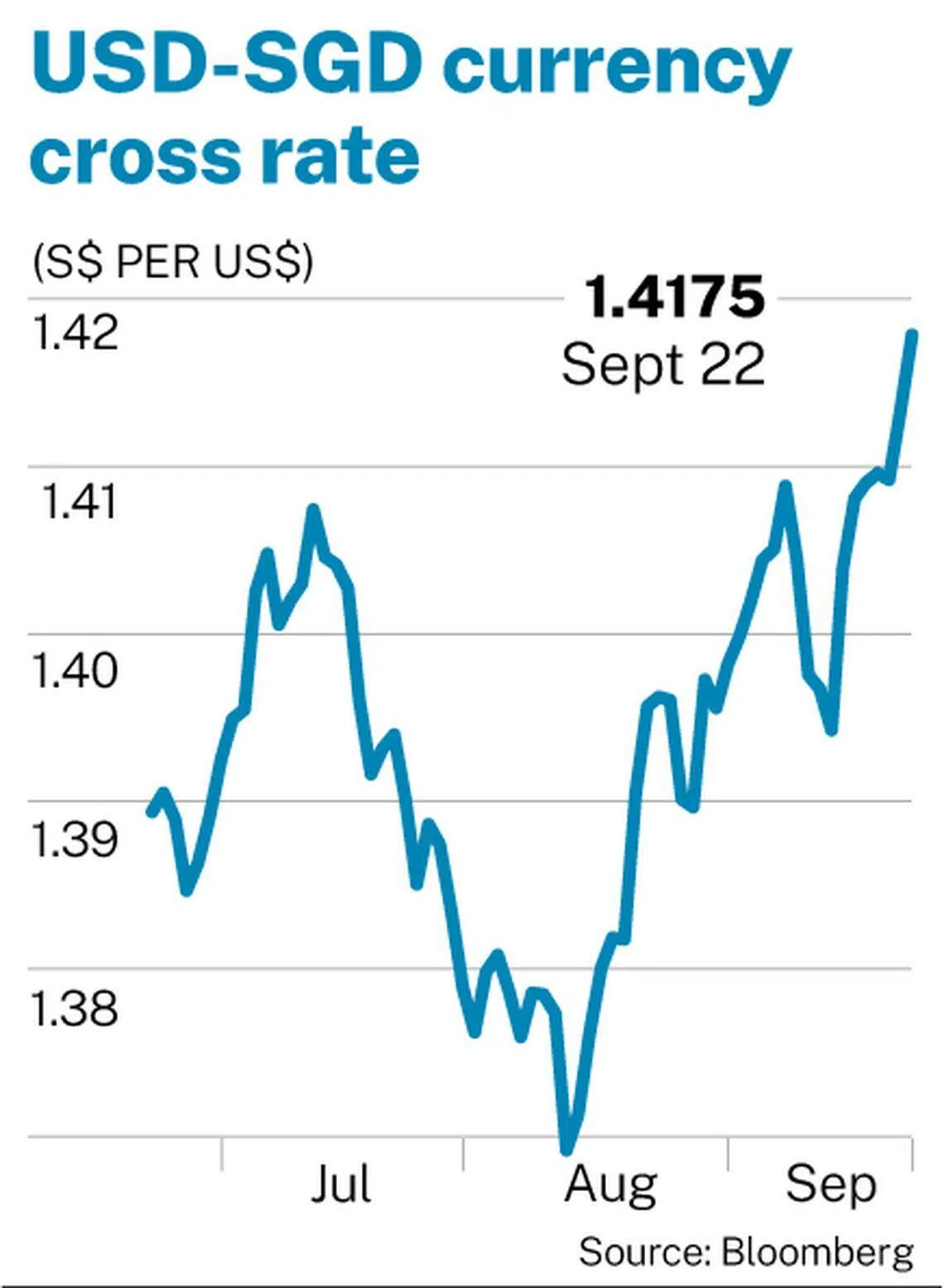
The rise in US interest rates has also strengthened the greenback against many currencies around the world. As at Thursday 5pm, the Singdollar and the euro had fallen to 1.417 and 1.012 against the dollar respectively. The yen rose to 141.91 against the dollar.
JP Morgan’s Tai said that the US dollar index has strengthened by almost 15 per cent in the year to date, due to the interest rate differential and risk aversion from a potential global recession.
He also noted that Asian central banks have started to tighten monetary policy, with the exception of China and Japan, which should help to limit the extent of Asian currency depreciation. Concerns over a currency crisis are somewhat overdone, he added.
“I think the currency adjustment that we’ve seen so far in the year to date is clearly significant, but it’s also, to me, a very healthy way to relieve some of the potential pressure in economies.
“We’re not expecting a currency crisis per se, especially for the Asia-Pacific economies with decent current-account positions as well as adequate, ample foreign exchange reserves,” Tai said.
Gold
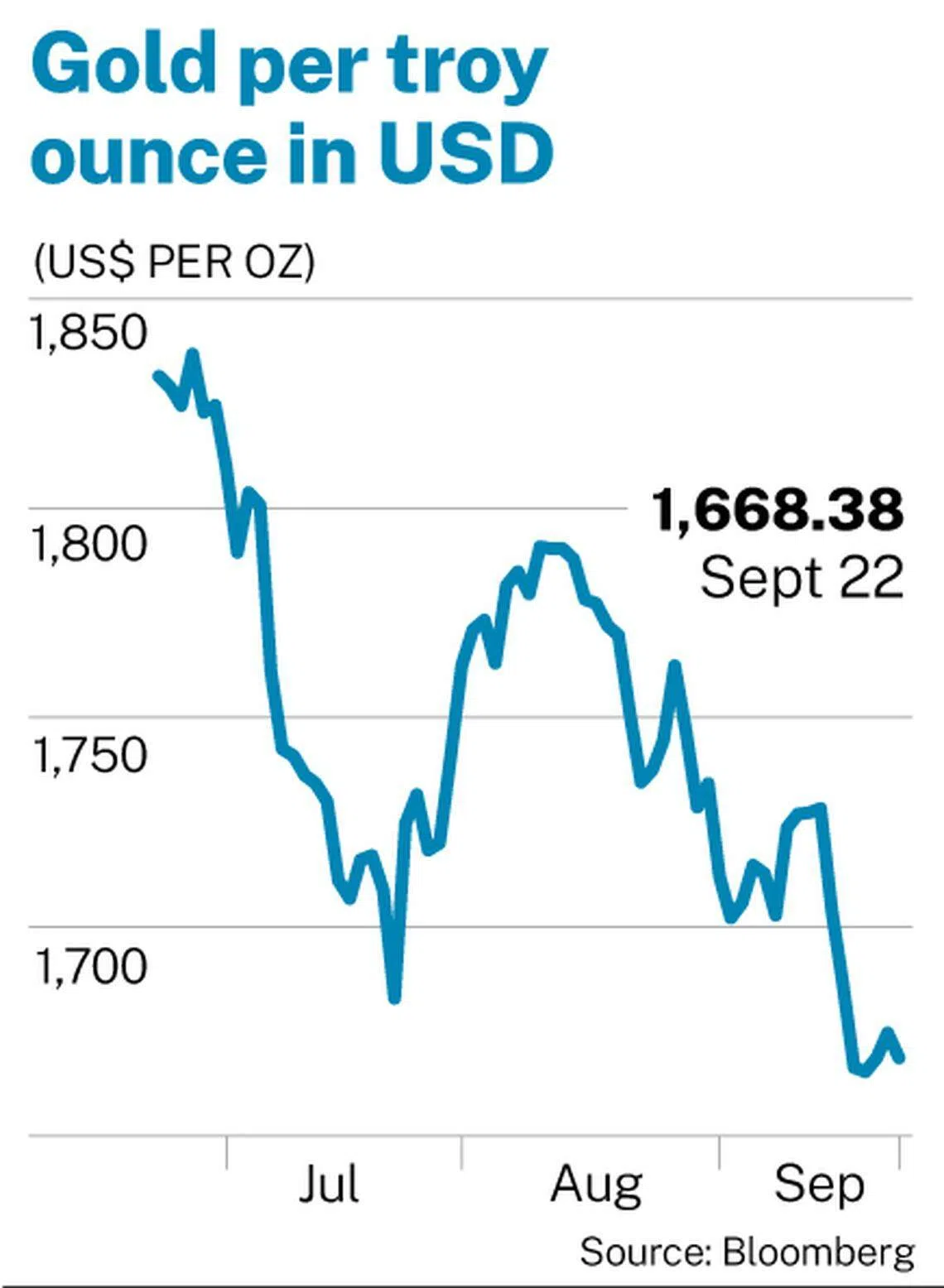
Another asset class that could continue to come under pressure from rising interest rates is gold. The US dollar gold spot price fell to US$1670.65 per troy ounce as at 5pm on Friday.
Manulife Investment Management head of macro strategy, Asia, Sue Trinh, said that she expects the precious metal to continue underperforming as real yields, or yields on long-term government bonds after accounting for inflation, turn positive.
Notably, the yield on 10-year Treasury Inflation-Protected Securities rose to 1.2 per cent on Sep 20, from -1 per cent at the start of the year.
“Until we see that peak in real yields, it’s hard to see the inflection points coming in for gold,” she said.
TRENDING NOW

Philippine power giant First Gen rebuffs foreign offers, plans up to US$2.6 billion in expansion

Once staunchly pro-China, Malaysian Chinese businesses are now distancing themselves from Beijing

Nearly half of Singapore workers put in at least six unpaid hours a week: survey

Vietnam’s data-centre investment rush faces reality check on power and site constraints

