Analysts optimistic on Asian equities, bonds even as Fed signals fewer rate cuts
They note strong long-term outlook for banking, manufacturing sectors here, and add bond investors will benefit from less volatility

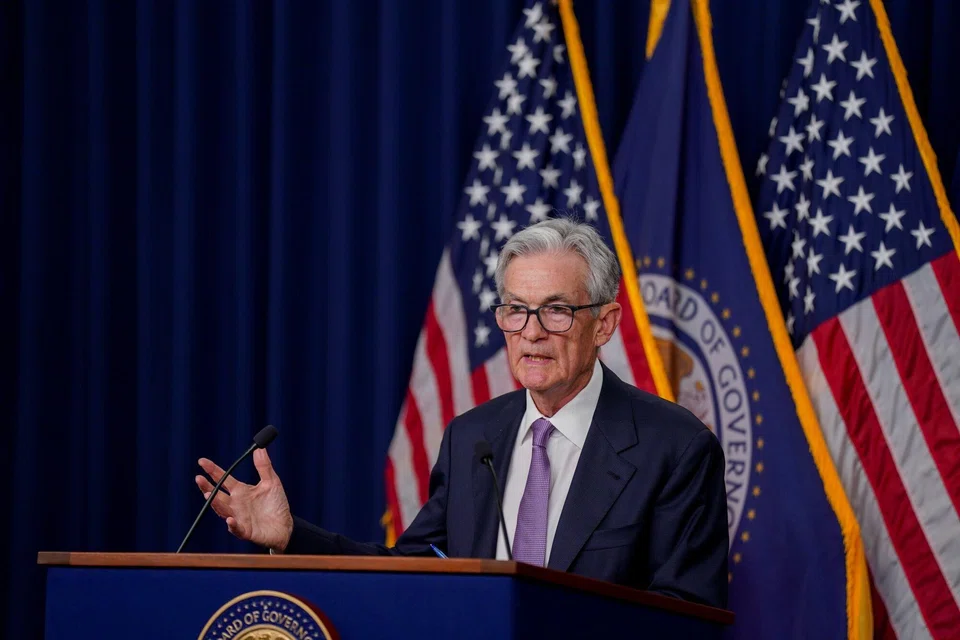
ALTHOUGH the “hawkish” interest rate cut by the US Federal Reserve led to Asian markets – including Singapore’s – opening in the red on Thursday (Dec 19), analysts remained optimistic on the outlook for both the Asia and Singapore equity and bond markets.
While there could be some initial volatility in the equity markets, the long-term outlook for the banking and manufacturing sectors in Singapore remains strong.
With a clearer view on rate cuts in 2025, bond investors will also benefit from less volatility as rate expectations will not be shifting as much, said analysts.
The Fed on Wednesday continued with its rate cuts, bringing down its benchmark overnight interest rate by a quarter point to the 4.25 to 4.5 per cent range.
This is the third consecutive rate cut by the American central bank this year, following a half-point cut in September, and a quarter-point cut in November. The rate was reduced by 100 basis points in total in 2024, following a series of rate hikes over the last few years.
Despite the consecutive series of cuts, the US Fed indicated on Wednesday that it will slow the pace of interest rate cuts, given a relatively stable unemployment rate and little recent improvement in inflation.
US central bankers now project two quarter-percentage-point rate cuts by the end of next year, down from the initial projection of a full percentage point cut for 2025.
While analysts agreed that the cut was widely anticipated by the market, they also acknowledged that it could be considered a “hawkish cut” when considering the US Fed’s forward guidance on the slower pace of rate cuts.
Asian markets fall
The rate cuts led to stocks falling across global markets on Wednesday. Wall Street stocks closed lower.
The Singapore market took its cue from the US, closing lower on Thursday. The benchmark Straits Times Index (STI) shed 16.74 points, or 0.4 per cent, to end at 3,762.88.
Regional exchanges, including Japan’s Nikkei 225 and Australia’s ASX 200, were also in a sea of red.
Joel Phua, research analyst at wealth management platform FSMOne Singapore, said that Asian equities are likely to trade lower in the near term as higher-for-longer interest rates and higher expected inflation generally weigh on risk assets such as equities.
“Asian equities have performed well this year and the Fed’s hawkish tone is serving as a catalyst for investors to take some profits off the table,” noted Phua.
Nevertheless, with Singapore-listed real estate investment trusts (S-Reits) expected to stay under pressure in a higher-for-longer rate environment, Phua advised that investors remain selective and invest in S-Reits with healthy balance sheets and the ability to generate growing cash flows.
Simon Ree, founder of online trading academy Tao of Trading, said that US rate cuts are “incrementally positive” for Asia and Singapore equity markets.
In the Singapore equity market, lower US rates might narrow the interest rate differential with Singapore, potentially affecting banks’ profitability from overseas operations.
In the real estate sector, lower borrowing rates could stimulate demand for property, leading to a recovery or stabilisation in property prices. Consumer confidence could also improve due to lower borrowing costs, leading to increased activity in the retail sector, he added.
In the case of bonds, Phua said that the slowdown in the pace of cuts has seen US Treasury yields climb across the board, with yields across most tenors rising more than 10 basis points. The rise in US Treasury yields is expected to put negative pressure on bonds, particularly longer-duration ones, he said.
Within the Singapore bond market, there are some increases in Singapore Government Securities bond yields, added Phua.
However, he noted that the yield curve remains “deeply inverted”, meaning that ultra-short-end yields remain higher than 3 per cent, and longer-end yields lower than 3 per cent.
Optimism despite fewer rate cuts
In view of a slower pace in rate cuts in 2025, Ree said that equity markets could face some volatility if investors had anticipated more aggressive easing. Nevertheless, a gradual approach might signal a controlled economic environment and be beneficial for long-term investment.
Similarly, Phua of FSMOne maintained a positive long-term outlook on Asian markets, including Singapore’s. For instance, the Republic’s manufacturing sector is well-positioned to capitalise on the ongoing semiconductor up-cycle.
Singapore banks are also likely to benefit from fewer rate cuts, said Kai Wang, a senior equity analyst at investment research company Morningstar. Higher interest rates mean that their net interest margins will continue to be supported. Consequently, the STI – which consists of mostly banks and financial institutions – will also benefit from fewer cuts.
However, if there are more than two rate cuts next year, this would indicate that the US economy is weaker than expected. Consequently, bank valuations in the Singapore market could be put under pressure, he noted.
Phua added that bond investors also have reasons to remain optimistic given the higher-for-longer interest rate environment.
Shorter-duration bonds will see less volatility, as interest rate expectations will be more steady. He also noted that nominal yields across the board are still at highs not seen in the past decade and can help to buffer total returns.
Yields in the Asian bond market might stabilise, rather than plummet, in view of the slower pace of rate cuts. This could make Asian bonds attractive if Asian economies continue to grow at a steady pace, added Ree.