Analysts split on US debt talks’ impact on US dollar; ‘no deal’ could have unprecedented effects

Yong Jun Yuan
Yong Jun Yuan

Published Mon, May 22, 2023 · 05:26 PM
    • Analysts believe that a default on US debt would be unprecedented and unpredictable.
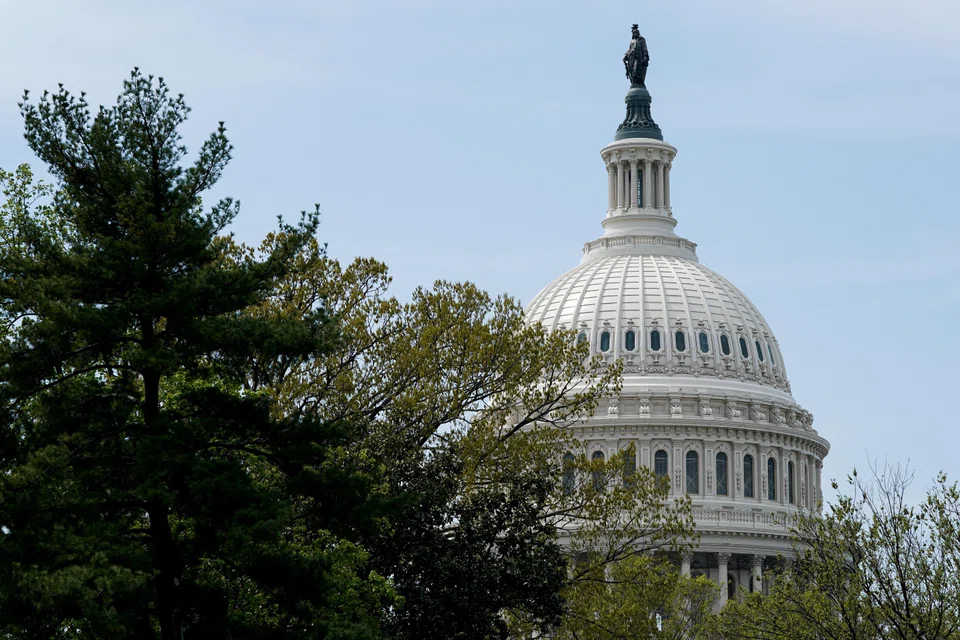
    • Analysts believe that a default on US debt would be unprecedented and unpredictable. PHOTO: REUTERS

    AS THE US debt ceiling talks edge towards the so-called “X-date” of Jun 1, foreign exchange analysts expect that continued uncertainty without a deal could mean a strengthening of the US dollar and weakening of the Singapore dollar in the near term.

    Swissquote Bank senior analyst Ipek Ozkardeskaya said in a note on Monday (May 22): “The safe-haven demand due to the debt-ceiling saga is one of the reasons why the US dollar saw inflows over the past couple of weeks.”

    Meanwhile, the US dollar/Singapore dollar pair is near the top end of its two-month range.

    Said Peter Dragicevich, Asia-Pacific market currency strategist at business payments provider Corpay: “The longer the talks draw out without a deal, the more nervous markets could become; and this is normally a backdrop that is supportive for the US dollar and Japanese yen over (other) Asian currencies such as the Singapore dollar.”

    If an agreement is reached, he expects the market to focus on the US Federal Reserve’s fight against inflation once again.

    This could still be positive for US dollar strength, in his opinion.

    “Based on the still-high and sticky US inflation pulse, we believe that market pricing looking for about two to three rate cuts by January is misplaced.

    “A further shift up towards a higher-for-longer outlook is likely to provide the US dollar and US dollar/Singapore dollar with a bit more of a boost, in our opinion,” he said.

    UBP global head of forex strategy Peter Kinsella, however, expects that an agreement could lead to some modest US dollar weakness as investors could interpret the move as being positive for risk sentiment.

    Maybank Singapore head of FX research Saktiandi Supaat said that there could be a period of heightened volatility as the political stalemate persists and fears remain over a US sovereign rating downgrade.

    “We expect this to be largely negative for the US dollar and would prefer to express this view by being short US dollar/Japanese yen, US dollar/Swiss franc or long gold (traditional safe havens).

    “A possible short US dollar/Singapore dollar could also work as we see Singapore dollar exhibit some safe-haven properties,” he said.

    Still, he sees little to no impact on the US dollar, Singapore dollar and other regional currencies if the debt ceiling is eventually raised, even at the 11th hour.

    DBS senior currency economist Philip Wee, meanwhile, pointed out that the recent US dollar strength came after a sharp depreciation following the US midterm elections in November last year.

    Such consolidations tend to happen after sharp depreciations, he noted.

    This was the case in 2011 too, when the United States faced a similar budget crisis. The US Congress passed a law in August 2011 to raise the debt ceiling, and the US dollar index rebounded that same month.

    But Wee said the rebound then was more likely to have been triggered by the European sovereign debt crisis, which created market uncertainty. The Singapore dollar shed most of the year’s gains against the US dollar in 2011.

    “Markets also need to keep an eye on the European Union budget, (which is) under pressure from lower revenue on weak growth, and higher borrowing costs from the European Central Bank’s aggressive hikes,” Wee said.

    Default fears

    Wee said a default on US debt would be “unprecedented and unpredictable”.

    In such a scenario, the greenback would fall as the US government’s credit-worthiness is eroded and US bond yields rise.

    He is optimistic that a crisis would speed up a resolution. The UK mini-budget crisis last year showed how quickly the British pound could bottom and recover after UK lawmakers “got their act together”, he said.

    Still, Wee noted that market participants in the region may be more worried about US Treasury Secretary Janet Yellen’s warnings of eight million job losses and a 45 per cent plunge in US equities if the debt ceiling is not raised.

    “They may prefer stable exchange rates to currency appreciation, wary that high US bond yields may eventually attract flows again once the dust settles,” he said.

    UBP’s Kinsella said the main issue in a “no-deal” scenario would be who is holding the collateral, and the second order effects this could entail.

    “If investors in the region are holding short-term US bonds or bills, then it may have a cascading effect throughout the region, and indeed the wider global economy,” he said, adding that the only clear winner in such a scenario would be gold.

    “Currencies with a high beta to global growth, such as the Singapore dollar, may weaken materially initially as the effects reverberate throughout the economy and banking system,” he said.