Analysts weigh impact on SIA brand following turbulence tragedy
Rising fears over turbulence could dent air travel sentiment


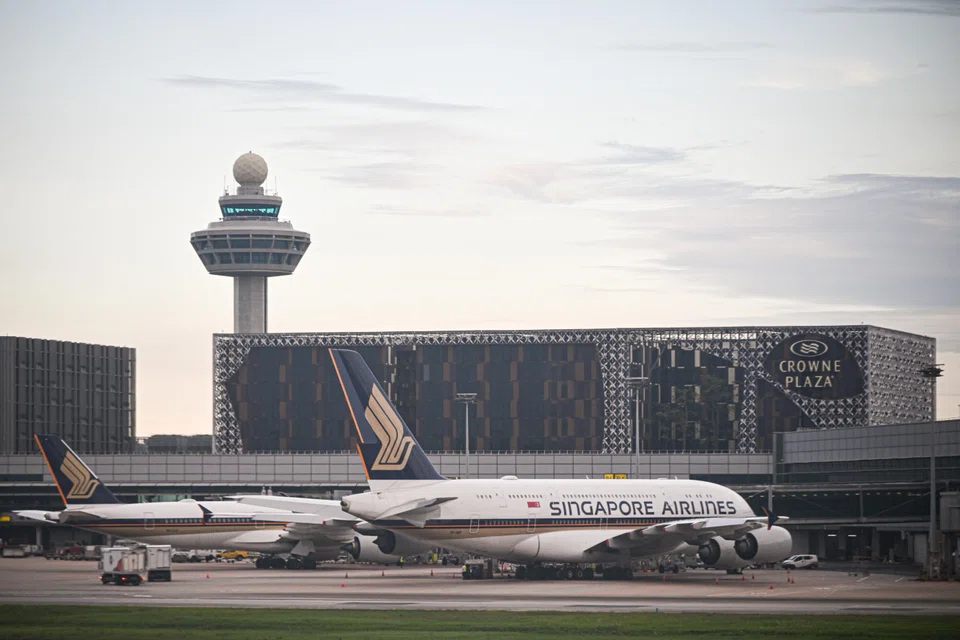
INDUSTRY observers and analysts believe that the Singapore Airlines (SIA) brand is unlikely to suffer significantly following the severe turbulence incident on Tuesday (May 21) that resulted in one passenger’s death and injuries to dozens of others on flight SQ321.
The sudden and extreme turbulence, described by Shukor Yusof, founder and primary analyst at Endau Analytics, as a “black swan incident”, is an unpredictable event not specific to any airline.
“In my opinion, while tragic, this incident should have less implication on SIA’s brand than an accident resulting from human error or faulty equipment,” agreed Lorraine Tan, director of equity research in Asia at Morningstar.
The unfortunate event has overshadowed the news from a week ago when the national carrier declared record annual profits of S$2.7 billion and raised its dividend for the fiscal year ended March 2024.
Possible knee-jerk market reaction
Analysts further noted that similar incidents have occurred with other airlines in the past.
In March this year, severe turbulence on a Latam Airlines flight from Sydney to Auckland resulted in at least 50 injuries. The event, albeit unfortunate, has not stalled the airlines’ proposed plan to relist its shares on the New York Stock Exchange on the back of robust air travel demand and improving profitability metrics.
Morningstar’s Tan does not expect the latest event to hurt SIA on the market front. “I would expect either minimal or short-lived reaction to its share price,” she continued.
The airline first announced the incident on its Facebook page at 6pm on Tuesday, after the market close. Its shares ended Tuesday at S$6.76, down S$0.01 or 0.15 per cent.
Terence Wong, founder and CEO of Azure Capital, shared a similar view.
He said that the cost of compensation and a possible increase in future disaster insurance premiums are unlikely to be substantial in the grand scheme of the airline’s operational costs.
“If there is an increase in the premium, it is likely to be industry-wide and not only affecting SIA,” he noted.
Beyond the “black swan” reasoning, Tan noted that SIA’s share price has already come off its 2023 highs, reducing the likelihood of further sell-offs as it has already adjusted downwards.
“The outlook of rising competition eating into passenger yields is already being factored into SIA’s share price by the market,” she added.
Yusof believed that the latest occurence will not deter passengers from flying with SIA. “The actions taken by the crew and SIA’s management in response to the accident have been outstanding,” he observed.
This tragic occurrence is the airline’s first fatal incident in 24 years, following the SQ006 crash in October 2000 that resulted in 83 lives lost.
It is also the third in the airline’s history. The first incident involved flight 185 of SilkAir – then a wholly owned subsidiary of SIA – which crashed into the Musi River in Sumatra in 1997.
Regaining traveller confidence
Nevertheless, general traveller confidence could take a hit as flight turbulence becomes more common and severe due to climate change, with increasing occurrence of air pockets and bad weather, said Rico Merkert, professor and chair in transport and supply chain management at the University of Sydney Business School.
A 2023 study by University of Reading in the UK found that clear-air turbulence, which is invisible, had increased with climate change.
While the US and North Atlantic have experienced the most significant increase, routes over Europe, the Middle East and the South Atlantic have also seen notable rises in turbulence.
“If passengers don’t keep their seat belts loosely fastened at all times, injuries will increasingly become a problem for traveller confidence and airline operations,” Prof Merkert added.
While wearing seat belts on flights is regulated by national aviation authorities such as the US Federal Aviation Administration, Prof Merkert explained that issues remain regarding how to protect passengers and crew when they need to use the toilet, or when turbulence unexpectedly occurs during cabin service times.
“The challenge is not specific to SIA or any one airline – it affects all airlines globally, especially those operating long-haul flights over oceans,” he added.
In a video message this morning, SIA’s chief executive, Goh Choon Phong, stated that flight SQ321 experienced sudden extreme turbulence over the Irrawaddy Basin in Myanmar at an altitude of 37,000 feet, about 10 hours after its departure from London.
He said: “We are very sorry for the traumatic experience that everyone on board SQ321 went through. Our priority is to render all possible assistance to our passengers and crew members.”
Prime Minister Lawrence Wong and Minister for Transport Chee Hong Tat confirmed that the Transport Safety Investigation Bureau (TSIB) under Singapore’s Ministry of Transport will conduct a thorough investigation into the incident.
“Officers from TSIB arrived in Bangkok Tuesday night. As this incident involves a Boeing 777-300ER aircraft, the United States’ National Transportation Safety Board is sending an accredited representative and four technical advisors to support the investigation,” Chee said on his Facebook page on Wednesday.