Ant IPO debacle prompts rethink on China fintechs
Push for fintechs to have more skin in the game could increase their accountability, cut excessive consumer leverage
Singapore
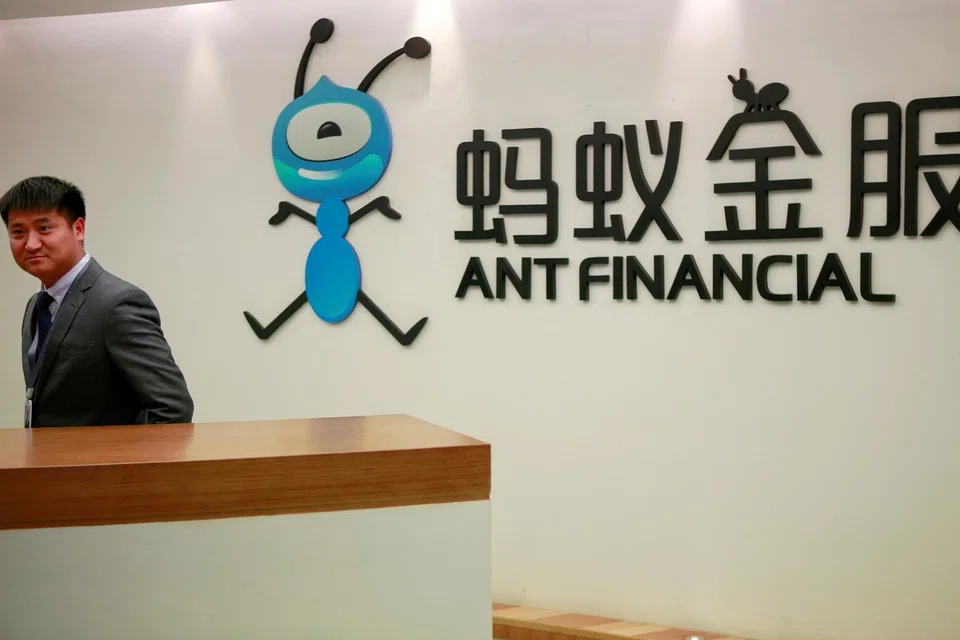
THE suspension of Ant Financial's US$34 billion initial public offering (IPO) less than 48 hours before its trading debut is expected to dampen the valuation of Alibaba's fintech arm, as well as that of other Chinese fintech companies looking to list in Greater China or even in the US, industry watchers say.
No one is expecting this to be the end of Ant's listing aspiration. Most believe the deal will return as soon as just months, albeit at a smaller size, once the regulatory issues are straightened out.
On Tuesday evening, Ant said it had been informed by Chinese regulators that its proposed A-share listing on the STAR Board will be suspended, as the group may not be able to meet listing qualifications or disclosure requirements in light of "material matters" that were not specified, following a rare regulatory interview with Ant's lead founder Jack Ma and senior management, as well as recent changes in fintech regulations.
As a result, Ant announced that its concurrent H-share listing will also be suspended.
In a statement, it said: "Ant Group is committed to implementing the meeting opinions in depth and continuing our course based on the principles of stable innovation; embrace of regulation; service to the real economy; and win-win cooperation."
While details of the reasons for the aborted IPO were scant, market watchers put two and two together, and guessed that this likely had to do with the China Banking and Insurance Regulatory Commission and People's Bank of China's recent joint consultation paper concerning the regulation of online micro credit companies.
An OCBC Investment Research report said a key implication from the paper is that Ant could potentially be required to provide at least 30 per cent of funding in every co-lending loan it enters into, which could upend its business model of facilitating loans rather than to take on balance-sheet risk.
"About 98 per cent of the consumer and small business credit balances enabled through Ant's platform as of June 30, 2020 are underwritten by its partner financial institutions or securitised. From the regulators' point of view, having skin in the game could increase the accountability for fintechs and prevent an excessive increase in consumer leverage."
OCBC said this regulation could be targeted at addressing some of Ant's banking partners' lack of resources to perform sufficient due diligence on voluminous small loan amounts, which average about 2,000 yuan (S$407) each. The new capital requirement will thus curb its loan growth.
The research house calculates that based on Ant's first-half equity and IPO proceeds, and assuming that it leverages by six times and practises 30 per cent in every co-lending loan, it should be able to manage 3.1 trillion yuan (S$631 billion) of co-lending loans in 2021. Ant facilitated 2.2 trillion yuan of loans through its platform in 2019.
While some believe Mr Ma's outspoken criticism of regulators may have contributed to the last-minute IPO cancellation, most see more rational factors.
The new regulations by the Chinese government follow the emergence - and failure - of numerous large conglomerates that have interests in financial services in recent years. Besides Ant, there are also Tomorrow Holdings, HNA Group and Anbang Insurance which are all facing financial troubles in various forms. Anbang in September this year said that it will apply for dissolution and liquidation after two years of operating under state custody.
Fitch Ratings in an October report said that in most cases, these firms were hit by liquidity stress that arose from over-expansion and fraud, including using bank ownership to gain access to cheap funding and using customers' funds to control investments.
"These activities increased systemic risks across multiple financial segments and had spillover effects in different regions, sectors, and firms. The Chinese authorities since 2017 have stepped in to seize assets or restructure several troubled financial groups, including Anbang, Tomorrow, and HNA."
Still, Dickie Wong, executive director of research at Kingston Securities in Hong Kong, said that while it was common for issuers to withdraw their IPOs - names like Budweiser Brewing Company APAC in July 2019 and Graff Diamonds in May 2012 come to mind, although the former listed successfully in Sept 2019 - it was an "abnormal" move for an IPO to be "unplugged" by regulators.
But he believes that subjecting fintech companies to similar regulations as commercial banks would be the right way forward for fintech companies.
These views are echoed by Professor Bernard Yeung, Stephen Riady distinguished professor in Finance and Strategic Management at NUS Business School, who said the episode clearly shows the regulators' efforts to balance interests, particularly in levelling the playing field, safeguarding financial prudence and stability, while not discouraging innovations.
Professor Duan Jin-Chuan, Jardine Cycle & Carriage professor of Finance at NUS Business School, added that markets will probably demand a revaluation of Ant to reflect new regulatory realities.
"The only surprise in this episode is the timing of the regulatory action... In any case, intervening immediately prior to the IPO is still far better than taking actions soon after the IPO. Otherwise, the parties with the received IPO shares would have faced significant losses."
Meanwhile, the impact of the IPO freeze hit Ant's parent Alibaba hard. Its shares sank HK$22.60 or 7.5 per cent to finish at HK$277.20. Alibaba owns about 33 per cent of Ant Financial, with Mr Ma's effective stake at about 50 per cent.
OCBC called Alibaba's price drop a "short-term blip", and called investors to keep their focus on Alibaba's core story, given Taobao's reacceleration of gross merchandise value growth in August, and the impending Singles' Day shopping festival next week.
Ant on Wednesday morning also said that the application monies relating to its IPO, together with brokerage commission and transaction fees, will be refunded in two batches without interest.
Mr Wong of Kingston Securities said retail and institutional investors who had subscribed to the IPO should get their money within the week. Although most may not get back their subscription fees paid to banks or brokerages, or the interest on their loans taken for the share purchase, his firm has decided to fully refund these as a goodwill gesture.
Among local brokerages in Singapore, Eng Thiam Choon, chief of Tiger Brokers (Singapore), said the brokerage has transferred the money back into investors' trading accounts, while Jean Paul Wong, general manager at FSMOne.com, said it is in the process of arranging refunds to clients.
READ MORE: