

Ant's foiled IPO: Taming of Jack Ma or urgent need to rein in fintechs?

Singapore
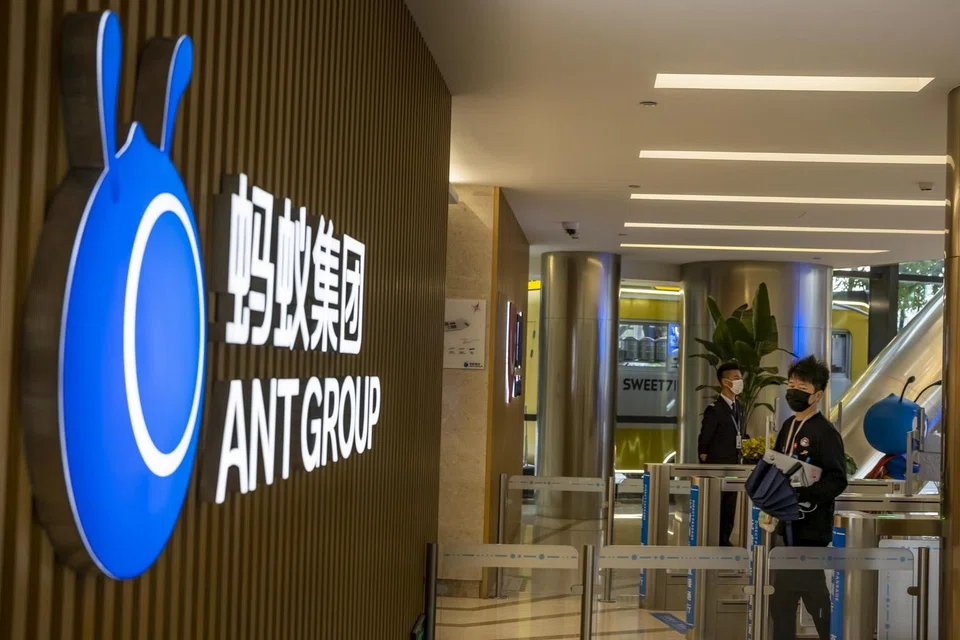
ONE of the early signs that the Ant Group's US$35 billion initial public offer (IPO) had hit a snag was the curious tearing down of all its advertisements from billboards across Shanghai Metro stations before its scheduled Thursday debut. Reason: their contents allegedly promote unwelcomed values that encourage advanced consumption.
Ant's simultaneous dual listing on China's Shanghai Star Market and Hong Kong Stock Exchange was arguably the holy grail and ultimate validation for Jack Ma's fintech, an operator of China's largest mobile payment application by volume, Alipay. But all that came crumbling late on Tuesday, when China slammed the brakes on its debut on grounds that Ant may not meet listing qualifications and disclosure rules.
While politics may be at play, there could also be more urgent fundamental reasons.
Chinese regulators want to send out a strong message to fintechs in the financial space - that they will not allow any innovation, no matter how appealing, to threaten the banking system and, lest you forget, they are still the boss.
China's move on Ant came a day after four Chinese regulatory bodies, led by the People's Bank of China, held a meeting on Monday with top Ant executives including Mr Ma, who in 2011 spun Ant out of Alibaba, the e-commerce titan he founded.
The meeting also included representatives from the China Banking and Insurance Regulatory Commission (CBIRC), the China Securities Regulatory Commission and the State Administration of Foreign Exchange, the currency regulator.
That day, the CBIRC released a consultation draft for regulating the businesses of online microloan companies, which are typically used by certain fintech platforms for co-lending partnerships with banks. The new draft tightens the rules further, notably on minimum registered capital, maximum allowed leverage, substantially lifted thresholds to qualify nationwide operations, and centralised supervision by CBIRC.
A week ago, Mr Ma criticised traditional banks as "pawnshops" and mocked the Basel Accord, which regulates the global banking industry, as an "elderly club". He said "systemic risk" is not the issue in China. Rather, China's biggest risk is that it "lacks a financial ecosystem".
Ant's debut was set to be the largest in history, attracting more than US$35 billion in proceeds. Saudi Aramco's IPO did not even come close at US$29.4 billion, and neither did Alibaba's at US$25 billion. The dual listing would have given Ant a valuation of more than US$310 billion, making it more valuable than most global banks, a reflection of the giddy growth of fintechs in the financial space as they rise, unencumbered by legacy banking systems and without being subjected to banking rules.
Over the past decade, fintechs boomed within the mainland when rules were lax. This resulted in the rapid digital adoption seen in China today, where e-payments have replaced cash transactions. However, in recent years, regulators began to focus on stabilising the system and reining it back to prevent systemic risks, and potentially a repeat of 2008 global financial crisis.
Unsecured credit a sticky point
Ant, a fintech, started off in the e-wallet mobile payment space. Its Alipay app has become a key payment tool for more than 730 million users. Trouble began when it ventured into this microcredit space and became very successful in offering consumer and small business loans, insurance and investment products - new pillars that leveraged its Alipay customers but encroached into the financial business of traditional state-owned banks.
Its phenomenal growth reflected the gap that was unfulfilled by traditional banks, which left 80 per cent of the population without access to credit. Its lending model was to give credit to that 80 per cent of the population that the banks did not want. As a fintech, it did not have to use the parameters set by regulators.
It gave out loans based on big data, a behavioural model that looked at an applicant's spending pattern, rather than income. Not surprisingly, it has touched the nerves of regulators which have stressed stability as priority. This lending was one sticky point from start.
The situation was aggravated when Ant started selling asset-backed securities (ABS) to banks, and approaching 100-odd banks to lend money to its Alipay customers. According to the prospectus, as of the end of June, about 98 per cent of Ant's credit came from these 100-odd cooperative banks.
Fintech or bank?
Should Ant, which started off as a fintech, be considered a bank now that it is offering bank-related services? If so, it should be subject to the same banking rules including capital and leverage requirements.
The timing of China's intervention is most unfortunate. Mr Ma's remarks certainly did not help. The news will hurt China and Hong Kong stock markets for a while as a wary China comes down hard on Ant.
Ant's IPO is not off the table. It needs to show its business model meets the new rules, and address concerns over the leverage of its lending portfolio. According to its IPO prospectus, Ant's consumer lending balance was 1.7 trillion yuan (S$346 billion) at the end of June, or 21 per cent of all short-term consumer loans issued by Chinese deposit-taking financial institutions. But only 2 per cent of the loans it had facilitated were on its balance sheet. This is worrisome.
Investors' confidence in China IPOs may take some time to heal. In the past, concerns about China investments were mostly related to governance issues. China's latest muscle flexing, unfortunately, has introduced another element of risk for China investment - government and political intervention. Unfortunately for Ant, it is the first to bear the brunt of the pain caused by reforms as regulators grapple with the rapidly evolving fintechs.
TRENDING NOW

Grab CEO’s wife Chloe Tong on life with Anthony Tan and finding her purpose
Stocks to watch: DBS, DFI Retail, Frasers Property, Clint, ESR-Reit, Centurion, Coliwoo
DFI Retail to bag US$340 million, Starbucks business in Asia in deal with Maxim’s Caterers
Green fuels, autonomous ships: How Singapore is future-proofing its shipping industry

