
TOPLINE

Apac Realty sees advantage in its ‘ultimate agent training’ and a super-app to help with analytics

Corinne Kerk
Published Mon, Jan 2, 2023 · 05:50 AM
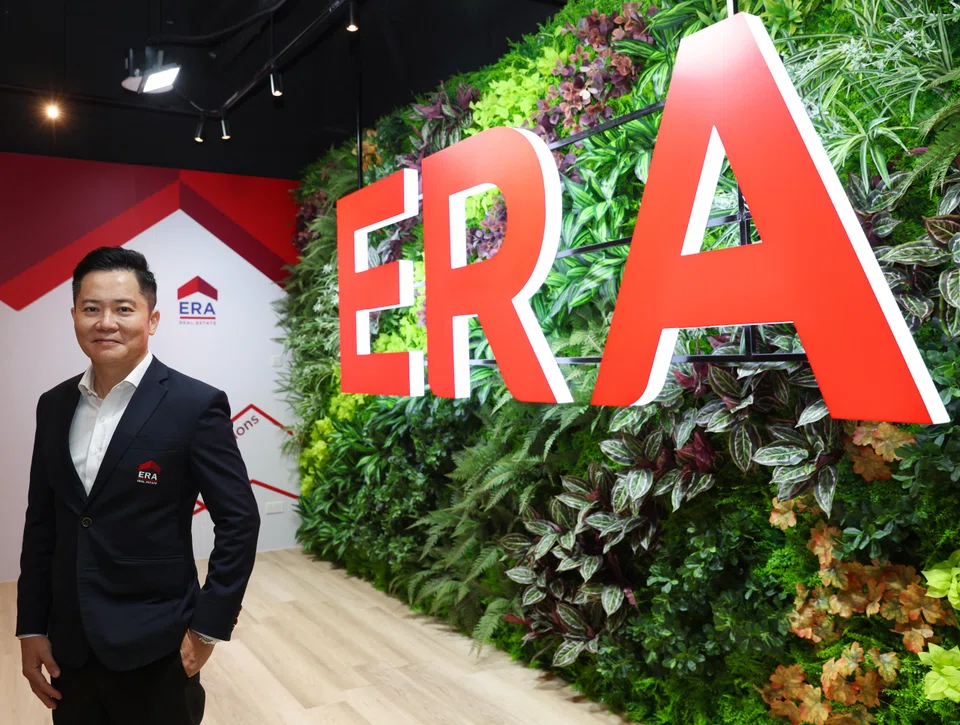
    • Marcus Chu, chief executive of real estate services provider Apac Realty, sees resilience in the property market for both new project sales and resale homes in 2023.
    • Marcus Chu, chief executive of real estate services provider Apac Realty, sees resilience in the property market for both new project sales and resale homes in 2023. PHOTO: YEN MENG JIIN, BT

    THE way Marcus Chu talks about them, you would think ERA Realty’s agents sell financial products rather than properties. They do not, of course, but with a home ownership rate of 88.9 per cent in Singapore, it’s clear why building wealth through property is a skill Chu is keen for the company’s agents to hone.

    The chief executive of real estate services provider Apac Realty , which operates the ERA brand in Singapore and Asia-Pacific, Chu is a consummate marketer who peppers his answers with rhetorical questions. In an interview with The Business Times, he says he is determined to beef up his sales force through training and digital technologies.

    The training programmes ERA offers agents carry names such as “Ultimate Agent Training”, “Wealth Creation Masterclass” and “Ultimate Transformation Leadership Camp”, all of which are meant to hone their hard and soft skills in closing property deals.


    The wealth creation masterclass, for instance, teaches agents about investments and how they can help clients build their wealth through asset progression – either growing the size or the number of properties owned.

    The leadership training camp involves improving agents’ emotional intelligence, changing their mindsets, helping them discover their inner strength and even managing their emotions.

    Chu is also pushing hard on the property technology (proptech) front in order to condense Singapore’s plethora of property data to feed a content-hungry marketplace. The company invested some S$3 million in proptech solutions last year, with a commitment to invest another S$5.2 million in 2023. It has also almost doubled its tech team headcount to about 30, and developed a proprietary mobile phone application called Sales+.

    The latter, he says, will be its game-changing “super app”. It offers solutions that reduce agents’ pain points, so they can reach out to and serve customers more efficiently, and focus on converting prospects to sales.

    Among other things, the app allows agents to customise and automatically share relevant content on the property market, create a personal website quickly, watch training videos, monitor clients’ interest levels in different kinds of properties, and access data analytics.

    ERA also has a separate app for homeowners called RealtyWatch, which alerts them to transactions in their neighbourhood and provides information on new project launches, resale homes and mortgage rates.

    But isn’t every agency trying to create its own proptech?

    Chu acknowledges the competition but says this is a good thing as more technology helps agents and customers, adding: “It’s about progression, isn’t it?”

    For the nine months ended Sep 30, mainboard-listed Apac Realty reported earnings of S$23.9 million – down 8.5 per cent from the year-ago period. Total revenue fell 3 per cent year on year to S$527.5 million, with the decline largely due to a 4.8 per cent year-on-year drop in resale and rental brokerage revenue to S$310.2 million.

    New home brokerage revenue slipped 0.6 per cent to S$210.1 million.

    Chu isn’t worried, however, as he believes 2022 was coming off what he says was a “super bull run” in 2021.

    Besides, he says, Apac Realty’s focus is on long-term sustainable market share. ERA’s market share of non-rental residential transactions stood at 40.1 per cent as at end-September, similar to the 40.2 per cent at the same time last year.

    “And we intend to capture more market share,” he said.

    He plans to achieve this through recruiting more agents. ERA is Singapore’s second-largest agency with close to 8,500 agents as at late-November. It is offering new salespersons a welcome package worth some S$2,000, and experienced ones a package worth about S$5,000.

    ERA will also roll out a brand refresh this year.

    Chu sees resilience in the property market in both new project sales and resale homes in the coming year. ERA expects developers to have sold some 7,800 new homes in 2022, and forecasts 8,000 new home sales in 2023. As for private resale transactions excluding executive condominiums, it is expecting a volume of 14,200 for 2022 and a slightly higher 14,300 in 2023.

    In the public housing segment, ERA is forecasting total resale volume of 27,300 flats in 2022, and 28,000 in 2023.

    Chu isn’t losing sleep over the government’s property cooling measures, either. He likens these to vaccinations – causing short-term reactions that are ultimately good for the market’s long-term sustainability, as they prevent prices from running ahead of economic fundamentals.

    Outside of Singapore, Apac Realty – which holds the ERA regional master franchise rights for 17 countries in the Asia-Pacific – currently has a footprint in 10 countries.

    With more than 21,000 agents across 646 offices, they make up just over half the 40,500 global ERA agent network. This is up from 16,300 agents in early 2020. Chu says Indonesia and Vietnam are its most promising markets, thanks to factors such as growing economies and a younger population.

    For someone who has been in the property industry for 26 years – he started out as a sales agent in ERA, clinching top achiever awards and climbing the ranks to become its chief executive in July last year – Chu is convinced the agency that provides the best value in terms of tech tools will be the agency that endures.

    A look of determination flashing across his face, he said: “We are building an agency that lasts. Isn’t that important?”


