

AR Capital to target AI beneficiaries, ‘dividend growers’ in new EQDP fund
Company says it stands out from the pack by having global analysts and fund managers work as a single integrated team

[SINGAPORE] As fund managers under Singapore’s Equity Market Development Programme (EQDP) crowd into similar strategies, AR Capital believes its globally integrated research team and focus on artificial intelligence beneficiaries and “dividend growers” can help it stand out.
The independent home-grown fund manager is preparing to launch its “AR Majulah SG Fund” in June, after having been selected as one of six managers in the second batch of firms under the EQDP; another batch is expected to be named in the coming weeks.
Unlike larger firms which spread their expertise across the world, AR Capital said its differentiating factor lies in how its analysts and fund managers operate as a single integrated team in Singapore.
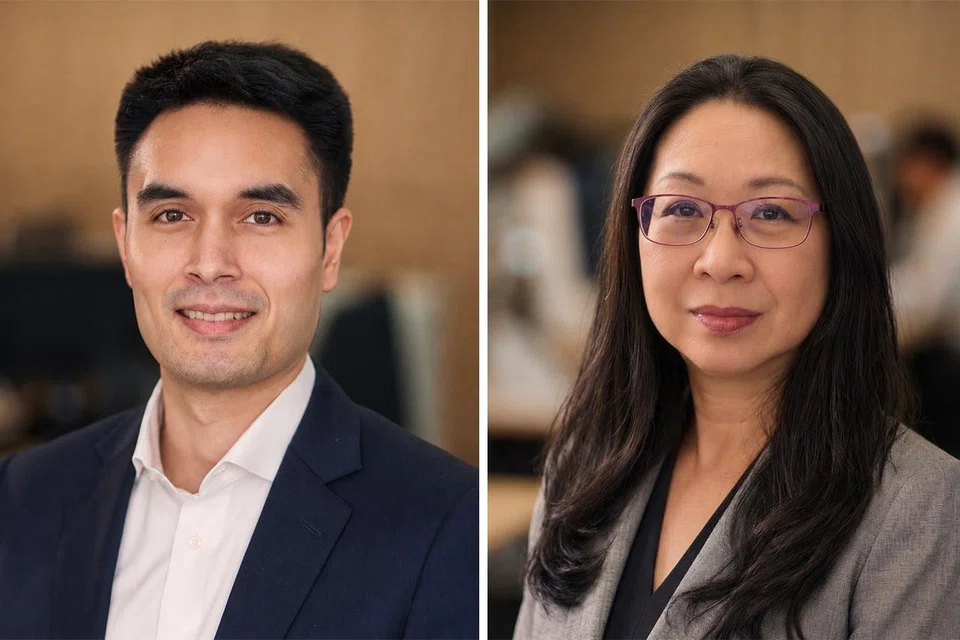
Millicent Lai, executive director for investment at AR Capital, said: “We are different in the sense that we bring deep global experience in sectors such as technology, healthcare and commodities, and that helps us to identify secular growth trends early.”
This means that an analyst covering a sector such as healthcare globally would analyse both US and Singapore firms, enabling insights from global markets to be applied to local stocks.
The fund itself carries a distinctly local identity. Lam Min Hwui, the fund’s lead analyst and an investment director at AR Capital, said the name “Majulah” was taken from Singapore’s national anthem and means “onward” or “forward”; it was chosen to reflect progress, advancement and confidence in the future of Singapore’s equities market.
He added that the name also aligns closely with the objectives of the EQDP, which aims to strengthen Singapore’s equities market by channelling capital into local companies and supporting the broader ecosystem.
The name of the fund emerged from an informal competition held within the firm.
Three key focus areas
The AR Majulah SG Fund will be a long-only, actively managed equity fund built through bottom-up stock selection.
Its portfolio will be structured around three groups of stocks: secular growth companies, corporate value-unlock opportunities and dividend growers.
The first group comprises companies exposed to long-term structural growth trends that can continue expanding over market cycles, regardless of broader economic conditions. These are typically linked to themes such as digitalisation, AI infrastructure, innovative healthcare and advanced manufacturing.
Lam said such stocks are critical to long-term outperformance, as they can deliver earnings growth above the broader market over time.
The next category of stocks that AR Capital’s upcoming EQDP fund will home in, the corporate value-unlock opportunities, would include companies undergoing portfolio rationalisation, improvements in capital return programmes, strengthening of corporate governance or enhancing of shareholder disclosures.
He also sees AI adoption as an under-appreciated value driver for Singapore companies.
“A lot of companies can unlock value through adoption of AI as we operate in a structurally tight labour market,” he said.
With more businesses focused on improving productivity, Lam said this positions local companies as potential beneficiaries of AI adoption, particularly when compared with software-heavy markets in which firms may face disruption risks.
The final pillar of the strategy, focusing on “dividend growers”, would consider companies capable of delivering sustainable dividend growth over time, supported by resilient demand drivers and durable business models.
Lam noted that this provides both defensiveness in periods of market volatility and long-term compounding potential.
“For us, we don’t really care about the headline yield as much. What we care about is the sustainability of the dividend growth,” he said.
He added that companies that are able to grow dividends consistently tend to operate in markets with resilient demand or structurally strong industries, which enable steady cash flow generation over time.
Lam cited Singapore as an example, noting that the market has historically remained resilient even during periods of geopolitical stress, such as the ongoing Middle East conflict, supported in part by its relatively attractive dividend yield profile.
He noted that Singapore equities as a whole have a relatively high dividend yield, which contributes to their defensive characteristic.
“With that defensiveness, if you couple it with the ability to grow your earnings consistently over time, then you have both (long-term growth and stable dividends),” he said.
Many of these companies fall within the “Halo” (heavy assets, low obsolescence) category. These are firms that own significant physical or tangible infrastructure that is difficult for AI to disrupt or replicate, so their stocks are increasingly viewed as a hedge against AI-driven volatility in software and technology markets.
Amid global concerns around AI’s potential to displace companies and labour, Lam said Halo assets are inherently harder for AI to replace due to their physical and capital-intensive nature.
He noted that the Singapore equities market has a significant weight in industrial and financial companies, many of which are less exposed to AI-driven disruption but still stand to benefit from AI adoption through productivity gains.
AR Capital said the fund will invest in both Singapore-listed companies and “Singapore Nexus” companies, as the strategy is not defined by rigid geographic splits.
These include firms with a meaningful connection to Singapore, such as global intellectual property developed locally, companies originating from Singapore, management teams based in the country, or businesses that operate facilities here.
The focus, Lai noted, is on companies that Singapore seeks to attract and develop over time, including those with potential for future listings. The pipeline includes regional and global firms, particularly in sectors such as technology, healthcare and data infrastructure.
She noted that while the fund does not specifically target small and mid-cap companies, its focus on less-researched businesses often naturally leads it towards that segment of the market.
Some EQDP managers, by contrast, allocate a defined portion of their portfolios to small and mid-cap companies.
For instance, Manulife Investment Management’s Singapore All-Cap Equity strategy allocates about 40 per cent of its portfolio to small and mid-cap companies, while maintaining significant exposure to large-cap names.
The Singapore equity strategy of another fund manager, Avanda, has allocated about half its portfolio holdings to mid-caps in the range of S$500 million to S$5 billion in market capitalisation.
So far, the S$6.5 billion EQDP initiative has committed S$3.95 billion to nine asset managers.
TRENDING NOW

Philippine power giant First Gen rebuffs foreign offers, plans up to US$2.6 billion in expansion
Cliff Tan has 7 million followers and a 4-month waitlist. Why won’t he expand his business?

Could stablecoins be the future of money?
From finance aspirant to Asean CEO: TUV SUD’s Jonas Strahberger on finding people who believe in you

