Are high dividend yields in the Singapore market blinding investors to chronically low total returns?

INVESTORS in the Singapore market celebrated increased dividend payouts this past week.
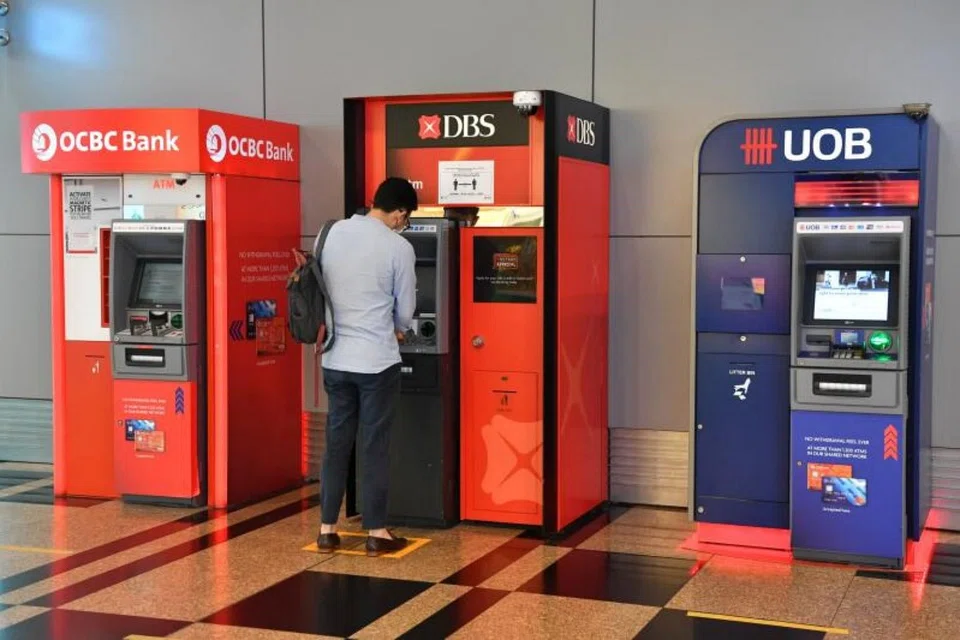
Specifically, the three local banks - DBS, OCBC and UOB, which have a combined weight of nearly 44 per cent in the Straits Times Index (STI) - announced significant hikes in their interim dividends for 2021 with their Q2 2021 financial reports.
This came after the Monetary Authority of Singapore (MAS) said on July 28 that it had lifted restrictions imposed on bank dividends last year in the face of the Covid-19 pandemic.
MAS had told all local banks and finance companies last year to cap their total dividends per share (DPS) at 60 per cent of FY2019's level. It called the move a "pre-emptive measure" to ensure the financial institutions maintained a strong capacity to lend and support the economy through the pandemic.
With economic activity picking up now, and provisions for bad loans coming down quickly, all three banks have wasted no time in hiking their interim dividends back to at least their pre-pandemic levels.
DBS said it would pay a DPS of 33 cents for Q2 2021. The last time it paid a quarterly dividend this high was for Q1 2020, before the dividend caps were imposed. Together with the DPS of 18 cents it already said it would pay for Q1 2021, its total H1 2021 dividend is 51 cents per share.
DBS paid a total DPS of 87 cents for FY2020, and 123 cents for FY2019.
OCBC said it would pay a DPS of 25 cents for H1 2021, equivalent to its DPS for H1 2019. OCBC paid a total DPS of 31.8 cents for FY2020, and 53 cents for FY2019.
Then, there was UOB: it hiked its H1 2021 DPS to 60 cents, which is even higher than its H1 2019 DPS of 55 cents. UOB paid a total DPS of 78 cents for FY2020, and 130 cents for FY2019.
These dividend hikes had a positive impact on their share prices. DBS, OCBC and UOB closed Friday with gains for the week of 1.9 per cent, 1.3 per cent and almost one per cent, respectively.
The STI closed 0.3 per cent higher for the week.
Given that all three banks have capital adequacy ratios that are as robust as they were before the onset of the pandemic, and assuming there is no significant rollback in their profitability, many investors will probably be hoping for further dividend hikes from the banks later this year.
Dividend-driven returns
Investors in Singapore love dividends, of course. And, perhaps because of that, the Singapore market is a dividend haven of sorts.
As at end-July, the STI offered a dividend yield of 3.18 per cent -- significantly higher than the FTSE All-World Index's 1.7 per cent and the S&P 500 Index's 1.37 per cent.
Reflecting the apparent hunger for yield in Singapore, seven of the 30 component stocks of the STI currently consist of real estate investment trusts (Reits).
But has this apparent addiction to yield served Singapore investors well?
During the 10-year period to July 30, the STI returned 39.8 per cent with dividends reinvested. If dividends were not reinvested, the STI's total return would have been 32.6 per cent.
Excluding dividends altogether, the STI's total return was minus 0.7 per cent.
In other words, investors would have essentially earned nothing from owning this basket of leading Singapore stocks had it not been for their dividends.
No doubt, the economic disruption caused by the Covid-19 pandemic has weighed on the STI's total return since last year. But dividends were a big contributor to the STI's total return even before 2020.
During the 10-year period from end-2009 to end-2019, a period that excludes the worst of the Global Financial Crisis and the onset of the pandemic, the STI delivered a total return of 54.3 per cent with dividends reinvested, or 46.9 per cent if dividends were not reinvested.
Excluding dividends, the STI would have returned only 11.2 per cent.
Retained earnings risks
One possible conclusion from these statistics is that investors in Singapore are right to focus on dividends, because these cash payouts account for the bulk of the return they get from owning local stocks.
Another possible conclusion, however, is that Singapore companies have delivered poor total returns, and they have placated investors with high dividend yields.
The FTSE All-World Index generated a total return over the past decade of 177.6 per cent -- more than four times the STI's total return. Dividends accounted for just over one-third of this total return.
The S&P 500 Index did even better - it returned 316.5 per cent, with dividends accounting for less than a quarter of this total return.
Why have Singapore companies performed so poorly? And, what can be done about it?
Faced with technological disruption, a steep slump in commodity prices, aggressive property cooling measures as well as the pandemic, many Singapore companies have struggled to make profitable use of their retained earnings over the past decade.
Interestingly, Singapore's Reits, which have to pay out the bulk of their income to qualify for tax transparency, have done far better than the STI. The FTSE Straits Times Reit Index chalked up a total return with dividends reinvested of 133.6 per cent over the last decade -- well over three times the STI's total return.
Dividends: cut or hike?
Under the circumstances, investors ought to push corporate boards to review their dividend policies and the manner in which capital expenditure programmes are approved.
It may be appropriate, in some instances, to demand that companies disgorge any idle cash on their books, so that even run-of-the-mill capital expenditure is subjected to market discipline.
On the other hand, it may be sensible to allow some companies to slash their dividends in order to facilitate expansion into promising new fields.
Much will depend on specific factors -- not least among them the track record and credibility of a company's board and top management. In the end, investors need to be confident that companies are making good use of any earnings they retain.
What about the local banks? On a positive note, they have delivered total returns over the past decade on a dividends reinvested basis that were more than twice that of the STI -- nearly five times in the case of DBS.
Yet, even with these solid outperformers, dividends accounted for more than half their total returns -- actually, more than two-thirds in the case of OCBC and UOB.
Given that the banks are oligopolistic and tightly regulated, there is probably little scope for them to unilaterally boost their profitability by rolling back their conservative capital adequacy ratios.
Still, investors should consider if their boards are doing enough to diversify away from the most price competitive segments of their business and lower costs.
Increased dividends should not distract investors from pressing Singapore companies for better total return performance.