

As developers brace for tighter margins, it's time to rethink their traditional business models

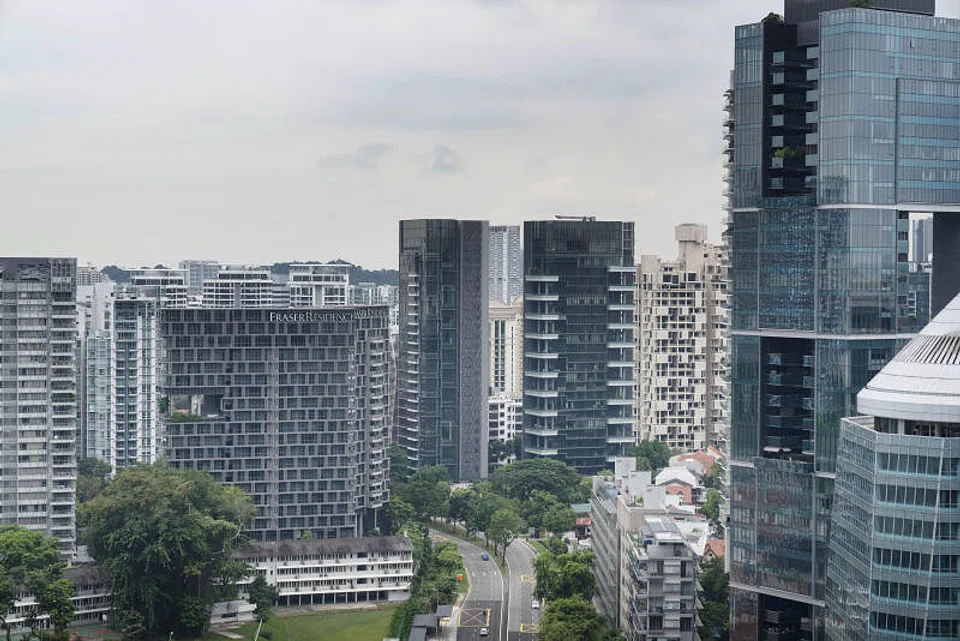
THE latest Government Land Sales (GLS) tender closings point to a continuation of thin profit margins in the Singapore residential property development business.
The tenders for a private condo plot along Ang Mo Kio Avenue 1 and the maiden executive condominium (EC) housing plot in the Tengah estate drew intense competition from developers who are running out of land amid healthy home sales.
The top bids for both 99-year leasehold land parcels beat market expectations, with the plot in Tengah Garden Walk setting a record price for EC land. ECs are a public-private housing hybrid.
The private condo site along Ang Mo Kio Avenue 1 received a top bid from a consortium led by UOL Group of nearly S$1,118 per square foot per plot ratio (psf ppr).
No doubt, it is in a nice residential locale, a stone's throw from the Bishan-Ang Mo Kio Park and in the vicinity of highly-sought- after schools including CHIJ St Nicholas Girls' School and Ai Tong School. But the top bid was almost as high as the S$1,129 psf ppr top bid for a city-fringe plot, near Farrer Park MRT Station, at a state tender that closed in April.
That city-fringe site would typically have been accorded a higher valuation, given that it includes a commercial component at the first storey.
The second plot, in the new estate of Tengah in the western part of Singapore and designated for an EC development, drew a top bid of S$603 psf ppr from a tie-up between City Developments and MCL Land.
Having paid such high land prices, the developers of the two sites will probably try to launch their projects at prices that will set fresh record highs in their respective segments.
The final breakeven costs and selling prices of the two projects will depend on many factors, including construction costs and whether there is a roll-out of fresh cooling measures.
For now, some analysts and market watchers are assuming that the top bidders would be looking at pretax profit margins of around 10 per cent.
This seems like a lot of risk to bear vis-a-vis the returns.
What can local property developers do to lift their profitability in the face of such thin profit margins from private housing projects in Singapore?
One traditional solution is to expand overseas. Another is to develop recurring income streams, principally, rental income from holding investment properties such as office, retail and industrial assets or income from operating hospitality assets.
Despite cyclical ups and downs, this was generally a good diversification strategy for developers here. Consequently, developers have generally done well holding investment properties on their books.
However, the Covid-19 pandemic may have changed things. There is little certainty now about when the travel curbs that have been weighing on hotel properties will be lifted.
The pandemic has also accelerated online shopping and e-commerce, pointing to less need for physical retailing space.
As for offices, it remains to be seen to what extent work-from-home and hybrid work models will affect leasing demand.
Opportunities in eldercare
Within the industrial property segment, logistics assets and data centres have been key beneficiaries from the pandemic. Some local developers may want to have some exposure, or greater exposure, to this sector.
Beyond that, there may also be opportunities to cater to the greying population. There will be scope for the private sector to develop assisted living or nursing care facilities to complement what is being done by the public sector.
The path for private-sector participation in this particular field has not always been smooth though.
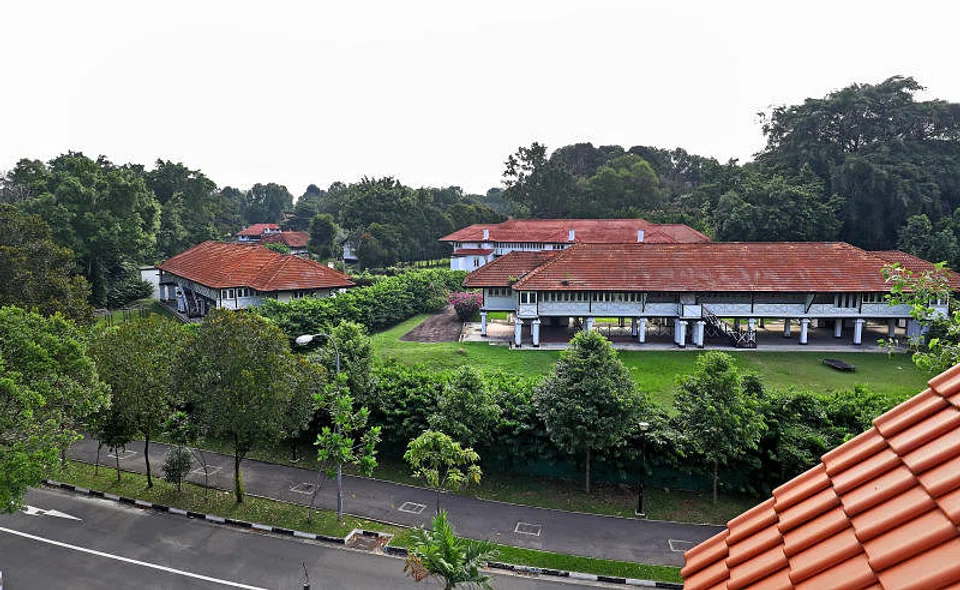
Back in July 2019, the government launched a tender for a sprawling site along Gibraltar Crescent in the Sembawang area, for a proposed dementia care village. When the tender for the 30-year leasehold site closed in January 2020, it drew just one bid - from a partnership between Perennial Real Estate Holdings and Orpea, a leading European player in global dependancy care.
The authorities found their concept proposal acceptable; nevertheless the site could not be awarded as the bid price of S$15 million was deemed too low.
It probably would not make sense for a private-sector developer or operator of an eldercare facility to pay a high land price if the idea is not to sell units in the facility.
As JLL Singapore senior director Ong Teck Hui said in a feature in BT Weekend in April: "The conventional develop-and-sell model for typical GLS residential sites which is oriented towards profit maximisation and drives up prices, is unlikely to work if the purpose is to provide affordable long-term care facilities to a wider spectrum of the elderly."
Instead, a develop-and-operate model would be a better fit for a venture that relies on long-term revenue.
Hence, what is needed is a different land price payment model that will not saddle the developer of a long-term care facility for seniors, with high upfront land cost.
The BT Weekend feature suggested that the authorities consider the model adopted by JTC Corporation.
When JTC allocates land, industrialists are given a choice of either paying an upfront lump sum land price for, say, a 30-year lease term; or a monthly land rent over that period.
The option of paying land rent - also know as ground rent - helps ease cashflow for businesses.
The authorities could adopt a similar approach when allocating or selling land for private-sector development of eldercare facilities. Having some flexibility on how land price has to be paid could help make this a feasible business.
The result could be some local residential property developers branching out into the development and operation of facilities catering to seniors, based on a recurring income model, unfettered by high upfront land cost.
Developers could tie up with seasoned operators of such facilities overseas, to bid for sites such as the Gibraltar Crescent plot earmarked for a dementia care village.
Beyond finding a new revenue stream, Singapore developers may also find it fulfilling to serve a real and growing need in Singapore's rapidly ageing population scene.
READ MORE:
TRENDING NOW

Knight Frank’s Tan Tee Khoon leaves firm, Nicholas Keong takes over auction business

Keppel Energy, Sembcorp Utilities and Tuas Power to supply biomethane in pilot project

GovTech retrenches another 38 staff in second round of layoffs
Take-up of new private homes dives 45% in Q3 as prices accelerate with 1.4% rise

