

Ascendas Reit expects low single-digit rent reversions in FY21
Singapore
THE manager of Ascendas Reit has signalled a continued flattish to low positive single-digit rent reversion for its portfolio in Singapore, Australia, United Kingdom and United States in FY21.
For FY20, the industrial landlord's portfolio recorded positive average rental reversion of 3.8 per cent for leases that were renewed, in line with its earlier guidance.
Its Singapore portfolio saw an average rent reversion was of 3.1 per cent, although this was not equal across subsectors. For instance, rent reversions at its high-specification industrial and data centres and logistics and distribution centres were -2.6 per cent and -7.9 per cent, respectively.
William Tay, CEO of the manager, said in an earnings call with media and analysts that the steep negative reversion for logistics properties was partly due to ample supply in the market and competition for tenants. Some sectors are also struggling still. The real estate investment trust (Reit) has a freight forwarder tenant occupying a logistics warehouse that is experiencing difficulties in its business, for example. Other tenants that reported negative reversions came from a range of sectors including IT, communication, and equipment. In contrast, technology, biomedical and network companies have reported some of the most positive rent reversions.
In FY21, excess supply in some industrial property segments, some delayed from FY20, is expected to curb rental growth, as tenants regain bargaining power with a wider array of leasing options.
Meanwhile, its US and Australia portfolios posted strong 16.6 per cent and 14 per cent rent reversions in FY20, but these are likely to moderate to single-digit in FY21, Mr Tay said.
Ascendas Reit posted a lower distribution per unit (DPU) of 7.418 Singapore cents for its second half ended Dec 31, 2021, compared to 7.485 Singapore cents a year ago. This was on the back of a larger unit base following its rights issue, private placement and preferential offering in late 2019 and late 2020.
The DPU will be paid March 9, 2021; books close on Feb 10, 2021.
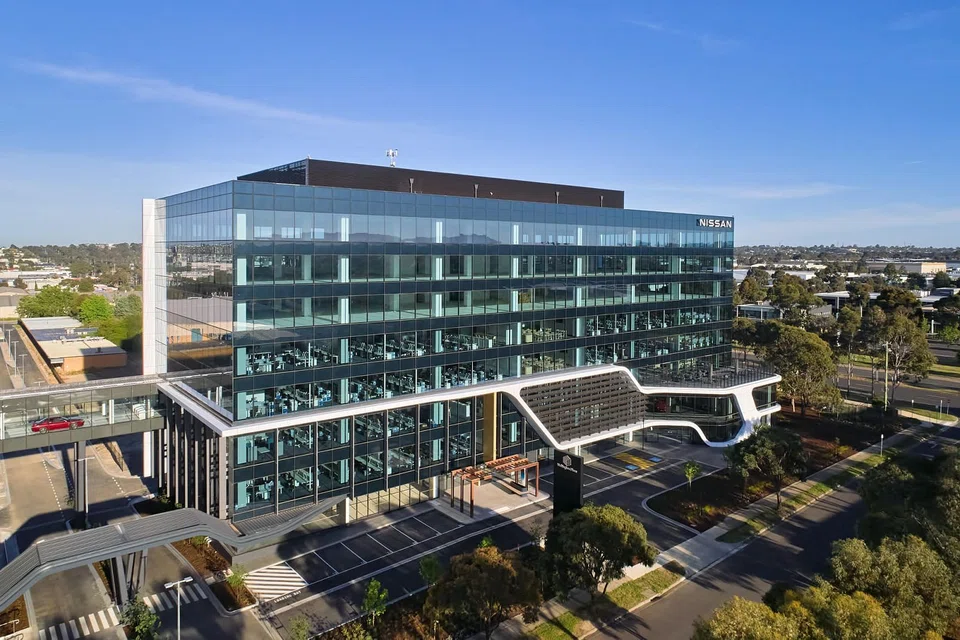
For the six months, gross revenue rose 12.5 per cent to S$528.2 million, mainly due to contribution from its US portfolio of 28 business park properties and two Singapore business park properties acquired in December 2019, as well as the purchase of two San Francisco properties in November 2020, and completion of 254 Wellington Road, a suburban office building in Melbourne in September 2020.
This was partially offset by lower occupancies at certain properties, rent rebates provided to eligible tenants in FY2020, and other divestments and redevelopment.
Net property income rose 7.8 per cent to S$388.2 million, while distributable amount added 9.9 per cent to S$275.2 million.
For the full year, DPU came in at 14.688 Singapore cents, lower than the 15.638 Singapore cents paid out a year ago. Accentuating the DPU drop was the distribution of rollover adjustments from prior years of S$7.8 million (equivalent to a DPU impact of 0.25 cent per unit) in FY19, owing to some tax rulings on the non-tax deductibility of certain finance costs in prior years.
Distributable income rose 6.7 per cent to S$538.4 million. Gross revenue rose 13.6 per cent to S$1.05 billion, while NPI gained 9.4 per cent to S$776.2 million.
In FY20, the manager gave S$17.8 million of rent rebates to help tenants facing challenges caused by Covid-19, on top of the government's property tax rebates and cash grants which were fully passed through to eligible tenants. There was also rent deferment of about S$4 million from tenants who requested for it.
Units of the Reit ended S$0.03 or 0.98 per cent higher at S$3.10.






