Ascott Reit Q4 DPU dips
Singapore
HOSPITALITY Reit Ascott Residence Trust (Ascott Reit) reported a 7 per cent drop in its distribution per unit (DPU) to 1.93 Singapore cents for the fourth quarter ending Dec 31, 2016. This was from 2.07 cents a year ago, after the Singapore-listed real estate investment trust adjusted for a one-off item. Removing that one-off item, the DPU for the quarter still dipped, but by only one per cent to 2.04 cents.
Despite this, its balance sheet remains strong with revenue, profit and distributable income all up.
Gross revenue for the quarter increased by 6 per cent to S$126.75 million while gross profit for the quarter went up 3 per cent year on year to S$58.2 million.
Distributable income also rose; by 6 per cent to S$33.9 million, up from S$32.1 million the year before.
This was revealed by Ronald Tay, CEO of the Reit manager, on Tuesday.
On a yearly basis, Ascott Reit's distributable income for FY 2016 grew 9 per cent to a record high of S$135 million, while DPU rose 4 per cent to 8.27 Singapore cents.
This came on the back of a net realised exchange gain of S$2 million arising from the repayment of foreign currency bank loans with the divestment proceeds from Fortune Garden Apartments in Beijing and the repayment of shareholders' loan from the group's subsidiaries.
Revenue for FY 2016 grew by 13 per cent to S$475.6 million, while gross profit increased by 9 per cent to S$222.2 million.
Ascott Residence Trust Management Limited's chairman Bob Tan attributed the strong performance to its acquisitions in 2015 and 2016.
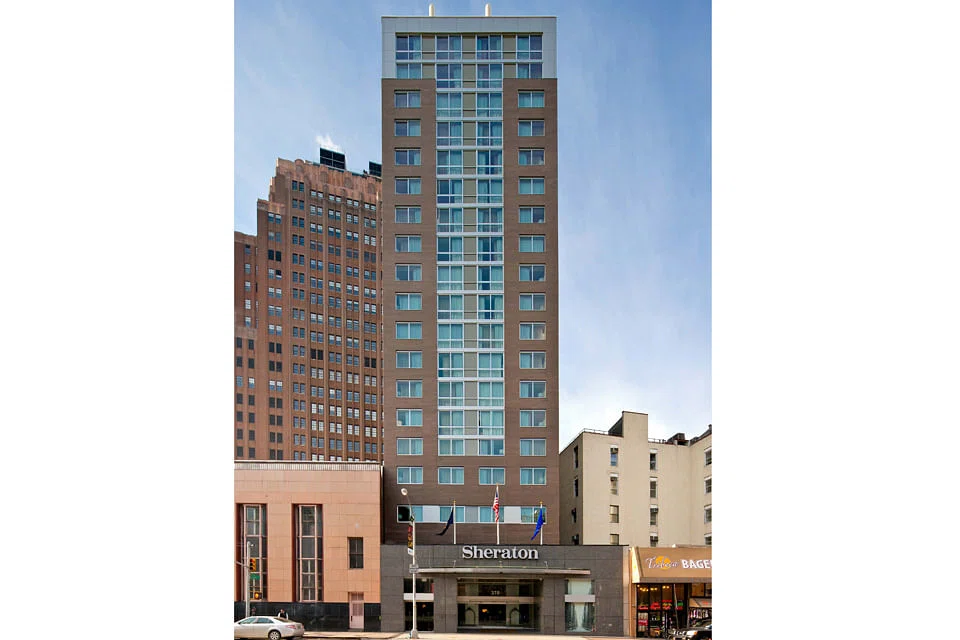
"We acquired Sheraton Tribeca New York Hotel last year, and our two prime properties in New York enjoy high average occupancy of over 90 per cent. The US market was our top contributor to revenue in 2016 and it is now amongst our top five markets in terms of asset value," he said.
Despite this, its portfolio value dipped 1.1 per cent to S$4.5 billion.
Speaking to a roomful of analysts and journalists, Mr Tay said that this was mainly because of lower valuation from properties in Britain and the United States due to higher property tax in the two countries. Fortunately, this was partially offset by higher valuations in Japan, Germany and Spain from better operating performance.
The last quarter's overall RevPau (revenue per available unit) was up 2 per cent year on year to reach S$148.
But better RevPau performance in Japan was slightly offset by weaker RevPau performance in China and the US during this period. Singapore RevPau was also muted because of a slowdown in corporate demand. It was down one per cent year on year to reach S$175.
On the China properties, Mr Tay said that the decrease in revenue and RevPau was mainly due to weaker demand in the regional, or what he referred to as "second tier", cities.
"While properties in Shanghai and Guangzhou continue to outperform, those properties in Xian, Wuhan and Shenyang carried on seeing downward pressure in terms of demand, and exacerbated by continuing supply of the three and four-star hotels, competing for our clients indirectly," he said.
Mr Tay revealed that Ascott Reit is "exploring the possibility of divesting some of the properties in these second-tier cities in China, especially those where there is no turnaround in the next one or two years". "We will recycle those assets," he said.
Despite that, China still remained Ascott Reit's second key market in Q4 of FY2016, contributing 14.4 per cent to the group's gross profit.
As at end-December, Ascott Reit's gearing stood at 39.8 per cent.
Leveraging on the robust health of Ascott Reit's balance sheet, both UOB Kay Hian and DBS Vickers are keeping their "buy" calls. In its report, UOB Kay Hian's "buy" recommendation has a target price of S$1.30 per share.
At the close of the market on Tuesday, units of Ascott Reit were listed as 1.28 per cent higher at S$1.185.
Ascott Residence Trust is a wholly owned subsidiary of The Ascott and an indirect wholly owned subsidiary of CapitaLand, one of Asia's largest real estate companies.
It manages Ascott Reit, which has a property portfolio that primarily covers serviced residences or rental housing.
As at Dec 31 last year, it has 90 properties with over 11,000 unitsin 38 cities.