Ascott Reit sees drop in bookings from Wuhan virus, has limited exposure to China
Its Q4 2019 DPS is up 6%, propped up by S$13.5 million from divestment gains

Singapore
ASCOTT Residence Trust (ART) expects a short-term impact on its portfolio, with global travel reduced as a result of the novel coronavirus situation, and it has already seen some cancellations in bookings and a drop in forward bookings since the start of this year.
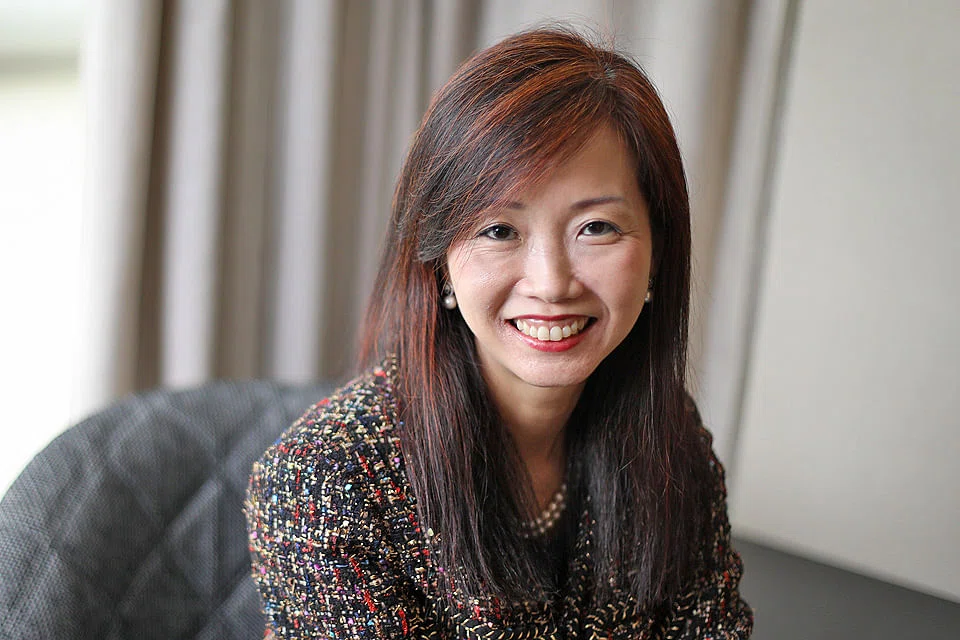
But the chief executive of the Reit manager Beh Siew Kim stressed at its results briefing on Thursday that the Reit has a diversified portfolio, so it will be able to ride through the short-term pain, even as it stands to gain from the medium- to long-term trends of increased business travel.
She added that bookings were in fact up year on year at the start of 2020, before news of the virus broke. Cancellations began "in the last week or so".
The Reit's properties in China made up 7 per cent of its overall portfolio as at end-December 2019, and following its divestment of Citadines Zhuankou Wuhan - a transaction expected to be completed by the first half of this yea - , its exposure to Wuhan and the Hebei province will be down to zero.
Chinese guests make up less than 10 per cent of the residents in its properties, and in its China assets, the average length of stay is about seven months. Excluding the Wuhan property, ART's occupancy is hovering at 60 to 70 per cent, she said.
She also believes that demand for serviced residences will be more resilient than that for traditional hotels because of the corporate focus and generally longer length of stay.
The Reit on Thursday reported that its distribution per stapled security (DPS) rose by 6 per cent to 2.27 Singapore cents for its fourth quarter ended Dec 31, from 2.15 Singapore cents a year ago.
The distribution was propped up by S$13.5 million in capital distribution to replace the loss of income from asset disposals, and to share divestment gains from the sale of assets such as Ascott Raffles Place Singapore.
Revenue was down 2 per cent to S$134.1 million for the quarter, from S$136.5 million a year ago, mainly due to the sale of Ascott Raffles Place Singapore and Somerset West Lake Hanoi.
Gross profit improved 3 per cent on the year to S$65.3 million for the quarter, from S$63.4 million a year ago.
Unitholders' distribution rose 6 per cent year on year to S$49.3 million, from S$46.5 million.
The distribution will be paid out on Feb 10, following the Dec 30 closure of the books.
For the full year ended Dec 31, DPS was 6 per cent higher at 7.61 Singapore cents, versus 7.16 cents the year before; unitholders' distribution was up 7 per cent to S$165.6 million, while gross profit improved 6 per cent to S$252.6 million for the full year.
ART is the stapled group formed after the combination of real estate investment trusts Ascott Residence Trust and Ascendas Hospitality Trust (A-HTrust). The merger was completed on Dec 31. Following that, A-HTrust was delisted from the Singapore Exchange and unstapled.
At the briefing, Ms Beh was quizzed by analysts on her plans for the Reit's debt headroom of S$1.5 billion and unusually low gearing of just 33.6 per cent. She replied that she sees buying opportunity in Europe, including Paris and the United Kingdom, as well as Japan, Singapore and Vietnam.
Asked about the possibility of expanding into US multi-family homes, she said: "It's a good portfolio because it's a very stable source of income, (and a) very well sought-after real estate in the US... It is very liquid... and of course from ART's perspective, we already have rental housing properties in our (Japan) portfolio."
She added that the length of such leases - at one to two years - is attractive, which adds to the stability of the Reit's income.
She said the leftover divestment gains can continue to replace some of the lost income, in the event that there are no imminent acquisitions.
The Reit had about S$190 million of divestment gains in 2018 and 2019, and has distributed only 16 per cent of it so far, including the latest announced S$13.5 million.
Units of the Reit closed flat at S$1.27.
READ MORE: Wuhan virus could score a point - off Singapore's economic growth
TRENDING NOW
One-third of Singapore-listed firms at risk in severe AI downturn: MAS
‘We don’t want to stay as we are’: CEO Patrick Ng builds a more resilient Huationg
He built the Vingroup empire. Now South-east Asia’s richest man is handing some key roles to his sons
Radiant World table shows six lenders with US$870 million exposure