Ascott Residence Trust H1 DPS up 14% on boost from travel recovery


THE return of global travel has lifted the fortunes of Ascott Residence Trust (ART), as it recorded a 14 per cent rise in distribution per stapled security (DPS) to S$0.0233 for H1 ended June.
Revenue for the period rose 45 per cent year on year to S$267.4 million, translating to a 44 per cent increase in gross profit to S$118.2 million. This was driven by a higher average daily rate and average occupancy rate; average occupancy rate rose to 70 per cent in Q2, from 50 per cent in the previous quarter. Revenue per available unit (RevPAU) rose strongly, by 60 per cent to S$96 in the first half.
Serena Teo, chief executive officer of the managers of ART, noted that the RevPAU of S$124 in Q2 was about 82 per cent of pre-Covid levels in Q2 2019.
“Based on the forward bookings that we have, we believe that the demand should be able to sustain through to the end of the year,” she said at a briefing given at the announcement of the results.
Teo added that business travel has recovered to normal pre-Covid levels for ART’s markets that have opened their borders – the US, Europe, Australia and Singapore.
“When China opens up, that could become another tailwind,” she said. She noted that prior to the pandemic, China accounted for 10 per cent of ART’s source markets.
The easing of travel in other markets could also give ART a boost in the second half, she added.
“Japan has already opened borders to corporate travel and since then, corporates have been travelling in,” she said. “If Japan borders open to leisure travel, we believe that will give an uplift to (ART).”
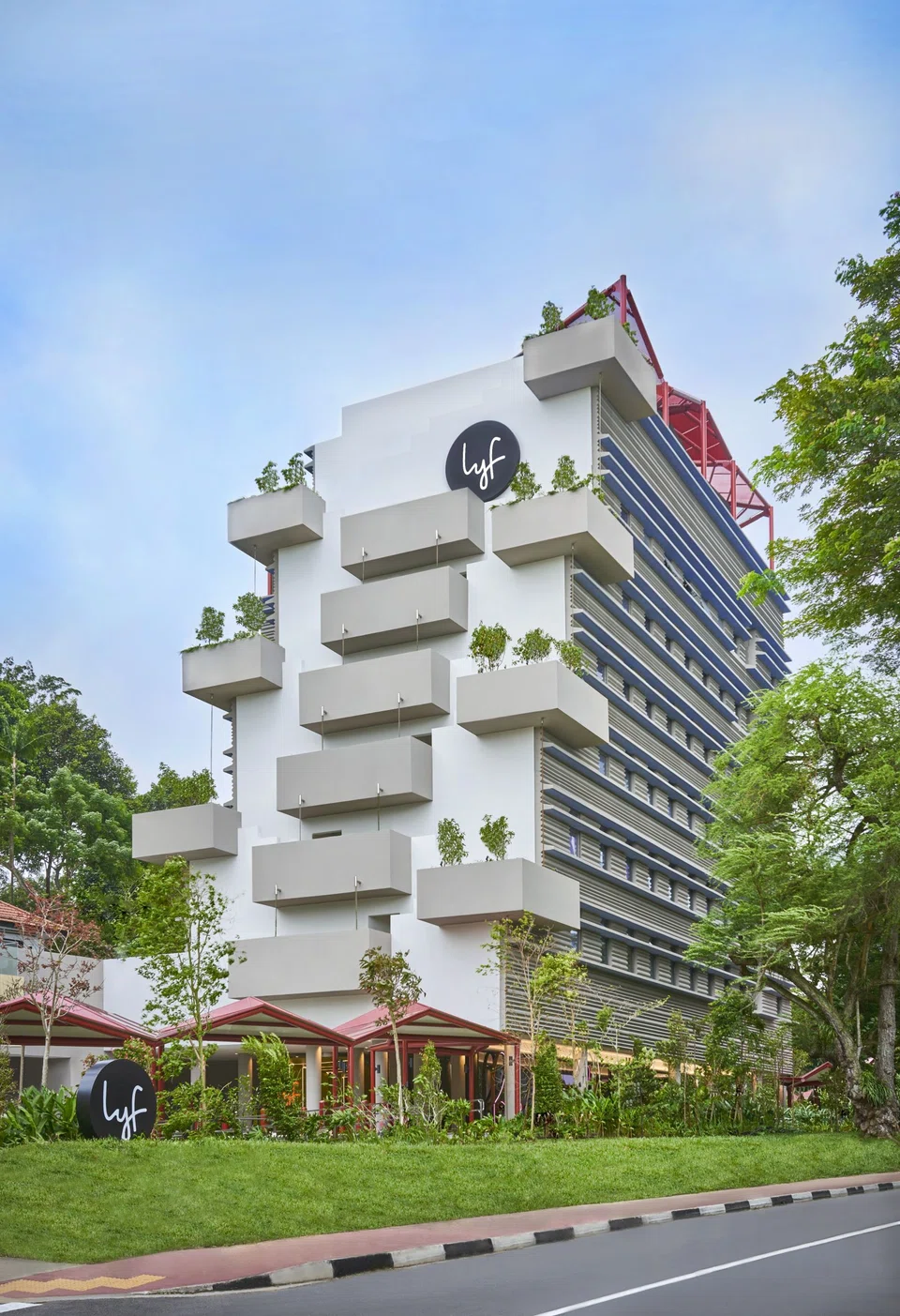
In H1, ART enjoyed greater contributions from its expanded portfolio of longer-stay assets, comprising student accommodation and rental housing properties, and the newly-opened lyf property in One-North. Its 7 student accommodation properties in the US and 3 rental housing properties in Japan acquired over the last year have an average occupancy rate of over 95 per cent.
Some 32 per cent of ART’s H1 gross profit was income from management contracts of serviced residences and hotels. The remainder came from “stable income” sources, including master leases, management contracts with minimum guaranteed income, rental housing and student accommodation properties.
The trust’s H1 distributions were up 20 per cent to S$76.7 million, including realised exchange gains from repaying foreign currency bank loans. Excluding one-off items, ART’s adjusted DPS rose 120 per cent to S$0.0178.
Bob Tan, chairman of ART’s 2 managers, said that their serviced residences and hotels have contributed more growth income with the recovery in travel. “This builds upon the steady income stream from our strong foundation of longer-stay assets. ART’s diversified and resilient portfolio remains poised for further growth.
“In addition, our robust financial position gives us the capacity to achieve our asset allocation target of 25-30 per cent in longer-stay assets and 70-75 per cent of our portfolio in serviced residences and hotels,” he said.
Looking ahead, ART has 2 properties under development. The student accommodation Standard at Columbia in the US is expected to be completed in Q2 in 2023. Construction of the new Somerset serviced residence on the Liang Court site remains on track for completion in H2 in 2025.
The counter closed flat at S$1.17 on Friday, following the announcement.