

Asean’s biodiesel push fuels palm oil rally, but will SGX-listed players gain?
Higher crude palm oil prices support upstream plantation earnings, but could be a double-edged sword for integrated operators: analysts
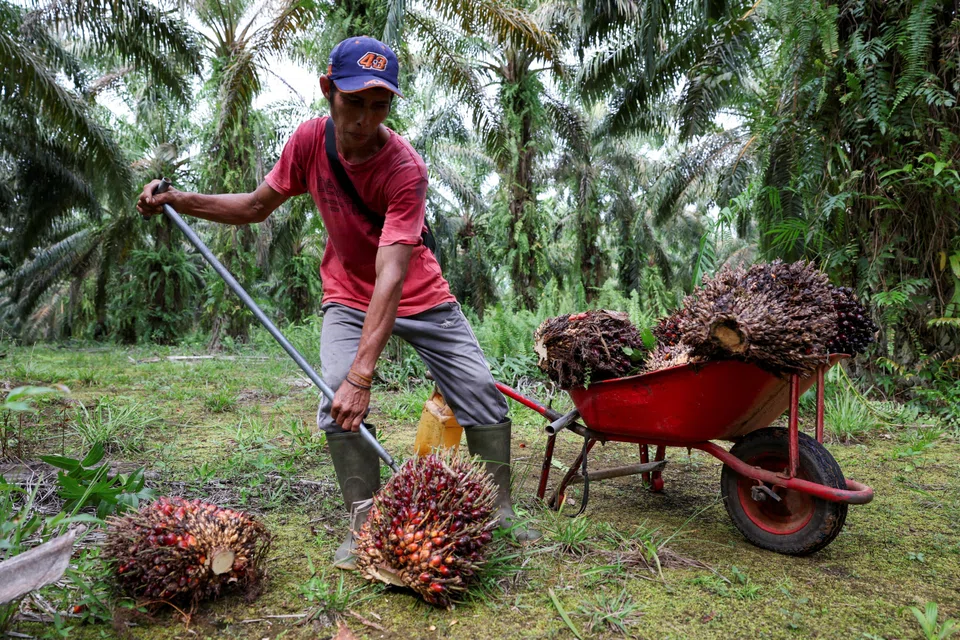
[SINGAPORE] A crude oil supply shortfall from the prolonged closure of the Strait of Hormuz has accelerated biodiesel mandates in South-east Asia, driving up crude palm oil (CPO) prices and lifting Singapore Exchange-listed plantation stocks.
Biodiesel – a substitute for petroleum-based diesel fuel produced by reacting vegetable oil or animal fat with alcohol – is becoming more cost-competitive.
Following the US-Iran war, CPO’s premium to gas oil has narrowed to around US$14 a tonne, from an average of around US$271 a tonne over the past year.
In Indonesia, the price of B50 – the blend of 50 per cent palm oil-based fuel with diesel – is now around 13,000 rupiah (S$0.96) a litre, compared to diesel at 17,800 rupiah a litre.
The country’s biodiesel mandate has scaled from B20 in 2016 to B40 in 2025. Although Indonesia’s B50 mandate was postponed in early 2026 due to capacity constraints, the government has accelerated its roll-out to Jul 1, subject to the completion of technical tests and infrastructure readiness.
Under this mandate, Indonesia’s diesel usage will be a 50-50 mix of palm oil-based fuel and diesel from 2028, making it the highest mandatory biodiesel blend rate globally.
Meanwhile, Malaysia announced in mid-April that it would gradually raise its biodiesel mandate from B10 to B15. This comes as the country aims to reduce reliance on imported fossil fuels and safeguard its domestic diesel supply.
Similarly, Thailand’s government has implemented a subsidy for B20, keeping it cheaper than unblended diesel.
Analysts expect CPO prices to be supported by a supply deficit amid the Middle East conflict and the prospect of El Nino, which could curb rainfall in South-east Asia.
FitchSolutions unit BMI forecasts CPO prices to average at RM4,300 (S$802.57) a tonne in 2026 and to gradually rise to RM4,460 a tonne by 2030.
Between the start of the US-Iran war in late February and Apr 3, the price of CPO rallied by as much as 19.8 per cent. It was trading around RM4,628 a tonne as at 3.30 pm on Monday (May 4).
A windfall for SGX players – with caveats
Between Feb 27 and Apr 29, Singapore Exchange-listed plantation stocks generated an average share price return of 37 per cent, versus the Straits Times Index’s negative 1.6 per cent, noted Ada Lim and Chu Peng, equity research analysts at OCBC.
“Higher CPO prices are supportive of upstream plantation earnings in the near term, but could be a double-edged sword for downstream businesses,” they said.
For integrated players such as Wilmar and Golden Agri-Resources , higher upstream contributions may be “partly offset” by elevated input costs in downstream operations.
This is especially when price increases cannot be passed through quickly to consumers due to competition and the staple nature of food products, said the OCBC analysts.
And while higher CPO prices generally bode well for the top lines of upstream plantation players such as Bumitama Agri and First Resources , Lim and Chu said these companies could also face margin pressure if a prolonged disruption to trade routes causes input costs, such as that for fertiliser, to spike.
In a note on Apr 27, Nirgunan Tiruchelvam of Aletheia Capital said that his overweight stance on Singapore-listed plantations is supported by the Middle East conflict and the prospect of El Nino.
“Bumitama Agri and First Resources are best exposed to CPO price gains due to their youthful estates and high extraction rates. Indofood Agri should also benefit from stronger downstream refining spreads,” he said.
Challenges to overcome
While CPO prices are supported by accelerating biodiesel mandates and weather-driven supply constraints, analysts noted that infrastructure gaps remain a key bottleneck.
If the B50 mandate is fully implemented in Indonesia, an estimated 2.1 million kilolitres of methanol will be required annually, noted CGS International analysts.
To reduce its reliance on methanol imports, Indonesia’s Ministry of Energy and Mineral Resources is exploring domestic methanol production sites in East Java and Sumatra, said the analysts.
BMI cautioned that the incremental palm oil required for B50 would place “substantial additional strain on domestic supply at a time of elevated global prices”.
The research house said it expects that B50 may not be achievable by the second half of 2026, due to capacity shortages.
Meanwhile, Malaysia is expecting to face a 600,000-tonne structural shortfall in palm oil production this year, driven by feedstock shortages and limited plantation expansion.
BMI added: “Unlike Indonesia, Malaysia has shown no intention to prioritise domestic biofuel mandates over export revenue.”
Looking ahead
Analysts say that sustaining accelerated biodiesel mandates depends on palm oil’s cost advantage over traditional fuels, regulatory momentum and supply constraints, often stemming from years of plantation underinvestment.
Technical hurdles also remain, in that not all car engines can run on high biodiesel blends.
Lim and Chu of OCBC said that, in the long run, “productivity from ageing plantations will likely decline, while demand stays resilient, given the ubiquitous uses of palm oil”. They noted, for example, that industrial applications of palm oil are being explored, such as palm oil-based bioplastics and lubricants.
“Such favourable supply and demand dynamics should provide a floor to CPO prices,” they said.
“We therefore also prefer companies with a track record of industry-leading productivity, which are able to keep up higher yields to benefit more from higher CPO prices,” the analysts added.
As palm oil’s role evolves from being a commodity to being a strategic energy asset, Tiruchelvam of Aletheia Capital noted: “The Gulf crisis may serve as a catalyst to bridge the disconnect between CPO prices and plantation equities.”
TRENDING NOW

LTA proposes combining car COE categories, adding rebate-surcharge system

StarHub to acquire MyRepublic’s mobile business amid ongoing telco consolidation

DBS, OCBC, UOB rout lops billions off STI as inflation, rate concerns spook investors

Grab CEO’s wife Chloe Tong on life with Anthony Tan and finding her purpose

