

Asia to be Food Empire’s top brew as coffee giant percolates expansion plans
In doing so, the group aims to balance the risks associated with geopolitical instability and currency volatility, particularly in its traditional markets of Russia and Eastern Europe

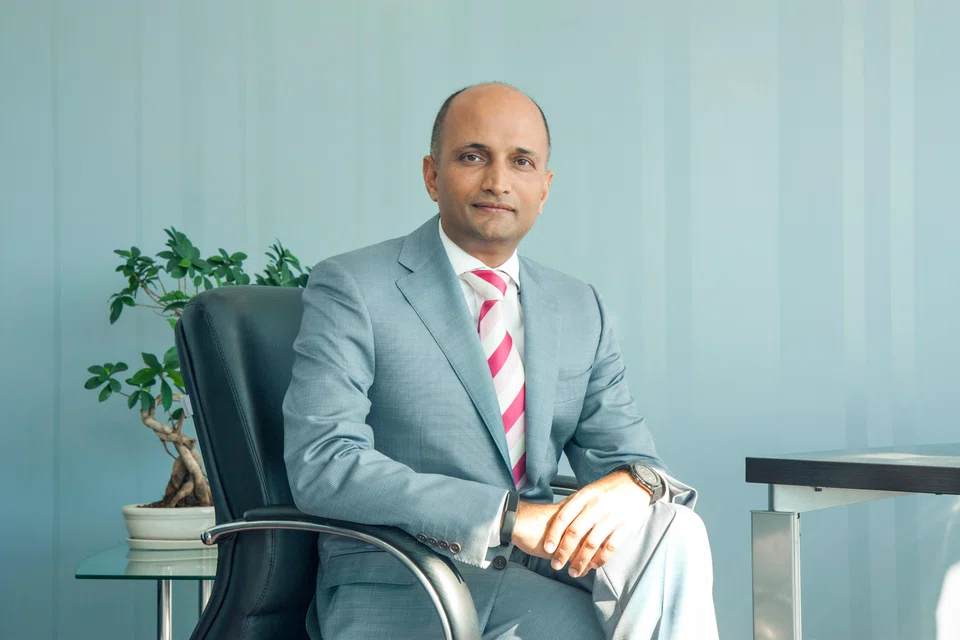
FOOD Empire will be deepening its roots in South-east Asia and Central Asia, as the instant-coffee maker looks to brew up the next wave of growth.
The mainboard-listed company intends to ramp up its investments in these regions, banking on their relative economic stability and burgeoning consumer markets.
“The geopolitics and a lot of currency volatility (in Europe) was primarily a reason why we looked to Asia, because this region has been more stable for us,” chief executive officer Sudeep Nair told The Business Times.
“What you see is the work of the last decade,” Nair said. “There has been a major diversification effort, which the group (started) from 2010, 2012 onwards.”
Over the next three to five years, seven of every 10 dollars that Food Empire invests for growth will be directed towards Asia, he added.
This comes as sales from South-east Asia are poised to overtake those of Russia as the group’s top revenue source within the next 12 to 24 months.
“Currently, you would see in our reporting that Russia comes in as the top single market,” Nair said. “But (our) South-east Asian investments and markets have been growing for us at a faster pace.”
For the six months ended Jun 30, sales from South-east Asia posted a 34.8 per cent rise to US$61.8 million, from US$45.9 million in the year-ago period. This was just behind the US$68.1 million in sales from Russia, which fell 3.6 per cent year on year due to the depreciation of the Russian rouble against the US dollar.
In total, Food Empire posted sales of US$225.2 million, up 13.6 per cent from US$198.2 million. Net profit fell 11.3 per cent to US$23.6 million, from US$26.7 million previously, due mainly to lower profit contributions from its Russia operations.
Yet, in local currency terms, the group actually registered revenue growth of 13.4 per cent in Russia during the same period, Nair noted.
“Coffee is a commodity which is priced – whether you like it or not – in US dollars,” he explained. “So these currency volatilities – when they happen, we will try to increase the prices, but we do it gradually, so that the consumer and the retailers get adjusted to the new realities.”
South-east Asian growth
In South-east Asia, Food Empire currently has a business-to-consumer sales presence in Vietnam and business-to-business operations in Malaysia.
Last month, the group announced a US$40 million tie-up with Asean-focused private equity fund manager Ikhlas Capital.
“Ikhlas is a very well-established fund in this region,” Nair said. “Since we are focused here, it would be good to have a partner who’s very specialised in Asean; they have very good networking and knowledge of almost all the countries where we would like to operate, or where we are operating.”
While the group has been actively shopping for acquisition targets in the region, “what we see in most of Asia is that the valuations have been stretched”, he noted.
The funds from Ikhlas’s capital injection – structured via five-year redeemable exchangeable notes – will likely be tapped for projects in Vietnam, along with expansions in South Asia.
That is because Vietnam – where the group’s Cafe Pho coffee brand has gained significant market share – stands out as a particularly strong performer, Nair said.
It is the fastest-growing market for Food Empire, outpacing other regions with the highest percentage growth in the company’s portfolio.
This was on the back of strategic investments in advertising, promotions, and an expanded sales force in Vietnam.
In the first half of this year, selling and marketing expenses rose by 10.4 per cent to US$17.4 million, due mainly to higher manpower costs, particularly from the group’s Vietnam operations.
Said Nair: “Vietnam has been the fastest growing market within Food Empire, right? A lot of this growth has come from salespeople; we have invested in a lot of manpower, (and) we have created more teams to go deeper into distribution and consumer activities.”
The group has also expanded its capacity in Malaysia, where it has bolstered its production of non-dairy creamers – a critical component of its coffee mix products.
This expansion is part of a broader strategy of vertical integration, Nair said, which will provide greater stability and control over its supply chain.
Central Asia expansion
In Central Asia, Food Empire is ramping up its presence with a US$30 million coffee mix production plant in Kazakhstan.
This facility, which is expected to become operational by end-2025, will serve as a hub for the entire Central Asian region, including Uzbekistan, Azerbaijan, and Tajikistan.
By localising production, Food Empire aims to reduce reliance on exports from its plants further afield, which improves efficiency and mitigates risks associated with long-distance logistics and cross-border trade.
The Kazakhstan plant is also part of the company’s broader strategy to capture a larger share of the growing consumer markets in Central Asia, where it already has a significant market presence.
For instance, Food Empire’s coffee mix products have over 70 per cent market share in Kazakhstan, Nair noted.
“We could supply from this plant the entire Central Asia (region), rather than supplying it from Malaysia – which is very far – and there would be certain tax benefits (from doing so),” he added.
Maintaining market share
As Food Empire continues to expand its Asian footprint, it is also balancing the risks associated with geopolitical instability and currency volatility, particularly in its traditional markets of Russia and Eastern Europe.
The company’s diversification into South-east Asia and Central Asia is a deliberate strategy to mitigate these risks, Nair said.
Indeed, Food Empire’s primary objective in Europe is to defend its existing market share, rather than pursue ambitious new projects.
“We don’t say: ‘Let’s go ahead and put in US$50 million and do something’. We don’t talk in those terms for (Europe),” Nair said.
“Whereas in Asia, we can do that, and say: ‘Let’s go ahead with this project.’”






