

Asia insurers increasing infrastructure debt exposure as capital rules shift: Schroders
The asset class offers access to sectors that institutional investors might not otherwise have

[SINGAPORE] Changes in regulatory capital treatment under risk-based capital regimes in Asia will allow insurers to increase their exposure to infrastructure debt, said Emaad Sami, senior investment director for infrastructure debt at Schroders Capital.
“Regulators have really made a concerted effort on this front (to facilitate investment to the asset class), which is really being encouraged by insurers, including here in Singapore,” he told The Business Times.
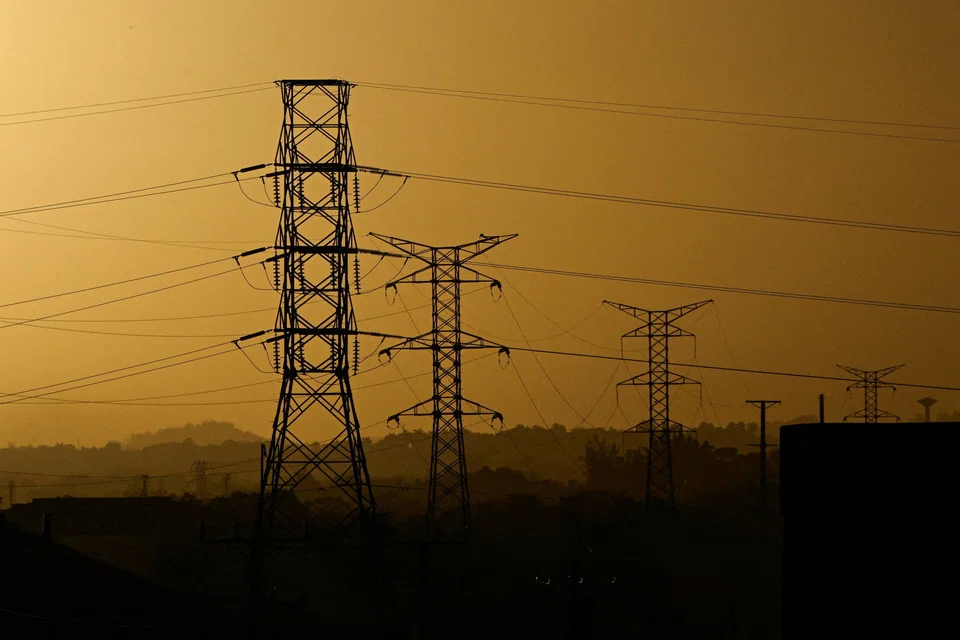
Infrastructure debt is a subset of private credit that finances infrastructure assets such as power grids, transport networks and utilities, rather than the software or services built around them.
The asset class has evolved beyond investment-grade lending to sub-investment-grade loans, which can offer double-digit returns with a slightly higher risk profile.
Infrastructure debt also offers exposure to sectors that institutional investors might not get access to, including essential services such as utilities, which continue to be used regardless of economic cycles.
Sami said that unlike private infrastructure investments, returns from infrastructure debt are not reliant on exits, almost acting as a fixed-income alternative.
“Macro volatility and geopolitical uncertainty is here to stay, and therefore investors are looking for a resilient private credit allocation that’s going to anchor their private debt portfolios,” he added.
The investment-grade infrastructure debt segment is facing increasing competition from banks and other institutional investors.
However, the sub-investment-grade infrastructure loan market is still developing; infrastructure players are still looking for such tranches to finance the growth in their business.



Damien Gardes, co-head of infrastructure debt at Schroders Capital, said that if one has “the skills to underwrite, understand and address the complexity of that market, there is much less competition and you can get a substantial premium in terms of credit margin compared to investment-grade”.
While it might appear that being less senior among creditors would be riskier, Sami noted that infrastructure debt behaves differently compared to corporate direct lending.
Rating agencies have observed that infrastructure assets have a much lower credit default rate compared to similar non-rated corporates.
It helps that the assets backing the financing are tangible and would have value in a default scenario, Sami said, though there are still risks to be aware of when investing into infrastructure debt.
Risks and outlook
Not all infrastructure assets are equal, with factors such as geographical location, regulatory and political risks to be considered, Sami noted.
There is also the resilience of the business model and how essential the service the asset is providing is.
Finally, there is obsolescence risk, which is present in sectors such as battery storage, which is an emerging technology.
Infrastructure debt would not be the appropriate avenue to back these projects, since the asset class will not enjoy any upside but take on the downsides of backing a technology that might not be prevalent.
“We would much rather back a tested business model, rather than some of these new emerging technologies, because that’s more prudent from a credit investment perspective,” explained Sami.
Infrastructure debt will ride the two mega trends of energy transition and digitalisation, which require financing that cannot be provided by private equity or the banks alone, he noted.
Gardes pointed out that in Europe’s ageing economy, there are opportunities to be part of the billions of euros invested in modernising or creating new infrastructure.
Against this backdrop, Europe is seen as a bright spot for infrastructure debt, with gigawatts of renewables installed and financed every year.
Beyond the two mega trends, there are also other opportunities there such as transportation and broadcasting networks, which are capex-intensive to maintain or grow.
“The demand is huge for tangible assets that are absolutely key for the society and community,” said Gardes.
Sami said that non-European investors are increasingly seeking exposure to Europe, including long-time investors from Korea and Japan, as well as newer investors from South-east Asia, including Singapore.
Interest is also broadening beyond insurers to include pensions, foundations and family offices.
“The appeal is broader now to the institutional investor space, including those return-seeking investors like family offices, foundations (and) endowments, compared to four years ago, when it was more insurance-focused,” added Sami.
Decoding Asia newsletter: your guide to navigating Asia in a new global order. Sign up here to get Decoding Asia newsletter. Delivered to your inbox. Free.
Copyright SPH Media. All rights reserved.
TRENDING NOW

Once staunchly pro-China, Malaysian Chinese businesses are now distancing themselves from Beijing

The middle power moment arrives in South-east Asia – but not for Asean

DBS, OCBC, UOB face rate hike reality check

Vietnam’s northern provinces, not Hanoi or Ho Chi Minh City, are powering near 10% GDP growth

