Asian currencies likely to stay under pressure as new Fed regime keeps rates steady
But US-Iran deal over the Middle East likely to keep US dollar appreciation in check

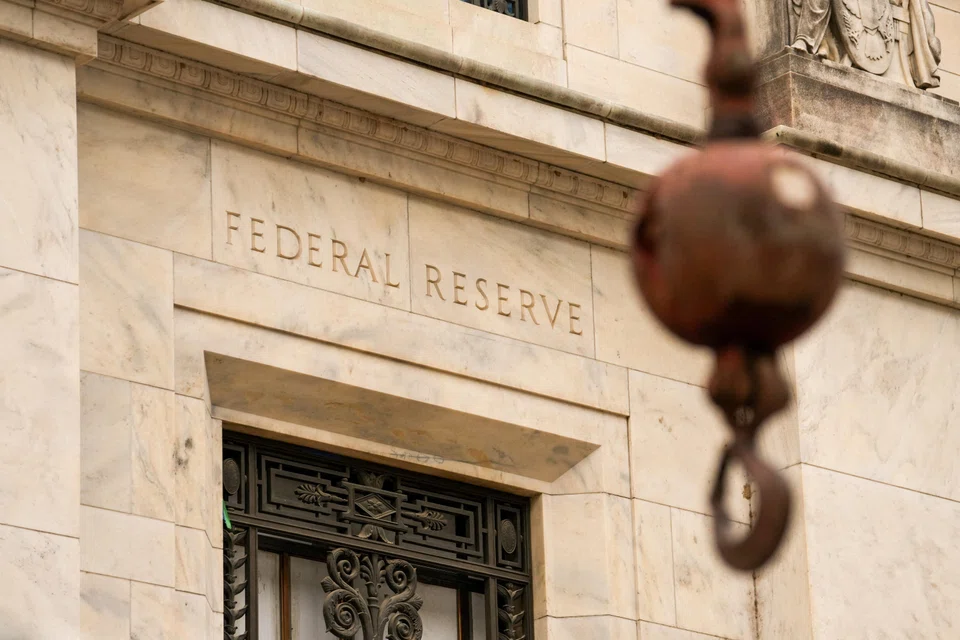
[SINGAPORE] Asian currencies will likely remain under pressure from an elevated greenback, as the US Federal Reserve kept interest rates steady on Wednesday (Jun 17).
The Fed kept rates unchanged at 3.5 to 3.75 per cent in the first Federal Open Market Committee meeting led by new Fed chair Kevin Warsh – who was known to be in favour of lower interest rates – as inflation remained above target.
The hawkish interpretation of the Fed decision will likely result in a stronger US dollar and higher rates in Asia, said Navin Saigal, head of global fixed income for Asia-Pacific at BlackRock.
But this should be mitigated by actions taken by Asian central banks in recent months, he said.
Saigal noted that many Asia-Pacific central banks, including Indonesia, the Philippines, Australia and Japan, have either already raised rates or are expected by the market to do so in the coming months.
Meanwhile, lower oil prices and receding geopolitical risks may keep near-term appreciation in check. This should result in a “resilient rather than relentlessly stronger” US dollar, said Ray Sharma-Ong, deputy global head of multi-asset bespoke solutions at Aberdeen Investments.
On Thursday, the US and Iran signed an initial deal to end the war in the Middle East and open the Strait of Hormuz. This resulted in a relief rally across equities and credit due to lower oil prices and near-term inflation risks, Sharma-Ong said.
With the US-Iran deal on the horizon, investors may view the Fed’s hawkishness as precautionary, which should help reverse the US dollar’s strength and be more supportive of Asian equities, added Tai Hui, Asia-Pacific chief market strategist at JP Morgan Asset Management.
Key indices in Asia ended largely higher on Thursday. Singapore’s Straits Times Index rose 0.7 per cent, the FTSE Bursa Malaysia KLCI was up 0.1 per cent, South Korea’s Kospi gained 2.3 per cent and Japan’s Nikkei 225 was up 1.7 per cent. Meanwhile, Hong Kong’s Hang Seng Index fell 1.6 per cent.
For equities, Sharma-Ong said future winners will be corporates that generate strong earnings growth that outpace a higher cost of capital and a more resilient US dollar.
US, Japanese, South Korean and Taiwanese equities provide important exposure to the artificial intelligence and semiconductor investment cycle, he said.
By contrast, unprofitable long-duration equities, highly leveraged smaller companies, commercial property, weaker homebuilders and businesses whose valuations depend on rapid rate cuts will likely lag, he added.
Meanwhile, a “higher-for-longer” US backdrop is likely to cap duration upside and widen country divergence in Asean bond markets, said Jesse Liew, chief investment officer for Asean fixed income at Principal Asset Management.
For example, Malaysia is appearing relatively more resilient, supported by solid growth, stable funding conditions and domestic institutional demand for ringgit bonds, Liew said.
BlackRock’s Saigal noted that China’s bond market had been a “bastion of stability” in recent months – having rallied through the Middle East conflict – becoming an anchor for certain Asian markets such as Singapore and Malaysia.
“This broad and diverse spectrum, a result of structural policy and inflation divergence, will allow Asian markets to continue to deliver a differentiated return profile and act as a diversifier for global portfolios, even if the market expects a higher probability of a hike in the US after today.”