

Asian equities bid October 'good riddance' with a rebound
The ghosts of Octobers past, especially that of 1987, haunted the markets, which could still get jittery ahead of the US mid-terms and from slower growth in China and Europe

Singapore
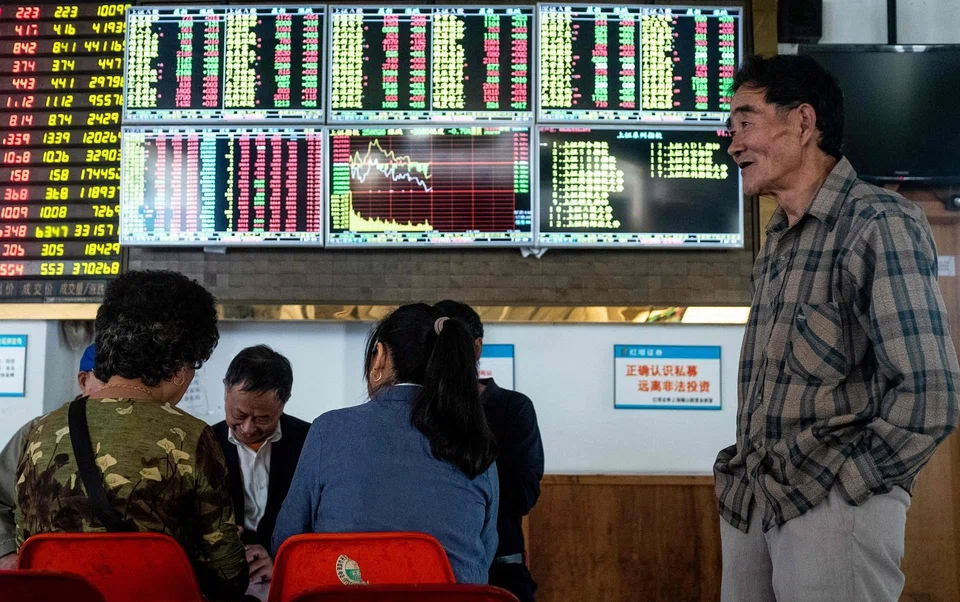
MAJOR Asian equity gauges bade "good riddance" to a gloomy October with visible relief on Wednesday after being rocked by a harrowing sell-off that wiped out between 5 and 13 per cent of their value over the Halloween month, no thanks to a cocktail of potent factors that spooked US stocks.
Fear factors - chiefly trade disputes, beaten-down emerging-market (EM) currencies, a run of weak data signalling slowing growth and rising US interest rates plus the vagaries of geopolitics - had amped up volatility in equities and triggered a global sell-off in October.
The hardest hit were the key indices of South Korea, Taiwan and Hong Kong, which declined 13.4 per cent, 11 per cent and 10 per cent respectively over the period.
All three indices rebounded on Wednesday alongside significant gains across Asia. Taiwan's Taiex jumped 2.9 per cent, while Japan's Nikkei 225 inched up 2.2 per cent and Singapore's Straits Times Index advanced 1.8 per cent, following an overnight bounce on Wall Street.
The MSCI Emerging Markets and MSCI Asia-Pacific indices fell nearly 11 per cent in October, hit by worries over liquidity drying up as the US Federal Reserve hiked rates and over earnings having peaked, as well as the US-China trade spat. US stocks were sent hurtling towards deep losses.
The ghost of the worst stock market crash in Wall Street history in October 1987 still haunts the market, giving rise to the "October effect", which fans nervous expectations; some analysts say it may have weakened risk appetite for equities for what is left of the year.
Oxford Economics' research said: "Our baseline is for no further significant equity reversals, but we recognise risks."
By risks, it means markets expecting a quicker pace of monetary tightening, a global liquidity drain and a faster-than-expected pickup in inflation.
The fast-approaching US mid-term election next week could add to market jitters. Historically, equity volatility is heightened before the mid-terms due to policy uncertainties, though markets tend to rally after the polls.
The Bank of Singapore's base case, which is in line with market expectations, is that Democrats will win control of the House of Representatives, while the Republicans will retain the Senate.
If this happens, market reaction could be muted as it has been mostly priced in.
Even so, the bank's investment strategy head Eli Lee said: "Given the populist undercurrents in the political backdrop, the dark horse outcome of a Republican sweep of Congress should not be ruled out."
A Republican-controlled Congress would translate to marginally higher chances for additional fiscal stimulus versus the bank's base case, and would drive the market to price incremental strength in the US economy, he added.
The robust US dollar on the back of rising rates has added strain on Asian markets and also dampened prices of crude oil and gold. Most analysts expect the greenback to pull higher against its peers stretching into 2019.
The volatile stretch in global markets has also hurt EM Asian currencies, which ended October in the red, although most currencies including the Singapore dollar and Malaysian ringgit edged higher on Wednesday.
The Thai baht and Indonesian rupiah declined 2.8 per cent and nearly 2 per cent respectively against the US dollar over the month; the Singapore dollar and Malaysian ringgit fell by more than 1 per cent against the greenback during this period.
More risks lie ahead. For one, slowing growth is a big worry with the recent run of disappointing data out of South Korea, China and the euro zone. Political risks are looming in Europe, with concerns over the rise of far-right politics in Italy and Germany - the bloc's largest economies, and the protracted uncertainty over Brexit.
Hermes Investment Management head of emerging markets Gary Greenberg said that the upside underpinning the EM business environment remains more robust than the recent volatility may suggest - with the exception of the troubled trio of Turkey, Argentina and South Africa.
Mr Greenberg's glass-half-full prognosis is based on reasonable growth, low interest rates and sensible economic policies in the majority of the EM countries.
He expects corporate earnings next year to be strong, which could lead to their share prices catching up with their earnings after hitting depressed levels recently.
He added: "To us, the highs and lows of 2018 have reaffirmed our key convictions - that EMs are not a destination for short-term trades but for long-term investment in high-quality, sustainable companies."
READ MORE: October's market value sees biggest fall in three years
TRENDING NOW

Could stablecoins be the future of money?

Once staunchly pro-China, Malaysian Chinese businesses are now distancing themselves from Beijing

Global expertise and tailored solutions: How affluent S’poreans can grow and manage wealth across markets

GIC-backed Bank Jago sees wealth management as next growth engine as Indonesian investor base grows

