

Short-term market rally likely after Fed rate cut, but analysts say 2026 will hinge on fundamentals
Asia markets end mixed as the STI and KLCI gain, while Hang Seng, Nikkei and Kospi retreat

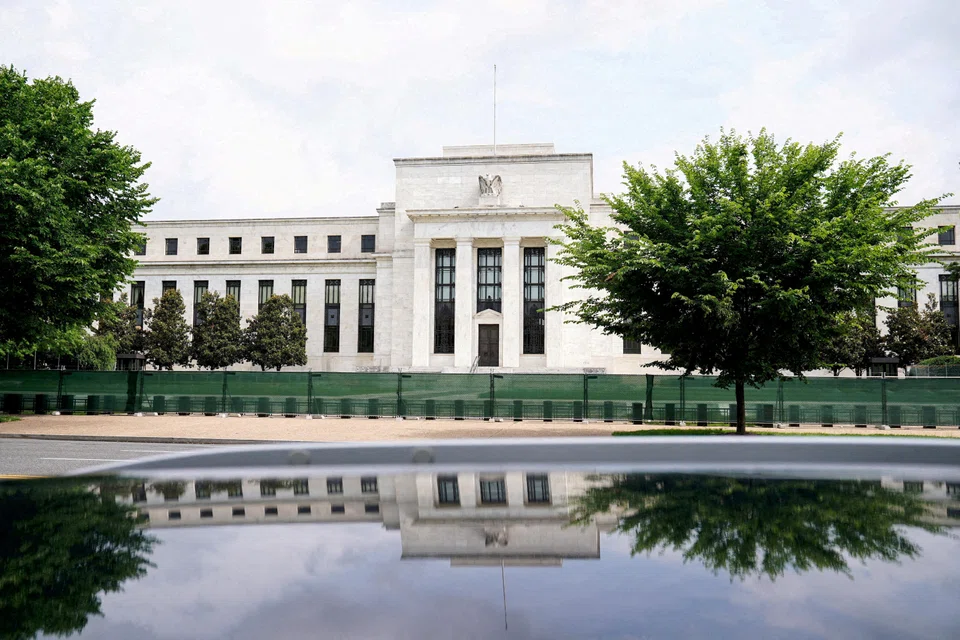
[SINGAPORE] Markets will likely rally in the short term, after the US Federal Reserve met expectations and cut benchmark interest rates by 25 basis points in its last meeting of the year, said analysts.
Going forward, however, they expect company fundamentals to matter more, given that the Fed is set to pause further cuts, as they rely more on data to make future decisions.
In Asia, markets ended mixed on Thursday (Dec 11). Singapore’s Straits Times Index rose 0.2 per cent and the FTSE Bursa Malaysia KLCI was up 0.9 per cent.
Meanwhile, Hong Kong’s Hang Seng Index inched down 0.04 per cent, Japan’s Nikkei 225 fell 0.9 per cent and South Korea’s Kospi lost 0.6 per cent.
There will likely be a relief rally in the short term amid an ease in concerns of a rate hike, said Ray Sharma-Ong, deputy global head of multi-asset bespoke solutions at Aberdeen Investments.
News that the Fed will purchase short-term Treasuries to maintain reserves is also “certainly a reason to be excited” and more than offsets concerns about limited benchmark trims ahead, said Jose Torres, senior economist at Interactive Brokers.
Torres noted that the purchases of Treasury securities post pandemic resulted in abundant liquidity conditions, which drove equity valuations meaningfully higher, supported risk appetites in markets and generated significant asset price appreciation.
Furthermore, stronger growth forecasts, lighter inflation expectations, and neutral employment expectations also support a bullish reaction in stocks and yields alike, he added.
Fundamentals
In 2026, the combination of lower interest rates and the US avoiding a recession should benefit risk assets, said Tai Hui, Apac chief market strategist at JP Morgan Asset Management.
But in the longer term, Sharma-Ong expects the Fed monetary policy will likely become less of a catalyst for markets.
The Fed maintained its long-term neutral rate at 3 per cent, and the bar for further cuts is very high, implying that the policy landscape is likely to remain static for some time, Sharma-Ong said.
This means that fundamentals will matter more, and sectors with strong earnings visibility and low sensitivity to macroeconomic volatility are likely to outperform, he added.
In particular, the artificial intelligence (AI) and technology ecosystem continues to stand out as a structural winner, with its investment cycle less dependent on the macro environment, he noted.
Hui also expects investors will need to be selective on companies that have strong long-term earnings growth prospects, given rich valuations in some parts of the global equity market.
Asia, including China, should still benefit from solid export demand, while AI development in China could offer new growth opportunities, Hui added.
This is a similar story for commodities, said Claudio Galimberti, chief economist and global director of market analysis at Rystad Energy.
The rate cut “modestly loosens” financial conditions and may weaken the US dollar, which should support crude, metals and some agricultural commodities.
But the signal of a pause tempers that boost, reminding markets that the Fed is unwilling to validate the two-cut easing path currently priced for next year, Galimberti said.
“Commodity prices will react more to fundamental signals and geopolitics shifts in the next few months than to the Fed’s tentative path,” he added.
Nevertheless, markets would also need to watch for the Fed chair who is succeeding current chair Jerome Powell.
DBS chief economist Taimur Baig expects a tussle between the authority and markets if the new chair turns ultra dovish and “capitulates to US President Donald Trump’s demands”.
“In fact, there could even be turmoil within the Fed, as many Fed officials would oppose (to cutting no matter what in the second half of 2026),” he said.
In that instance, markets will express their concern across public equities, government bonds, fixed income, currency, and private debt and equity spaces.
“The divergence in market outcomes between the US and rest of the world would widen, and many relative value trade opportunities would open up,” Baig said.
TRENDING NOW

Once staunchly pro-China, Malaysian Chinese businesses are now distancing themselves from Beijing

Looking beyond looming CEO succession, should UOB potentially pursue a transformative merger?

Could stablecoins be the future of money?

Grab CEO’s wife Chloe Tong on life with Anthony Tan and finding her purpose

