Asia’s rising private markets create demand for training from talents seeking an edge
For private equity firms, talent management is the top priority after fundraising: EY survey

INCREASED activity in Asia-Pacific’s private markets is creating an attractive career pathway for investment bankers, public equity managers and other finance professionals.
This trend is also generating demand for training, and pushing managers to adopt proactive talent management policies.
In May, for instance, CFA Institute launched a private equity (PE) certificate that aims to “equip professionals within PE partnerships, as well as those aspiring to such roles”.
Grace Yeung, the institute’s senior director of exam development in Asia-Pacific, said the certificate has been roughly three years in the making – starting with a survey assessing market demands.
Private markets polled as the second most important, Yeung said, after traditional portfolio management.
“Many see the attractiveness of PE,” she said. This list includes finance graduates who have interned at a PE firm and want to further stand out, and junior analysts and associates at investment banks seeking a move into PE.
There is also demand from boutique PE firms – at both individual and firm level – where in-house training programmes may not be as developed or comprehensive.
The certificate has been “really well received”, and CFA Institute is working on an advanced certificate. “We are still in the ideation stage right now,” Yeung added.
PE firms typically seek candidates with some experience, and investment banks are a common training ground.
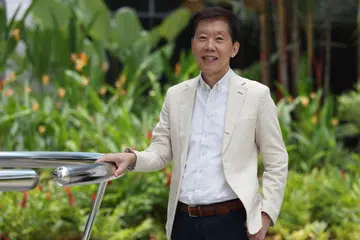
Edwin Low, partner at Global Infrastructure Partners (GIP), said he has recently added a former investment banker to his team, and that the skill set has some overlap.
Low, who joined GIP earlier this year, was most recently Credit Suisse’s Asia-Pacific chief executive. He had previously also served as the bank’s co-head of investment banking and capital markets.
Family offices, fund houses and insurers are also funnels for private equity talent.
Temasek-owned SeaTown, an alternative investments manager, last year appointed Chai Chi Kit as chief investment officer (CIO). Chai was previously CIO at Ping An Asset Management (Hong Kong).
SeaTown’s deputy CIO Eddie Ong had been head of private equity investments at Wah Hin & Co, an investment company set up by the late Dr Lien Ying Chow that now runs as a single-family office.
Another Wah Hin alumni, Jason Kang, became CIO of multi-asset investor M45 Capital Partners early last year.
Such movements are neither new nor unusual, but they are taking place against a backdrop of growth in Asia-Pacific’s private markets.
Preqin data shows the region bucking the downward trend in fundraising: Pan-Asian funds accounted for 31 per cent of capital raised in 2023, up from 20.6 per cent in 2022.
For financial professionals, this places private markets among the faster-growing and more promising segments of the industry.
In comparison, LSEG data shows that Asia-Pacific investment banking fees fell 6 per cent last year to their lowest level since 2019. They fell another 25 per cent in the first half of this year.
Active managers, meanwhile, are facing lower margins and defections to passive investments. Global assets under management (AUM) rose 12 per cent last year, according to Boston Consulting Group, but revenues increased 0.2 per cent.
Passive products constituted 70 per cent of net flows, and ended the year accounting for 20 per cent of AUM but 4 per cent of revenues. Alternatives represented 20 per cent of AUM and 54 per cent of revenues.
Dickson Loo, managing director for private capital at SeaTown, said the opportunities available are a major talent draw.
“We have seen many overseas graduates and professionals returning to their home markets in South-east Asia due to the potential of the different markets and investors’ interest in this region,” Loo said.
“As we continue to invest in talents and capabilities, we have expanded our onshore presence into neighbouring countries such as Vietnam and Indonesia.”
All this growth has made talent management and knowledge sharing more important. An EY survey of PE firms found talent management to be the top priority after fundraising, regardless of the size of the firm.
“Whether it’s hiring to scale with the growth; retaining top talent; or implementing diversity, equity and inclusiveness programmes; firms are constantly focused on talent to... compete in the industry,” the EY report said.
SeaTown, for instance, “invests in in-house training to ensure the team has the right foundation, approach, philosophy, and culture”. It has also established the SeaTown Sustainability Scholarship with Singapore Management University, offering a grant and an internship to sustainability majors.
Felicia Chia, Asia director at the Global Private Capital Association (GPCA), is seeing demand among members for training on environment, social and governance matters, as well as for knowledge sharing on practical aspects of operating in private markets.
GPCA, whose members collectively manage more than US$2 trillion in assets across Asia, Latin America, Africa, Central and Eastern Europe, and the Middle East, regularly organises events covering topics such as fundraising, gender lens investing and sustainability reporting.
Its knowledge partners include development financial institutions that are increasingly active in emerging markets and want to help upgrade the region’s talent pool.
“Part of the emerging markets challenge is finding fund managers with the right skills,” Chia said. “How do you increase capacity across the board?”
TRENDING NOW
He built the Vingroup empire. Now South-east Asia’s richest man is handing some key roles to his sons
Grab CEO’s wife Chloe Tong on life with Anthony Tan and finding her purpose
What role can Japan play in Asean’s future?
From folding clothes to factory work: Why China is sending humanoid robots to school