

Asia’s wealthy families shed taboo on succession planning as US$83 trillion changes hands: UBS
The inheriting generation is reshaping how family wealth is managed and who they trust to manage it

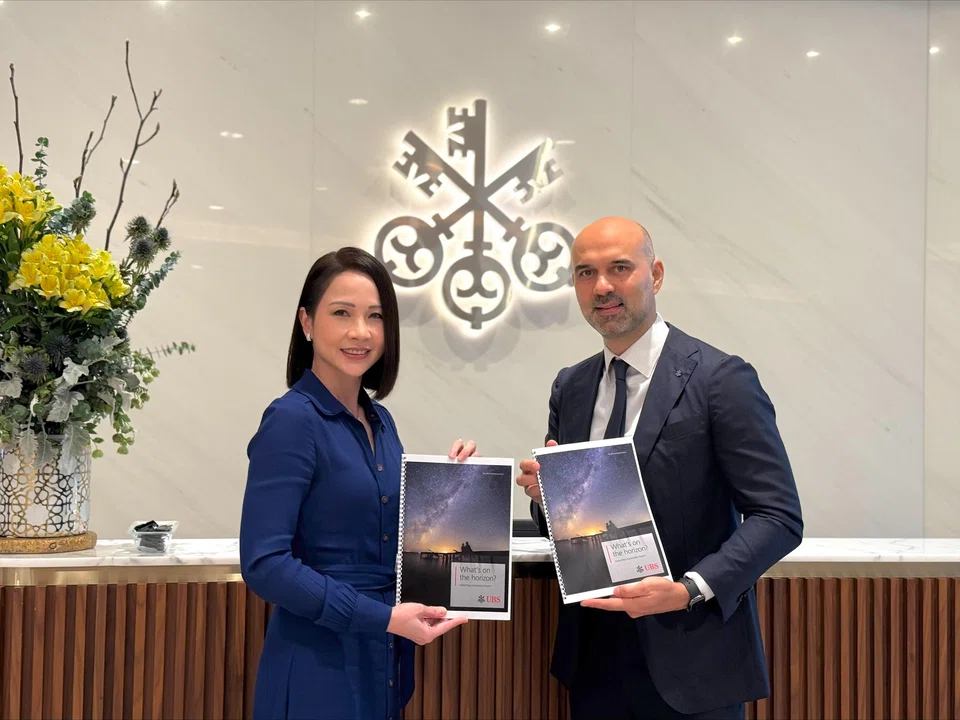
[SINGAPORE] Nearly two-thirds of wealthy families involve the next generation in wealth management from young adulthood, UBS revealed at a Singapore roundtable event on Friday (May 8), citing findings from its first Global Next Generation Report.
The report, which draws on more than 170 survey responses of next-generation wealth holders globally, explores their evolving investment preferences and key priorities as the largest wealth transfer in history – estimated at US$83 trillion – begins to unfold.
More than half of those surveyed believe that parents should discuss wealth earlier with their children, “not to rush them into wealth responsibilities, but to help them understand what’s involved”, UBS found.
Among the respondents, 11 per cent resided in Asia, though UBS noted the figure is understated, as some second-generation members of Asian families are based in Europe and the US.
“In the past, many of our clients (found it) taboo talking about succession and wealth transfer in Asia, particularly because of our culture,” said Young Jin Yee, co-head of UBS global wealth management for the Asia-Pacific.
“But today, more and more of our clients are a little bit more open and they approach it much earlier, and also in a more structured and professional way.”
She presented the findings with Conrad Huber, next-generation lead and head of UBS global wealth management for Indonesia and Japan international.
The “next-generation” label is defined by UBS as “the inheriting generation, stepping into responsibility within their families”. Survey respondents represented “the full age spectrum”, though a majority were between 26 and 40 years of age.
Focus on networking, sustainability
When it comes to choosing a wealth manager, next-generation clients are clear on what they want.


Networking opportunities were the biggest differentiating factor for 78 per cent of the next generation, far outpacing the second-ranked factor, legal and tax consultation, which came in at 56 per cent.
In terms of what the next generation invests in, UBS found “more muted” enthusiasm for newer asset classes such as digital assets, with just 11 per cent invested in cryptocurrencies. Traditional assets such as stocks and bonds accounted for 79 per cent of holdings.
The next generation “drives strong interest in sustainability and impact investing, with nearly half building exposure to these investment themes”, UBS noted.
Succession takes different forms across the regions; the report revealed a cultural divide in how wealth transfers are perceived.
In the Asia-Pacific, 57 per cent associate wealth transfer with a family milestone, usually with the death of a family member.
In Europe and North America, more tend to “associate wealth transfer with taking on responsibility”. UBS found that 45 per cent of the next generation in Europe and 67 per cent of those in North America hold such a view.
Huber said that over time, Asia-Pacific families’ perceptions may begin to shift and converge with those of their counterparts in Europe and North America.
He pointed out that UBS sees the wealth transfer across generations not as a disruption, but a journey with “a long runway”.
“They (the next generation) will have to have great responsibility for managing a lot of wealth,” he added. “It is a very different pressure – one that we cannot imagine ourselves.”
Decoding Asia newsletter: your guide to navigating Asia in a new global order. Sign up here to get Decoding Asia newsletter. Delivered to your inbox. Free.
Copyright SPH Media. All rights reserved.
TRENDING NOW

Once staunchly pro-China, Malaysian Chinese businesses are now distancing themselves from Beijing

Looking beyond looming CEO succession, should UOB potentially pursue a transformative merger?

Could stablecoins be the future of money?

Grab CEO’s wife Chloe Tong on life with Anthony Tan and finding her purpose

