
TOPLINE

Aspial Lifestyle aims to become a ‘consumer lifestyle powerhouse’

It has expanded its pawnbroking business in Malaysia, and acquired German jeweller Niessing

Navene Elangovan
Published Mon, Jul 8, 2024 · 05:00 AM
    • Aspial Lifestyle is growing its business to maintain its profitability amid higher lending costs, says chief executive officer Ng Kean Seen.
    • Aspial Lifestyle is growing its business to maintain its profitability amid higher lending costs, says chief executive officer Ng Kean Seen. PHOTO: YEN MENG JIIN, BT

    HIGHER interest rates may mean increased financing costs, but Aspial Lifestyle is not letting that hold back its ambitions to venture into new businesses.

    In the two years since the Catalist-listed company, formerly known as Maxi-Cash, acquired the jewellery business from its parent company, Aspial Corporation, it has made several forays into new markets.

    It has expanded its pawnbroking business in Malaysia, and acquired German jeweller Niessing from its parent company. It also increased its stake in property debt investment platform BigFundr.
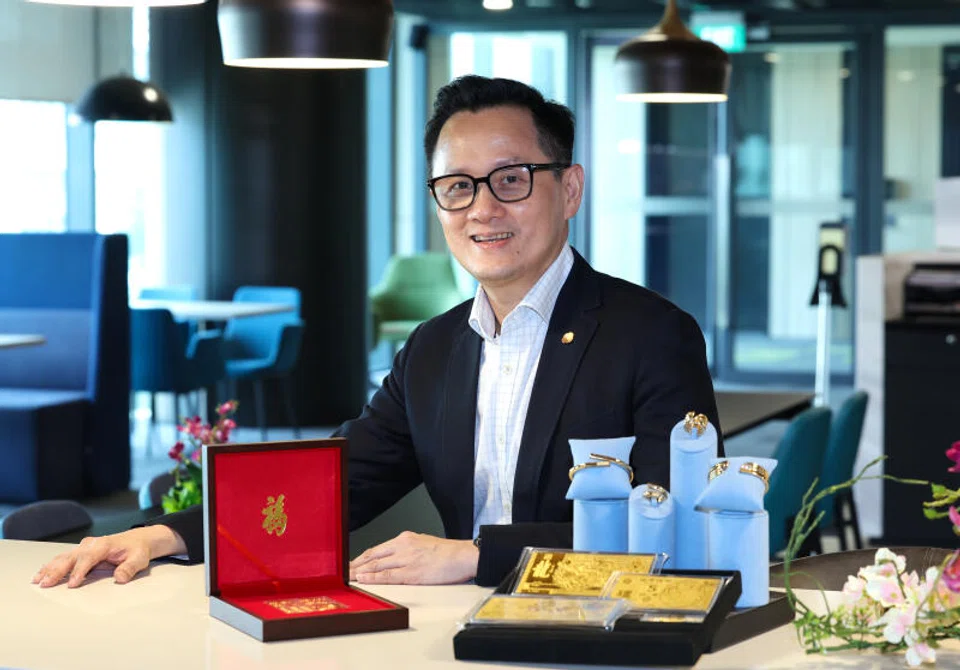
    Ng Kean Seen, the chief executive officer of Aspial Lifestyle, told The Business Times: “With higher lending costs, we have to make sure the business grows bigger so that we can maintain at least the same profitability.”

    And so far, the efforts have borne fruit. The company’s revenue for FY2023 came in at S$471.6 million, up 48 per cent from a year ago. It also registered a 20 per cent growth in net profit to S$19.2 million for FY2023.

    The rise in revenue was attributed to an increase in interest income from its newly acquired Malaysian pawnbroking business, higher revenue from its retail jewellery and branded merchandise segment, and the acquisition of the jewellery business from Aspial Corporation in the fourth quarter of FY2022. The acquisitions include the well-known jewellery retail chains Lee Hwa Jewellery and Goldheart.

    ‘Contemporising’ pawnbroking 

    Fast-food restaurants have a drive-thru option but pawnshops? This was something Aspial Lifestyle ventured into across the Causeway, with Malaysia’s first drive-thru pawnshop Dr.Pajak.

    In January 2023, Aspial Lifestyle, which already had existing Maxi-Cash pawnbroking outlets in Malaysia, paid RM30.7 million (S$9.5 million) and acquired a 65 per cent stake in Malaysia-based pawnbroking business Maxion Holdings.

    Maxion Holdings is a joint venture between Maxi-Cash and Malaysia’s Pajak Gadai Ion pawnshop, which eventually rebranded to Dr.Pajak in 2020. Prior to the acquisition, Dr.Pajak operated three drive-thru pawnshops in Johor, Malaysia.

    Describing them as a “successful but very small” outfit, Ng said that Aspial Lifestyle found Dr.Pajak’s drive-thru concept “highly creative”.

    It catered to Malaysians who mostly drove, and was also a safer option for customers who did not want to walk out in the open with their cash or jewellery.

    Given that Aspial Lifestyle, which already operated several Maxi-Cash outlets in Johor, wanted to expand in high-traffic areas, the concept of a drive-thru appealed to the company, said Ng.

    There are now 18 Dr.Pajak stores across Malaysia.

    While Maxion has an in-depth understanding of the local demographic, Ng said that Aspial Lifestyle also saw an opportunity to “contemporise” the Malaysian pawnbroking scene; in other words, to modernise it along the lines of the Singapore model. This included implementing technology to track live data, such as outstanding loans and transactions, across any Dr.Pajak store.

    Aspial Lifestyle’s recent expansion in Malaysia has led its pawnbroking segment to become the second-largest contributor to the group’s revenue, after jewellery.

    The segment logged a topline of S$63.6 million for FY2023, 23.5 per higher than the S$51.5 million the previous financial year.

    Gold prices boost jewellery segment

    Aspial Lifestyle’s retail and trading of jewellery and branded merchandise segment is by far the group’s largest revenue stream, representing 86.4 per cent of total revenue.

    Despite spot gold prices trading at around US$2,300 per ounce in June, up more than 20 per cent on the year, customers have not been discouraged from buying jewellery. According to Ng, young people, in particular, are buying gold jewellery to act as a hedge against inflation as the cost of living rises.

    Contemporary designs have also attracted younger investors, who can benefit from the capital appreciation of their jewellery at the same time, he added.

    Higher gold prices have “elevated” the company’s bottom line, said Ng as the company sold its older, less expensive gold inventory. He acknowledged that if gold prices remain at current levels, the company’s margins may eventually narrow.

    Expanding into global markets

    Aspial Lifestyle’s proposed acquisition of luxury German jewellery brand Niessing in May 2024 from its parent group through a conditional share purchase agreement is part of its aim to be a “consumer lifestyle powerhouse”.

    Under the agreement, Aspial Lifestyle will acquire all the issued ordinary shares in the capital of Niessing for a consideration of S$18 million.

    Niessing offers a range of high-quality contemporary luxury jewellery. While Lee Hwa and Maxi-Cash cater mostly to regional consumers, Niessing boasts an international network, with stores in Europe, Japan, Australia and other regions in South-east Asia, said Ng.

    He added that Aspial Lifestyle would consider working with smaller brands that want to have a foothold in the Asia-Pacific market and see Aspial Lifestyle as a “natural partner” due to its networks in the region.

    Venturing into secured lending

    Another revenue stream that the company hopes to grow is its secured lending arm.

    In February this year, Aspial Lifestyle increased its stake in BigFundr from 15 per cent to 70 per cent.

    BigFundr provides retail investors with access to real estate-backed loans previously only available to institutional investors or high-net-worth investors. Those who use the platform can invest in loans starting from S$1,000 and see returns of up to 6.5 per cent per annum.

    BigFundr invests in loans secured by registered mortgages over real property. It earns the spread between the interest rate paid by borrowers and the interest rate paid to BigFundr’s investors.

    Ng said that there is a “misperception” that the loans offered by BigFundr are sub-prime in nature as developers are relying on private equity for loans rather than banks.

    In fact, developers in markets such as the United Kingdom and Australia are now turning to private equity for loans as regulatory restrictions deter banks in these markets from offering small loans.

    While secured lending’s contribution to the group is still “miniscule”, Ng said that BigFundr is “very close” to breaking even and will likely be profitable by next year.

    Shrinking market cap, weak share price

    While revenue and profits have grown by double-digits, Aspial Lifestyle’s share price, however, has seen a steady decline since a high of S$0.188 in March 2021.

    Since then it has fallen some 32 per cent to S$0.128, resulting in market capitalisation falling to $177.3 million.

    In common with many other Singapore counters, Ng reckons that the falling share price is partly attributed to the state of the country’s stock market, where even highly profitable companies may struggle to garner attention from investors.

    “As a company, we are disappointed that our share price does not reflect the reality (of the company’s performance). But what we can control and do is to work hard to continue to grow the business, and hopefully, the share price will reflect the true value,” said Ng.



