

Assembling the ‘Avengers’: practicable ESG research for businesses
The team aims to collate the volume of ESG research out there in a way that will be understandable and useful to companies, investors and other stakeholders

Michelle Quah

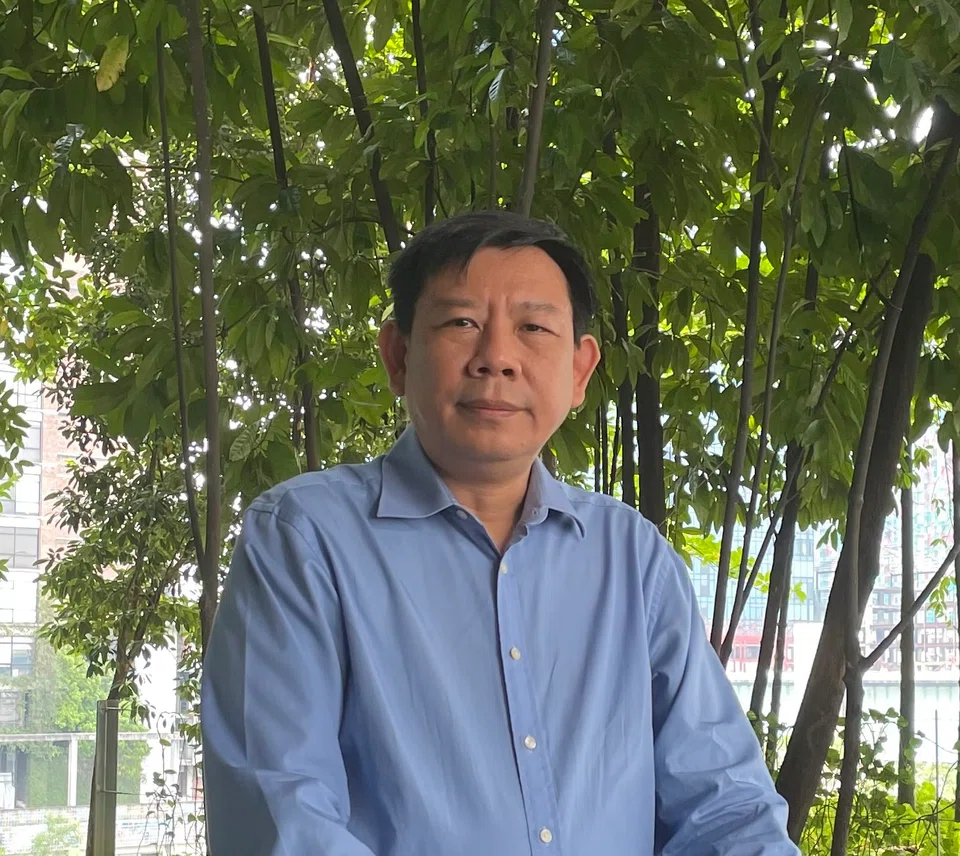
IN A world flooded with research on environmental, social and governance (ESG) issues, the team behind the report “Integrating ESG Factors Into Executive Remuneration” sought to make a difference with their offering.
The report’s author, Professor Mak Yuen Teen, wanted to bring together the increasing amount of academic and practice research being published on different aspects of ESG - and explain the implications of the research in a way that would be both understandable and useful to companies, investors, regulators and other stakeholders.
“It is clear that investors and regulators are increasingly expecting companies to link ESG to executive remuneration, and more companies are doing so, especially in Europe and North America,” said the professor of accounting at NUS Business School, who is known here for his views on corporate governance (CG) issues.
“However, institutional investors are also often sceptical about how companies are going about it, as it could become a means to inflate executive remuneration through ‘soft’ ESG targets or reducing the weighting of financial metrics because financial performance is deteriorating.”
He notes that linking ESG factors to executive compensation isn’t necessarily appropriate for all companies and, even when it makes sense, there are many implementation issues that need to be considered.
“Doing this badly can be worse than not doing it at all,” he warns.
And so, he hopes that this report helps to set companies on the right track - helping them identify the key questions that remuneration committees and boards need to think about when considering whether and how to incorporate ESG factors into executive remuneration.
“It summarises what academic and practice research tells us about these issues. My hope is that it will generate debate on this important topic, especially in this region, and that companies, investors and other stakeholders will find it useful.”
Of critical importance to the credibility and usability of this report is the team behind it - and Prof Mak tells of the care he took in this area. “There is a lot of so-called “research” out there that is produced by those with something to sell or to support a pre-determined position. (We wanted) to bring together a group with no vested interests who can evaluate published research objectively.”
The project came about when the chief executive officer (CEO) of Sustainable Finance Institute Asia (SFIA), Eugene Wong, reached out - his genuine passion to make a difference in the area of sustainable finance appealing to Prok Mak.
Wong said he was much influenced by ‘The Limits to Growth’ - a 1972 report on the exponential economic and population growth with a finite supply of resources - which he read while in university. “I was greatly struck by how the reckless use of resources, environmental abuse and social inequalities would eventually lead to catastrophe, and that we desperately needed to address this very real possibility.”
Recognising the wealth of academic intellectual capital out there that has not been translated for use in practice, particularly in the financial sector, Wong felt the need to bring together a group of academics, like Prof Mak, “who understands how the markets work and could distil the high impact drivers from the academic research pool, and translate them for the market in a way that can catalyse action”.
Separately, CPA Australia (CPAA) approached the professor on collaborating on thought leadership publications in ESG. Given his long history of working with them, which includes producing 10 volumes of annual corporate governance case studies, Prof Mak said he decided to bring SFIA and CPAA together - with SFIA recognising CPAA’s commitment to promoting ESG amongst its members.
On the team of experts that he’s brought together to helm the reports, Prof Mak likens assembling them to that of the Marvel Comics’ Avengers - albeit, he quips, a “slightly nerdy version” - with everyone bringing something different to the table.
The purpose of such an assembly is to produce a series of reports, with “Integrating ESG Factors Into Executive Remuneration” being the first.
“Our plan is that this would be a regular series covering different areas of ESG, including emerging areas. The next issue is expected to be on climate risk, such as how climate risk affects various outcomes such as cost of capital; and there will be reports on ESG issues in supply chains, implications of ESG for directors’ duties, and accounting and disclosure issues relating to ESG.”
But he intends to let the specifics of future reports be determined by the experts that will headline them. The initial group is made up of five individuals, including Prof Mak:
- Associate Professor Lan Luh Luh, associate professor of law at the National University of Singapore (NUS), who specialises in company law, corporate finance law and corporate governance;
- Professor Christopher Tang, a distinguished professor at the UCLA Anderson School of Management, regarded as a foremost scholar of global supply chain management;
- Professor Ho Yew Kee, associate provost at the Singapore Institute of Technology, whom Prof Mak says will bring strong expertise in accounting, finance and investments and is engaged in ESG issues in the investment committees of not-for-profits he serves on; and
- Dr Khoo Guan Seng, a data scientist with a doctorate in computational physics, whom Prof Mak describes as being an expert on climate risk issues, with considerable practical experience in ESG issues through his management and advisory roles at financial institutions, asset management companies, sovereign wealth funds and other organisations.
“I cast the net wide,” Prof Mak said. “I approached a number of individuals who have deep knowledge about different areas of ESG. I was particularly careful to avoid academics who are overnight CG or ESG experts. I am humbled that they agreed with work with me on this and were not looking for financial rewards.”
As for how frequently one can expect these publications, Prof Mak said the team intends to issue four reports a year.
“And, over time, we will need to expand the group – like Phase 2 and Phase 3 in the Marvel Cinematic Universe - but no one will be killed off,” he quips.
The report, “Integrating ESG Factors Into Executive Remuneration”, is available at Prof Mak’s website: https://governanceforstakeholders.com/.
TRENDING NOW

Malaysian king buys stake in Singapore-listed mining firm expanding into rare earths

Grab CEO’s wife Chloe Tong on life with Anthony Tan and finding her purpose

Once staunchly pro-China, Malaysian Chinese businesses are now distancing themselves from Beijing

Longer wait times expected as S’pore healthcare institutions report system disruptions

