Asset manager Lion Global Investors bets on mid-caps and gold investments
CEO Teo Joo Wah notes that the mid-cap segment is more labour-intensive in terms of research effort but is optimistic that it will pay off

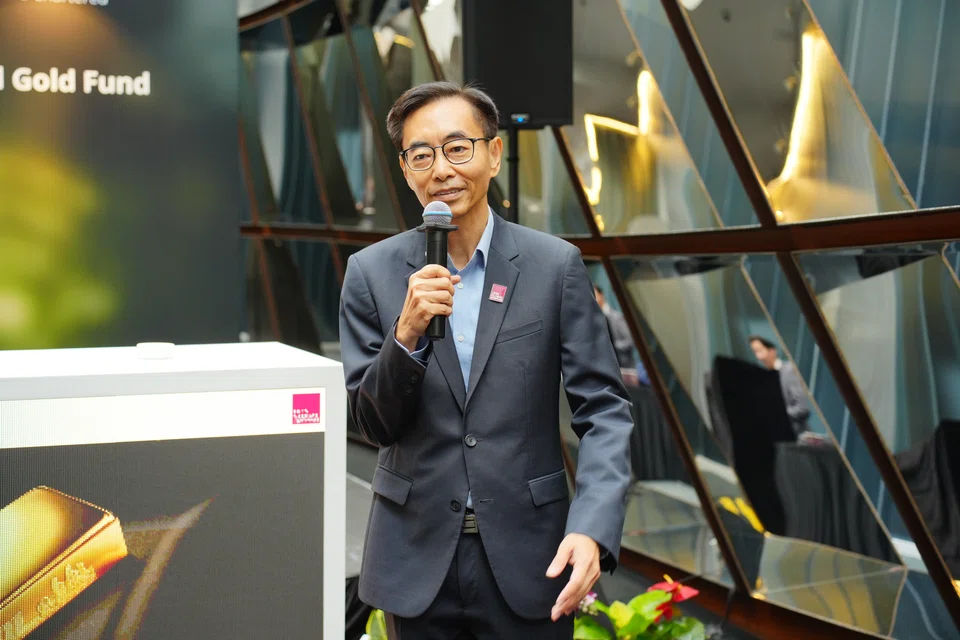
[SINGAPORE] The mid-cap segment of Singapore’s equity market is set to become far more vibrant, instead of being dominated by just a handful of large-cap stocks, envisages Teo Joo Wah, chief executive officer of Lion Global Investors (LGI).
He said that the mid-cap segment is more labour-intensive in terms of research effort but is optimistic that it will pay off.
This comes at a time when the Monetary Authority of Singapore’s (MAS) S$5 billion Equity Market Development Programme (EQDP) is reinforcing the importance of professional fund management.
LGI is among the six newly appointed asset managers under the recently announced second batch of the EQDP. The six will receive a total allocation of S$2.85 billion.
Teo, who spoke to The Business Times on the sidelines of the LionGlobal Singapore Physical Gold Fund event last week, noted that the market is no longer defined solely by large caps, with a substantial and influential mid-cap segment now emerging.
“For mid caps, you tend to be more diversified – and that is good for the industry,” he said.
However, he finds the challenge for investors lies in keeping close track of these companies in sufficient depth. Many investors, faced with the prospect of monitoring 10 to 15 mid-cap names, often find they lack the time to do so, which in turn increases reliance on professional fund managers.
This is in contrast to the past, when Teo noted, investors often questioned whether they even needed an asset manager for Singapore equities, as buying the top four or five large-cap stocks was considered sufficient to mirror the market. Today, that is no longer the case.
As a result, more investors are turning to professional fund managers to access a broader range of opportunities.



Lion Global Investors has already seen stronger inflows this year into its two Singapore-focused funds – LionGlobal Singapore Trust Fund and the LionGlobal Singapore Dividend Equity Fund – noted Teo.
He joined LGI in 2014 as chief investment officer and became CEO in late 2022, succeeding predecessor Gerard Lee.
“Some retail investors know about EQDP; and that over the next two or three years, there will be more money coming into the market,” he said.
He noted that when people develop an interest in Singapore equities, they do their homework and look for the best-performing funds. That track record, he said, is what draws them in.
Unlike some of the other newly appointed EQDP fund managers, LGI is not planning to launch any new funds.
The firm will deploy its EQDP allocation into its existing LionGlobal Singapore Trust Fund, which has a strong track record of over 10 years.
Teo said: “Why would I want to launch a new fund and start with a new track record? Here when I go out, I can tell people (that) they can see the track record. Whereas if I launch a new fund, they will (ask) where is your track record?”
LGI will continue to adopt the same strategy for its Trust fund, allocating 60 to 70 per cent to large-cap stocks and 30 to 40 per cent to mid caps.
He added that small caps as a whole have historically underperformed large caps over the last decade but said that LGI has managed to identify some that outperform.
“The small caps in Singapore, as a group, have not done as well as the big caps so even then, with 20 to 30 per cent in the small caps, we have done even better than the big caps,” Teo said.
Bottom-up
Teo highlighted that the firm will continue to look at newly listed companies as its funds grow. The increased activity around initial public offerings (IPOs), planning and listing processes has kept the fund manager busy, with LGI acting as a cornerstone investor in recent offerings.
The firm’s approach remains largely bottom-up, evaluating companies on an individual basis while recognising Singapore’s strengths in sectors such as infrastructure and logistics.
“We’d rather look at company by company and say, what is the specific story that you have in our engagement with the company and make a decision on that,” Teo said.
On being selected for the EQDP, Teo said it was also important for a manager to be able to attract third-party investors, an area where international fund houses may hold a comparative advantage over local managers.
However, Teo noted: “Over the last two to three years, we have also been able to draw in quite a lot of third party money.”
He noted that LGI faces some limitations as its presence is primarily in Singapore and with only a few regional partnerships, compared with global firms such as BlackRock which have far broader distribution networks.
Although LGI is “still small compared to the big boys”, Teo said that the firm’s strong performance and recent success in attracting third-party capital gave it a good chance.
He sees the EQDP as a progressive initiative. “To revitalise the stock market, it is a question of demand and supply so you need to have the impetus for people to get interested in the market,” he added. He explained that with strong demand, greater liquidity and improved valuations, larger and higher-quality companies are more willing to list in Singapore rather than in Hong Kong or the US.
First physical gold fund launch
LGI has also been active in introducing innovative products over the past two to three years, including exchange-traded funds (ETFs).
The firm’s newest launch is the LionGlobal Singapore Physical Gold Fund, the first insured and securely vaulted physical gold fund in Singapore aimed at both retail investors and institutional investors.
Teo sees the gold fund as a differentiated offering in a crowded market. While investors can access gold through banks, mutual funds, or ETFs such as SPDR Gold Shares (GLD), LGI’s fund is unique because it is domiciled in Singapore and the gold is physically vaulted locally.
“Gold should become a more mainstream strategic asset allocation,” he added.
Younger retail investors are a key focus for LGI, as Teo believes they are more aware of global developments and the ongoing uncertainties in financial markets, which are expected to persist over the next five to 10 years. Older investors, in contrast, often prefer holding physical gold directly, despite higher costs.
Teo shared that the idea for a gold fund originated earlier this year, but its launch was delayed due to regulatory and tax considerations. LGI engaged with the relevant authorities, clarified why a separate licence was not required, and completed the necessary clearances to bring the fund to market.
Decoding Asia newsletter: your guide to navigating Asia in a new global order. Sign up here to get Decoding Asia newsletter. Delivered to your inbox. Free.
Copyright SPH Media. All rights reserved.