Australian billionaire Cannon-Brookes takes a fresh swing to sell solar to Singapore
Anita Gabriel
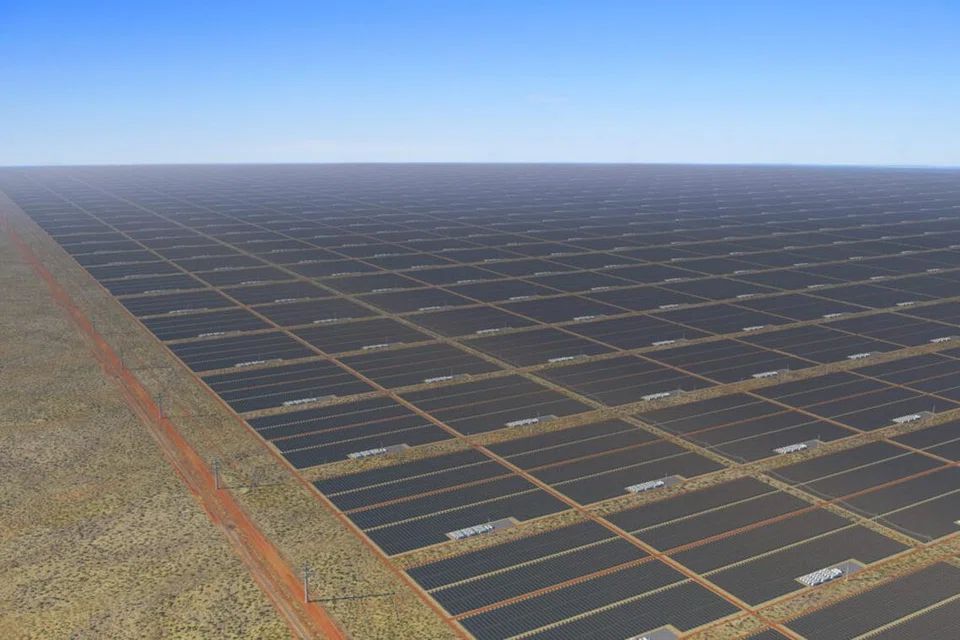
THE sun may be back up on Sun Cable’s audacious A$30 billion (S$26 billion) solar project to ship sunshine from Darwin, Australia, to Singapore via what would be the world’s longest and deepest subsea cables.
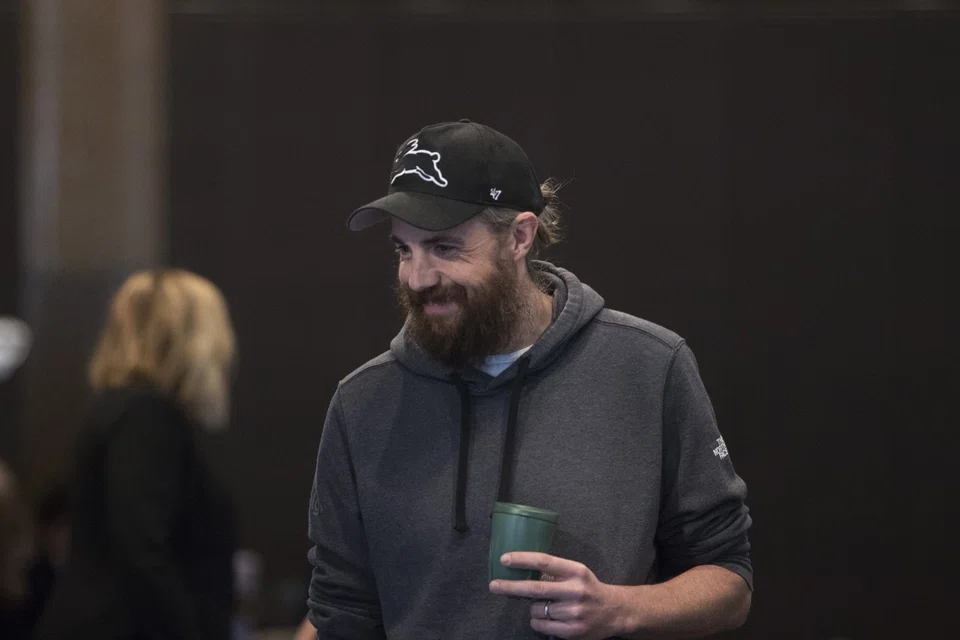
“I feel pretty bullish...we’ve got more streamlined and focused and more momentum...than before. I think we can prove that we’ve got the facts and the figures and the talent to back it up,” said Australian tech billionaire Mike Cannon-Brookes in an interview with The Business Times (BT).
On Thursday (Sep 7), Grok Ventures, a private investment firm run by Cannon-Brookes, said it has completed the purchase of Sun Cable’s assets, including the shares in its operating subsidiaries.
One of the firm’s immediate priorities is to submit a plan later this month to Singapore’s Energy Market Authority (EMA) to get an energy import conditional licence for its flagship project Australia-Asia Power Link (AAPowerLink). The firm has described the project as “the world’s largest solar infrastructure network”.
“We’ve (Sun Cable) been keeping them (updated) along the way. Hopefully that pays off. I mean, to submit by the end of this month shows that work has been continuing,” said Cannon-Brookes, Principal of Grok.
Grok’s chief executive officer Jeremy Kwong-Law told BT: “They’ve (EMA) been on a journey with us and nothing that we’re going to submit is going to surprise them.”
EMA’s request for proposal to appoint licensed electricity importers ends in December 2023 and is part of the city-state’s plans to meet its import target of 4 GW of low-carbon electricity by 2035.
Cannon-Brookes won control of Sun Cable in May after a near six-month sale process that followed the collapse of the company.
The company went into administration in January after Sun Cable’s co-owners Cannon-Brookes and another Australian billionaire Andrew Forrest fell out over whether to continue with the Singapore cable part of the development.
Sun Cable’s AAPowerLink is a mammoth intercontinental undertaking that includes building a 20 GW solar farm near a small town in Australia’s Northern Territory and an 800-kilometre overhead transmission line to Darwin.
Apart from powering up Darwin, the link aims to connect to Singapore via a 4,200 km underwater cable by snaking through Indonesian waters.
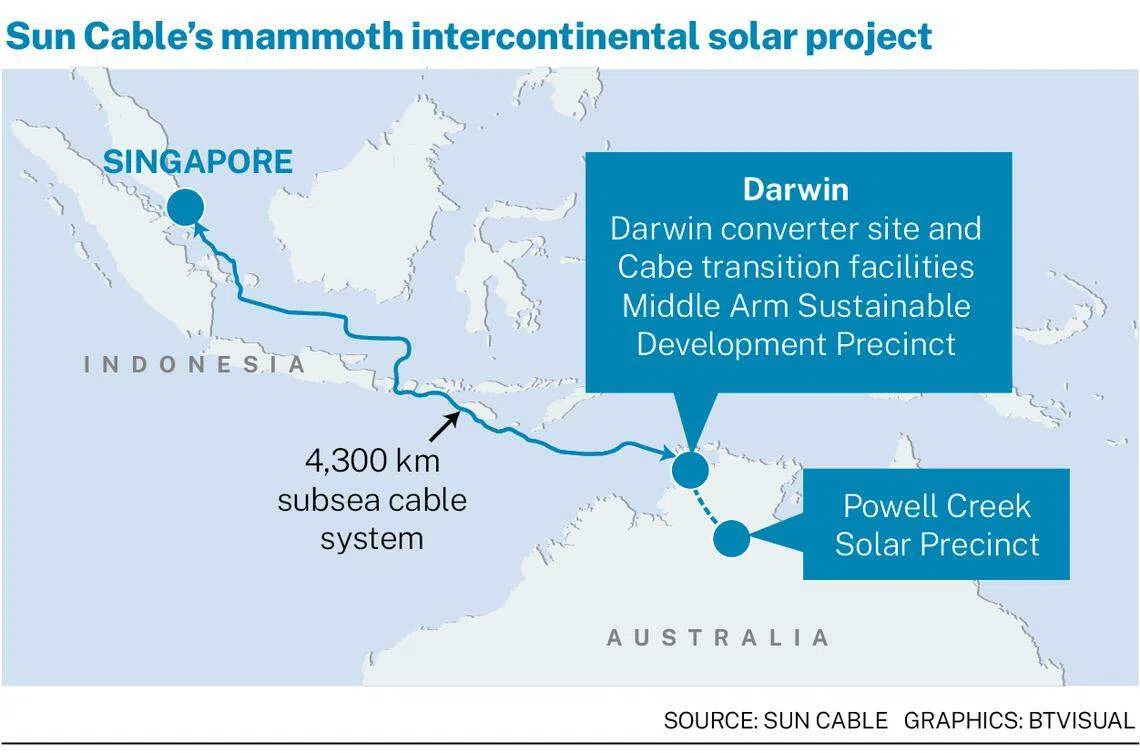
The high-voltage direct current transmission system that will link Darwin and Singapore is the project’s grandest portion and also the most talked about. It was also the centre of the dispute between the two billionaires with Forrest reportedly having concerns about its economic viability.
One of the concerns among sceptics is what happens if something goes wrong with the long-distance transmission cables.
“There are lots of different contingency plans. The cable design configuration is something that we’ve debated with the EMA quite a lot,” said Kwong-Law. He said it could also involve elements such as having a backup, a “very, very big battery” and batteries on both sides (of the transmission lines).
“So there’s a multi-layered approach on risk mitigation, but that’s sort of key to the consideration that EMA is going to make as it assesses the viability of projects,” he added.
The power link project hopes to deliver some 6 GW of renewable energy in multiple stages. In the first stage, the project will generate 900 MW of power in Australia, while more than 1.75 GW will be delivered to Singapore. Subsequently, an additional 3 GW of renewable electricity is planned for customers in Darwin.
Sun Cable has also restructured to split the massive project into two streams – the onshore component Sun Cable Australia, and Sun Cable International, the offshore component involving the project’s most complex portion (the subsea cables). Separating the risk and being able to stage out the different pieces to get the project going is a more logical way, said Cannon-Brookes.
Grok said that “there is a deep pool of reputable prospective offtakers” and Sun Cable has received interest of more than 1.5 times its supply to Singapore.
The company is banking on several plus points of its own to snag Singapore’s import licence and bag more off-takers. Its 24/7 renewable electricity offering would be important to meet the needs of manufacturing companies and data centres.
“The fact that we’re a single vendor that can supply a large amount of (renewable) energy...that’s actually really important to some people. It saves them a lot of time and energy from getting it from 15 or 20 different sources and having to think about credits. So it (the project) is a pretty simple sell,” said Cannon-Brookes.
He is also unfazed that the project faces more competition since the firm ran into trouble earlier this year.
For one, in May, Malaysia said it was lifting its export ban on renewable energy to Singapore. Apart from Malaysia, rival bidders from Indonesia, Laos and Thailand may have an upper hand in getting a slice of Singapore’s import action given their proximity.
“It’s honestly good. The 4 GW (Singapore’s import target) was a pretty aggressive target to start with. It’s a very big number. And we’re only at less than half of that. I think any country’s grid should have a variety of input sources in a variety of locations.
“Part of the strength of what we have is that it’s quite a disparate source from a Singaporean point of view. And that makes them less reliant on any one source...something that Singapore is also looking for,” remarked Cannon-Brookes.
If the entire fate of the project hinges on getting the Singapore licence, he replied: “It’s certainly an incredibly important milestone for us.
“Look, we’re banking on working with Singapore… making sure that it comes through. That’s our number one goal.”