

Awards of new data centre capacity signal search for fresh ideas to benefit Singapore economy: market watchers

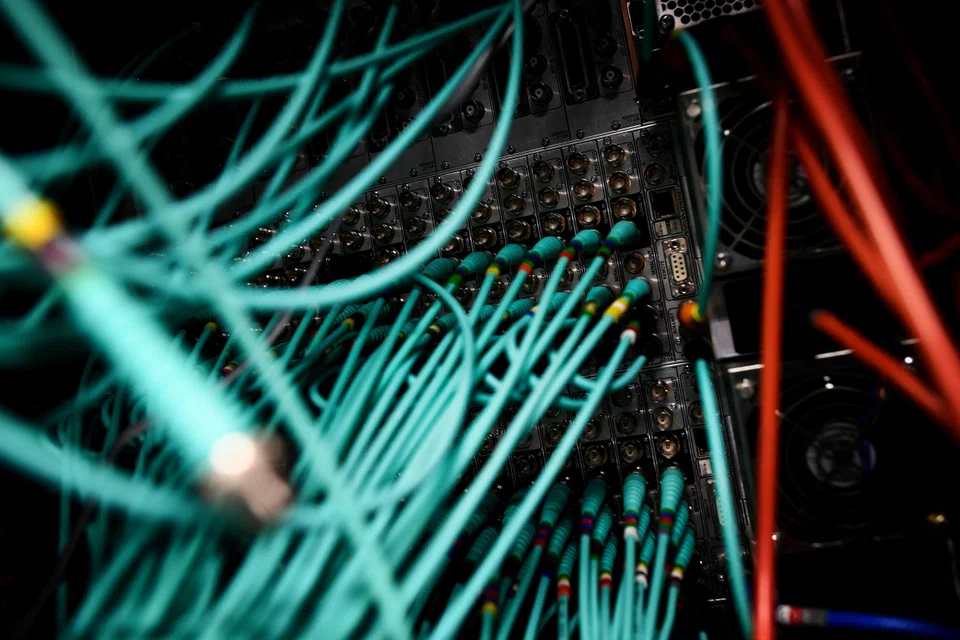
THE Infocomm Media Development Authority (IMDA) and the Economic Development Board (EDB) have put the data centre industry on notice with their choice of operators allowed to grow capacity, market watchers said.
The picks show a focus on value and a search for fresh ideas and unique capabilities that benefit the Singapore economy, including artificial intelligence (AI).
Last Friday (Jul 14), IMDA and EDB announced that four parties would be allowed a combined 80 megawatts (MW) of new data centre capacity: data centre operators GDS and Equinix, a consortium comprising data centre specialist AirTrunk and TikTok-owner ByteDance, and software giant Microsoft.
The award is significant because it brings to a close a moratorium on new data centre building in Singapore.
At the same time, observers noted that the selection excluded some large and established local players, while giving space to some new ones.
Chinese player GDS, for instance, has not been allocated data centre capacity in Singapore before this, said James Murphy, Asia-Pacific managing director of data centre market intelligence company DC Byte.
GDS has built up capacity in Batam and Johor, but has said before that it wants to use Singapore as its regional data hub.
As at Mar 15, 2023, local data centre operator ST Telemedia Global Data Centre (STT GDC) had a 36.7 per cent stake in GDS’ Class A ordinary shares.
The choice of carrier-neutral operators Equinix and GDS would also give potential users greater flexibility, Murphy added. He also believes the companies awarded would be able to further Singapore’s goals in improving connectivity and supporting AI technologies.
Chris Street, JLL’s managing director of data centres for Asia-Pacific, said AI had not been as big of a deal when the data centre call for application was launched in July last year. It will, however, begin to drive more infrastructure development over the next decade.
“In that time (since the moratorium), the industry has shifted; and they recognise that this is something that they want to be involved with,” he said. “So, good on them to pick people that are able to support that.”
Microsoft was an early investor in AI research company OpenAI, which released ChatGPT in November last year. Bytedance is actively developing AI to power personalisations and the parsing of digital videos.
A focus on higher-value, more intense compute applications may also be part of the plan to make data centres in Singapore more productive.
National University of Singapore (NUS) associate professor Lee Poh Seng said IMDA and EDB’s focus on high-performance computing use cases, such as AI, may indicate a desire to densify data centres and make them more energy efficient.
“If you were to integrate liquid cooling with (high-density computing) racks, I think that’s when you will be able to realise the most energy savings,” he said.
NUS’ Lee said companies such as AirTrunk and Microsoft have proven track records in building power-efficient data centres and hitting decarbonisation goals, as well.
In Melbourne and Sydney, AirTrunk has built data centres that aim to achieve a power usage effectiveness (PUE) of 1.15 – significantly lower than the PUE target of 1.3 at 100 per cent IT load that IMDA and EDB laid out last year.
PUE is a ratio that describes a data centre’s energy efficiency, with a lower figure representing higher efficiency.
Microsoft has also demonstrated a willingness to innovate and improve data centre efficiency.
The company in 2018 deployed a data centre in the sea off the coast of Scotland, to take advantage of cooler temperatures. The data centre had one-eighth the failure rate of its land-based control group.
Dedi Iskandar, Asia-Pacific head of CBRE data centre solutions, advisory and transaction, said successful applicants were likely differentiated based on who could bring the best benefit to the nation.
“The differential factor, perhaps, is how extensive and unique the proposal is beyond business as usual, understanding Singapore’s position to be the hub for the region and the strong push for decarbonisation,” he said.
As for companies that did not receive approval to expand, JLL’s Street noted that the authorities aim to allocate more data centre capacity in the next 12 to 18 months.
“That, to me, gives me a glimmer of hope that they were very encouraged by the strength of the overall submissions; that this wasn’t just a paper exercise,” he said.
CBRE’s Iskandar said the additional supply would also help to stabilise the hot market for data centres, and bring more certainty to Singapore’s data centre industry.
Trade association SGTech hopes the process of approval can be improved. Ashton Soh, chair of its data centre chapter, noted that it took a year for the results of the call for application to be released.
This adds significantly to the 18 to 24 months needed to build a data centre, he said.
The amount of capacity allocated to each operator is also relatively small, which could curb development of high-performance computing use cases.
A spokesperson for STT GDC said that despite not being successful, the company remains committed to serving the national economy.
Bill Chang, chief executive of Singtel’s infrastructure unit, said that while the company is “disappointed” with the results, its current builds in the South-east Asian region will double its data centre capacity when they become operational in 2025.
The company broke ground on data centres with partners in Indonesia and Thailand in December 2022 and January 2023, respectively.
At an earnings briefing in May this year, Singtel also said it has plans to recycle five of its old data centres into its latest data centre in Tuas. This would bring its Tuas facility up to 58 MW of capacity. (* see amendment note below)
Amendment note: The article had earlier said that the Tuas facility would see up to 118 MW of capacity. It will instead see up to 58 MW of capacity.
TRENDING NOW
Who is Leo KoGuan, the Singapore-based billionaire backing Nvidia’s Jensen Huang?

Demand, tech capabilities position Apac and AI as Skyscanner’s next growth frontiers: CEO Bryan Batista

Higher rates, weaker spending: Is the Philippines entering stagflation?

South-east Asia has lost Nvidia’s best salesman

