Axington's planned RTO of Chinese tech company was dead on arrival
BY most accounts, now may not be the best time to dabble in China's tech sector. Beijing's regulatory crackdown on Internet companies has left the nation's homegrown giants reeling. The outlook is not much better for those companies turning to China tech plays for a new lease of life.
The proposal of scandal-hit Axington to pay S$405 million for a stake in Hong Kong's Veivo Web Technology was, therefore, dead on arrival.
On Saturday, Axington disclosed that the deal, which would have resulted in a reverse takeover (RTO), was a no go. Talks with the vendor were not fruitful and the non-binding memorandum of understanding inked last month has lapsed.
Regulatory scrutiny of the tech sector aside, there were aspects of the deal that would have made it less than attractive to shareholders.
If the deal had gone through, Axington would have ended up with 60 per cent of Veivo. But Veivo is not the operator of any tech businesses.
It is, instead, the legal and beneficial owner of a wholly foreign-owned enterprise (WFOE) in China.
The WFOE, in turn, was in the process of procuring "effective 100 per cent control over" and entitlement to the economic interests and assets of a Chinese tech company that operates an instant messaging platform, a cloud application platform and a paid application store.
China also restricts foreign ownership of Chinese media and technology companies. To evade these restrictions, Chinese companies listed in the United States have used a complex offshore structure, which Beijing is now paying more attention to and clamping down on. There is no ruling out if China could widen its scrutiny beyond US listings, governance advocate Mak Yuen Teen of NUS Business School pointed out.
Recap of theatrics
Catalist-listed Axington, whose shares have been suspended from trading for nearly a year, had a cash balance of some RM90 million (S$30 million) as at end-June and no revenue-generating business. It was banking on this Veivo deal to tackle its "cash company status" and stay listed.
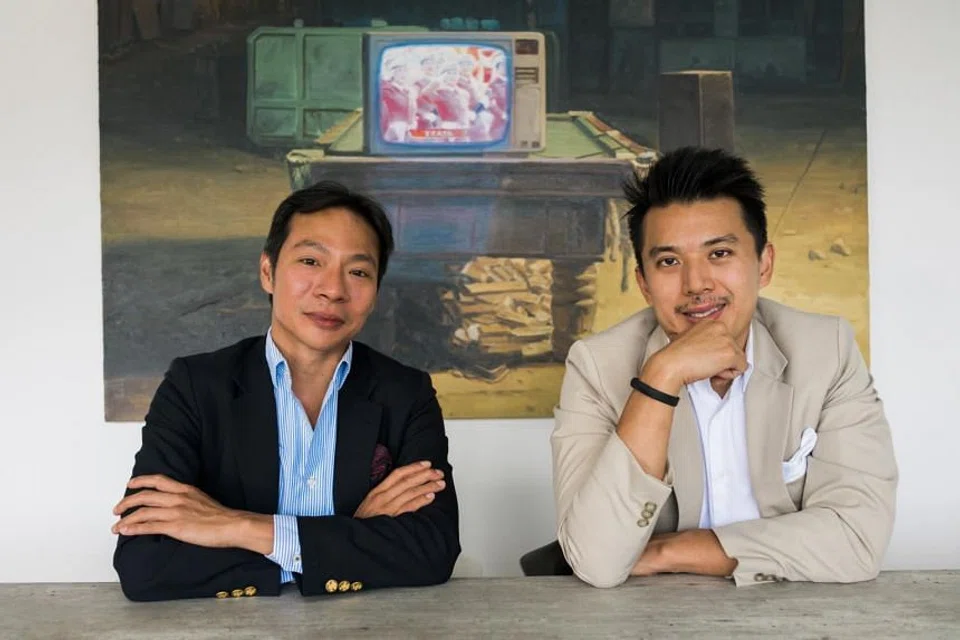
The counter was suspended last year following much drama. Singaporean cousins Nelson Loh and Terence Loh, now bankrupt, had emerged as controlling owners in July last year after their private vehicle Dorr Global Healthcare International made a general offer for the company formerly known as Axcelasia.
At the time, Axington was already without an operating business after its previous owners sold its core integrated professional services business in Malaysia.
The duo's buyout offer was sweet - they offered 20.8 Singapore cents a share, which marked a 43.5 per cent premium to Axington's last traded price prior to the offer announcement. Following that, Dorr ended up with nearly 78 per cent of Axington.
The Lohs had planned to inject their medical and consumer wellness services assets, which would include robotics and artificial-intelligence technology, into Axington. They also announced an intended name change to NETX.
But their proposal flopped in the aftermath of a string of odd events.
Not long after they emerged as shareholders of Axington, photos surfaced depicting the cousins with former US president Barack Obama. These photos, used in the marketing materials of a company they controlled called Bellagraph Nova, turned out to be doctored.
Other claims about Bellagraph Nova began to unravel around the same time, including that it owned a fleet of 10,000 private jets. Police reports were filed amid allegations of accounting fraud in one of the businesses belonging to the cousins. Mr Terence Loh has denied any wrongdoing.
The hullabaloo spilled over to Axington, as the controversy shook down its newly-installed board.
After a board resignation en masse, whatever plans the cousins had in store for Axington came crumbling down. The stock, which had climbed as high as 26.5 Singapore cents on investors' optimism over its new direction, last traded at 19 Singapore cents before being suspended.
Last month, Mr Terence Loh was declared a bankrupt by Singapore courts following proceedings by creditor Maybank Singapore to recoup debt of some S$3 million. In January this year his estranged cousin Mr Nelson Loh, whose whereabouts are still not known, had suffered the same fate after DBS commenced bankruptcy proceedings in relation to some S$14.2 million in debt.
Whither now?
Noteworthy is that Mr Terence Loh was responsible for introducing the target to Axington. As he has been declared a bankrupt, Dorr's shares in Axington are charged to DBS for a loan provided to Dorr - according to Axington's reply to a string of queries earlier by the Singapore Exchange on the Veivo deal.
As Dorr's go-ahead on any RTO is imperative given its super majority ownership in Axington, the ball is in the lender's court. A key condition in the Veivo RTO was an undertaking by Dorr to vote in favour of the deal and not dispose of its shares until the conclusion of the general meeting to be convened. This had piled on the risks on an already wobbly deal - and could do the same for potential future deals, if at all.
Axington has until end-August to get its act together and submit a workable proposal. While the Singapore Exchange may have dodged a backdoor listing of an S-chip at a time when China's intense regulatory scrutiny, albeit not broad-based, has pushed panicky investors towards the exit door and raised doubts on the investability of the sector, it also leaves Axington back in square one: at risk of getting axed from the exchange.
TRENDING NOW
8 public officers referred to police over property buys near unannounced MRT stations: Chan Chun Sing
DBS tops trades in smaller board lots on debut of revised SGX framework
Grab CEO’s wife Chloe Tong on life with Anthony Tan and finding her purpose
Retrenched PMETs who return on lower pay see median 25% wage cut