
Baidu CEO engineers US$66b comeback after some slip-ups
 Add BT as a preferred source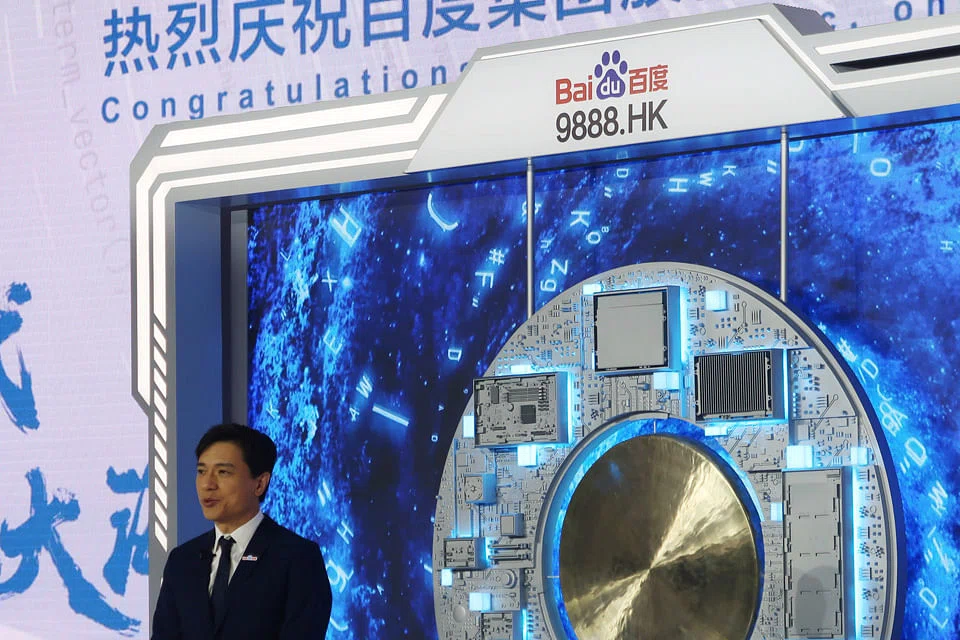
Hong Kong
BAIDU'S stock offering in Hong Kong on Tuesday marks an unlikely resurgence for founder Robin Li, who has fought his way back to relevance in China's technology industry after squandering a near-monopoly in search.
The Internet giant raised US$3.1 billion in the biggest homecoming by a US-traded Chinese firm in the city since JD.com last June. Mr Li's firm has more than tripled its valuation from the trough last March, with about half the gains coming in the past three months as Baidu's bets in artificial intelligence (AI) finally start to pay off in areas like cloud and electric vehicles.
It's a rare stretch during which the company has outperformed larger rivals Alibaba Group Holding and Tencent Holdings, whose shares have struggled in the wake of China's campaign to crack down on its free-wheeling tech industry.
In an exclusive interview, the 52-year-old founder sketched out how Baidu is transforming into an AI company and why he supports Beijing's antitrust push. The firm will continue to team with carmakers like Geely to stake out a position in the world's biggest vehicle market, sustain a record pace of R&D investment despite compressing margins, and seek to acquire talent and technologies to drive AI development, he said. Eventually, the bulk of Baidu's revenue will come from businesses beyond search and advertising, he added.
"We've been investing in AI for more than 10 years and we probably lost a lot of money by doing this," he said in an interview with Bloomberg Television. "Eventually we'll be rewarded."
Navigate Asia in
a new global order
Get the insights delivered to your inbox.
Baidu closed out its first day of trading in Hong Kong unchanged after rising nearly 2 per cent earlier in the session. Its muted debut compares with first-day gains of 3.5 per cent at JD.com and 5.7 per cent for Netease, two other US-listed Chinese firms that turned to the city for secondary listings.
Once part of China's Internet triumvirate alongside Alibaba and Tencent, Baidu has fallen behind in the mobile era, where the effectiveness of its search service has been crippled by super-apps like WeChat creating siloed ecosystems. To compete, Baidu's core search product is morphing into an all-purpose platform hosting an array of content from news articles to live-streams and short videos, essentially emulating those apps.
Meanwhile, Baidu has sunk billions of dollars over the past decade into areas from natural language processing to voice interaction, an endeavour that ran into initial trouble with departures of key executives.
Until recently, investors had called into question the firm's R&D spending, which amounted to roughly a fifth of its 2020 revenue. But Mr Li has kept faith in his original vision and is pledging to keep up the pace of investment for the next decade or two.
Now, commercialisation is finally coming to the fore. In January, Baidu unveiled a new venture with Zhejiang Geely Holding Group that will produce smart EVs, prompting analysts to revalue the tech giant's eight-year-old Apollo unit, whose self-driving software had drawn tepid interest from carmakers in the past. The venture with Geely will accelerate that integration, Mr Li said, with the goal to deliver its own EVs to the market within three years.
Like Alphabet's Google and Amazon.com, Baidu started to custom design chips for its own server farms, performing tasks like search rankings. But what started as a cost-saving exercise has morphed into a new business, with nearly half of its Kunlun chips used by third parties last year. The new 7-nanometer iteration of the AI silicon has started production at fabs despite the global chip shortage, Mr Li said. The unit - which recently raised US$230 million from investors like IDG Capital - will target more external clients in areas from finance to education and energy, he added.
By pushing into chips and AI, Mr Li is delving into businesses that have become a top priority for China's Communist Party as the world's largest economies vie for global influence. US-China tensions spanning trade to cybersecurity and investments have already engulfed a number of Baidu's peers. Scores of Chinese companies that once saw an American listing as conferring the ultimate cachet have delisted or added secondary listings elsewhere.
Baidu's Hong Kong debut is a hedge against the potential risks of trading in the US, Mr Li admitted, but more importantly, it "lets the Chinese investors really share in Baidu's growth story".
While Jack Ma's Alibaba and Ant Group have been the most visible of regulators' targets, the country's antitrust watchdog this month also penalised firms including Baidu and Tencent for not seeking its approval for years-old acquisitions and investments. Mr Li pledged to ensure the company doesn't make the same mistake in future deals, which could be funded by proceeds from the Hong Kong listing.
In many ways, Baidu is better shielded from China's crackdown than its fellow tech pioneers. Efforts to encourage private-sector businesses to share the data they've amassed will likely benefit Baidu's core search service by dismantling the walls around the country's most popular mobile apps. Its open platforms for self-driving and deep-learning technologies dovetail with Beijing's drive to open up data amassed by private-sector companies, Mr Li said.
His firm also doesn't wield the same kingmaker status as Alibaba and Tencent, both of which back a plethora of up-and-comers. Some of their portfolio companies, such as food-delivery giant Meituan and ride-hailing leader Didi Chuxing, were created through billion-dollar mergers. In 2017, Baidu sold its takeout business to rival startup Ele.me, which was later acquired by Alibaba, after losing a costly subsidy war in China's gig economy.
Thanks to its relative immunity to the antitrust push, Baidu's market capitalisation has climbed US$66 billion over the past year, ahead of its Hong Kong listing where retail demand was 112 times the available stock.
While the share sale has provided Baidu with a temporary boost, investors are likely to focus more on the firm's search and content as its biggest earnings driver over the medium term. That's where upstarts like TikTok-owner ByteDance have been luring away eyeballs and marketing dollars alike. Baidu's Netflix-style service iQiyi saw revenue fall in the past two quarters as newer platforms like Bilibili and Kuaishou Technology gained traction. BLOOMBERG
Decoding Asia newsletter: your guide to navigating Asia in a new global order. Sign up here to get Decoding Asia newsletter. Delivered to your inbox. Free.
Share with us your feedback on BT's products and services

