

Bank of Japan says sales of its ETF holdings to start next week
The bank is set to unload the assets little by little to avoid roiling markets

[TOKYO] The Bank of Japan said it will start selling its holdings of exchange-traded funds on Monday (Jan 19), a project that may take more than a century if it proceeds at the currently planned pace.
The BOJ will start selling its holdings of ETFs and Real Estate Investment Trusts from next week, according to its statement on Friday (Jan 16). The bank is set to unload the assets little by little to avoid roiling markets, as decided at a September policy board meeting.
The entire ETF holdings had a market value of 83 trillion yen (S$676 billion) at the end of September, and that value has likely risen since then after stock prices reached a record high this week.
The book value of the ETFs is around 37.1 trillion yen, according to the central bank. Governor Kazuo Ueda’s board decided in September to sell the assets at a pace of 330 billion yen per year based on book value, a pace that’s equivalent to 27.5 billion yen per month.
A simple calculation indicates the process will take around 112 years if that pace remains unchanged.
The BOJ wants to make the market response of the sales almost unnoticeable, like it did for the sales of stocks brought from beleaguered banks in 2000s, people familiar with the matter told Bloomberg last month. The selling of those stocks was completed in July after about a decade of offloading that didn’t disrupt financial markets.
The Nikkei 225 stock index touched a record high earlier this week on the expectation of more expansionary fiscal spending by Prime Minister Sanae Takaichi. As Japan’s stock prices have more than doubled in the last three years, the market value of the BOJ’s holdings has risen rapidly.
The sales are likely to provide some extra cash over time for the government via the BOJ’s contributions to the national coffers as Takaichi’s administration looks to keep fiscal policy expansive even in the face of the largest public debt burden among developed nations.
While the central bank expects to keep a steady pace of monthly sales, the bank may stop selling them in the event of exceptional volatility as seen during the Global Financial Crisis in 2008, according to the people.

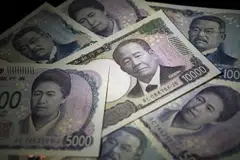
The BOJ began buying ETFs and J-REITs in December 2010 as part of its efforts for monetary easing. The scale of the buying was expanded considerably when the central bank launched an ultra easy policy in 2013. They were formally scrapped in March 2024. BLOOMBERG
Decoding Asia newsletter: your guide to navigating Asia in a new global order. Sign up here to get Decoding Asia newsletter. Delivered to your inbox. Free.
Share with us your feedback on BT's products and services






