

Bankers need to learn to deal with ambiguity to navigate rising uncertainty: HSBC’s Ashmita Acharya
Banks also need to have an external mindset, with new providers and partners coming into the market

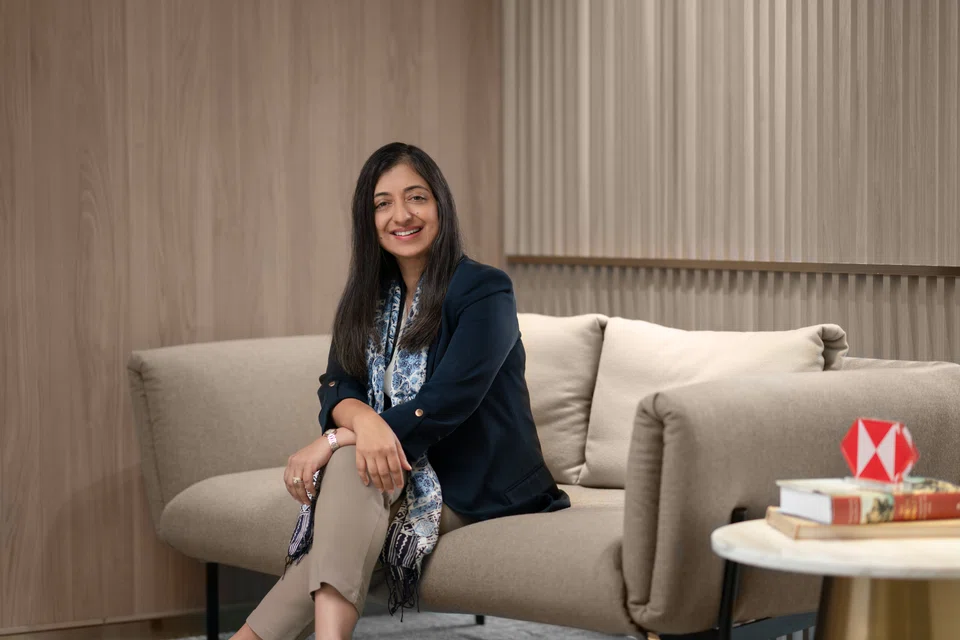
IN AN increasingly uncertain world, being able to deal with ambiguity can help navigate challenges and ever-changing trends, said Ashmita Acharya, head of wealth and personal banking at HSBC Singapore.
Acharya, who joined HSBC in 2023 from Citi with more than 20 years of experience in international banking, said it is increasingly important for bankers to have tenacity, especially as it is getting easier to get derailed and overwhelmed.
“We will not know everything… And so many things are coming; some of it will gain scale, some of it will not. You need to be able to deal with and navigate that ambiguity to create clarity for yourself and your team,” she said.
The banker also expects that being curious and open to change can help create better experiences for clients, and better steer the bank for the future.
Noting that the “quintessential banker of tomorrow is a mix of everything”, she hopes to inculcate a culture of resilience and curiosity, to better address changing trends in the banking industry.
“Stay the course; don’t get too hassled or frazzled by what’s going on, and we’ll get through this.
“Today’s bank may not be identical to tomorrow’s, but banks like HSBC have ridden through multiple different cycles, so there is no reason why we cannot navigate what’s out there,” she said.
Here are excerpts from her conversation with The Business Times:
How did you end up in your role?
When HSBC had this opportunity, it was quite inspiring to speak to the leadership because there is a tremendous amount of conviction in wanting to be the No 1 wealth manager and international bank in the world, as well as conviction and commitment to Asia and to Singapore.
I was at Citi for 20 years. I worked in India for the early part of my life, then spent 11 years in New York, before I moved to Singapore.
My experience has been across sales, wealth management products, strategy, client experience, marketing, segment management, and I also managed big teams when I was the retail bank head for Citibank in Singapore.
Having that breadth of experience really lent to this role, because it is quite a broad role.
What are some key trends in your area?
Covid has amplified digital adoption in our lives. I don’t expect the next generation will engage with financial services in the way I do, so we have to be very different in terms of driving engagement.
Data has become excessively important. Especially in Asia, people are very open to sharing data to get hyper personalised offers. We need to be better in how we throw up data and use that “segment of one” approach.
There is a tremendous amount of democratisation of wealth in Asia – wealth is no longer an esoteric concept of the rich people. People are also getting more connected and experiencing the world abroad. This is making people understand wealth better and want more out of it.
There is too much choice and information as well. Content has become all pervasive, so being able to distil it to make decisions is becoming difficult. That plethora of information is also making us more uncertain and nervous about the future.
How do these affect your role?
Clients are more connected globally and internationally. So we need to build out our international proposition, by making it more digitally enabled and customising with data.
Banks also need to have an external mindset. New providers and partners are coming into the market, so we need to have that mindset of collaboration.
I’m really pushing teams to have intrinsic trust and a healthy sense of conflict, because you need to be able to push each other during a transformation.
With clients, we want to tell the clients that we’re not here to sell products to you, but we are here to understand your needs and motivations.
The more we can get out of the box to think about the solutions our clients need, the more we can weave in data and digital into our solutioning. This will better create client experiences and we can free up more time, as humans, to build relationships.
TRENDING NOW

Good Class Bungalow market activity picks up pace on ‘realistic’ pricing
Indonesia imposes US$116 million in fines over manipulation of Sinar Mas, Prajogo-linked stocks

Singapore identifies 7 firms responsible for haze fires, notices issued urging action: Grace Fu

Once staunchly pro-China, Malaysian Chinese businesses are now distancing themselves from Beijing

