

All big US banks but one pass stress tests
New York
ALL but one of the US's largest banks earned an unconditional passing grade from federal regulators on their annual stress tests, which measure their preparedness to weather a financial crisis.
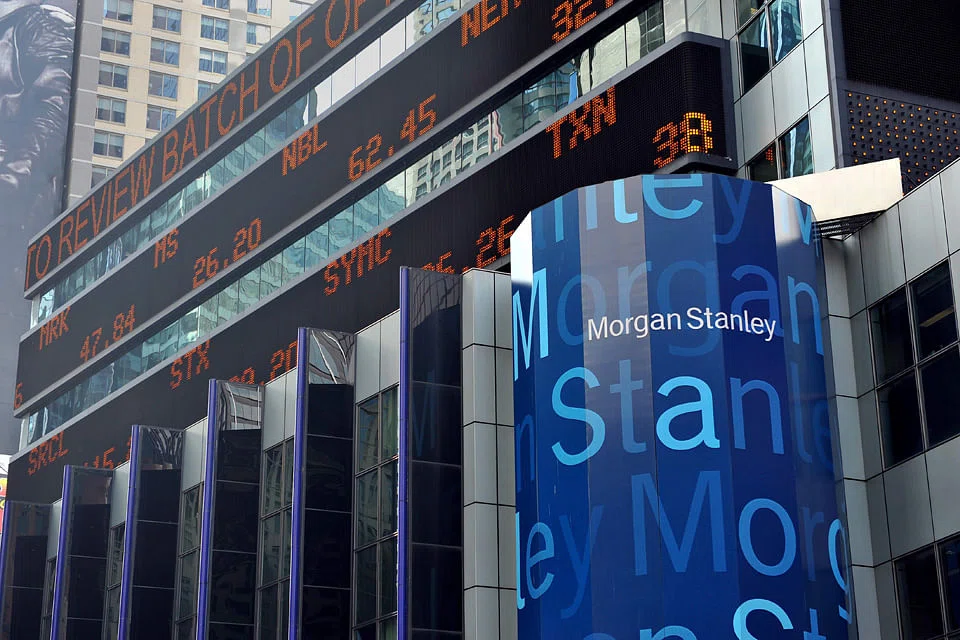
The one US-based institution that did not pass unconditionally was Morgan Stanley, a Wall Street bank that has been struggling to regain its footing after the financial crisis of 2008. Regulators raised concerns over the company's internal controls and processes.
The Federal Reserve gave failing grades to the US subsidiaries of two European banks, Deutsche Bank and Santander, which both failed in previous years.
The banking stress tests - which measure whether banks have enough capital and liquidity, management controls and other necessary safeguards to survive various worst-case situations - have been required of banks with more than US$50 billion in assets since the passage of the Dodd-Frank act, which took effect in 2010.
The passing grades mean that all the big banks - even Morgan Stanley - will be able to pay dividends and buy back stock from shareholders. The failing banks will not.
The results, announced by the Fed on Wednesday afternoon, are the second part of the annual stress tests which compel each institution to run a simulation of how it would bear up under various catastrophic conditions such as an abrupt rise in interest rates or unemployment, or a big crash in equity markets. Last week, the Fed said that all the big banks would be able to make it through a recession and still maintain adequate financial buffers.
On Wednesday, a Fed official said that even with the concerns raised, the stress test results suggest that banks would be able to withstand an event like Britain's exit from the European Union, which has rocked bank stocks over the last week.
Since the financial crisis, banks have been required to create large capital barriers to cushion against losses from a recession or market shock. While the financial system has not encountered any problems close to the mortgage losses of 2008, banks have been able to withstand more recent challenges like the steep drop in oil prices and the turmoil in Europe.
While tougher capital requirements may be helping to stabilise the banks, they are hampering profitability. The stock prices of many large banks have languished as investors question whether these companies can increase their profits substantially in such a stringent new regulatory environment.
The stress test results announced on Wednesday are no doubt a welcome relief - in particular, to Bank of America and Citigroup - which have had difficulty passing the test unconditionally in past years. Both banks have spent tens of millions of dollars and assigned some of their top executives to the task of ensuring that they gain the Fed's approval.
Shortly after the results were made public, Citigroup announced that it would more than triple its dividend, to 16 US cents from five US cents, and buy back as much as US$8.6 billion of stock. Bank of America said that it would increase its dividend to 7.5 US cents from five US cents and purchase US$5 billion in shares.
Even Morgan Stanley came forward to say that it planned to raise its dividend to 20 US cents from 15 US cents and increase its share buyback programme to US$3.5 billion for the four quarters beginning July 1, from US$2.5 billion in the previous period.
The three banks that were called out by the Fed on Wednesday all had big enough financial buffers, the regulators said. Rather, the criticism was with more qualitative aspects of the way that they operate internally.
At Morgan Stanley, the Fed said, the problems "include shortcomings in the firm's scenario design practices, which do not adequately reflect risks and vulnerabilities specific to the firm; weaknesses in some aspects of the firm's modelling practices; and weaknesses in governance and controls around both scenario design and modelling practices".
Morgan Stanley will be able to return money to shareholders as planned, but it will need to improve its internal processes by the end of the year. If the bank does not make those improvements, the Fed could halt the bank's payouts. The results are an unhappy hiccup for Morgan Stanley, which has been struggling to raise its profits to the level of its competitors' and is in the middle of a significant cost-cutting campaign.
In a statement, Morgan Stanley chief executive James Gorman, said: "We are committed to addressing the Fed's concerns about our capital planning process, and fully expect to meet their requirements within the established time frame."
For Deutsche Bank and Santander, the failing grades raise bigger concerns about their ability to satisfy US regulators. Deutsche Bank in the US has failed twice in a row, and Santander three times.
In this and previous years, the Fed has applied its tests only to parts of Santander and Deutsche Bank. These two banks, as well as other foreign banks, such as Barclays, UBS and Credit Suisse, have large operations in the United States that have not undergone stress tests. But that will soon change. The large foreign banks now have to organise their US operations into a single "intermediate holding company". NYT






