Alternative assets post strong 2020 growth in Singapore asset management industry: MAS

Singapore
ALTERNATIVE assets are an increasingly bright spot in Singapore's asset management industry, with significantly higher growth rates than traditional assets - albeit on a relatively low base.
In 2020, growth of assets under management (AUM) in private equity and venture capital expanded by 54 per cent to S$391 billion, compared to a 16 per cent growth in 2019, thanks to investors' appetite for yield and uncorrelated assets.
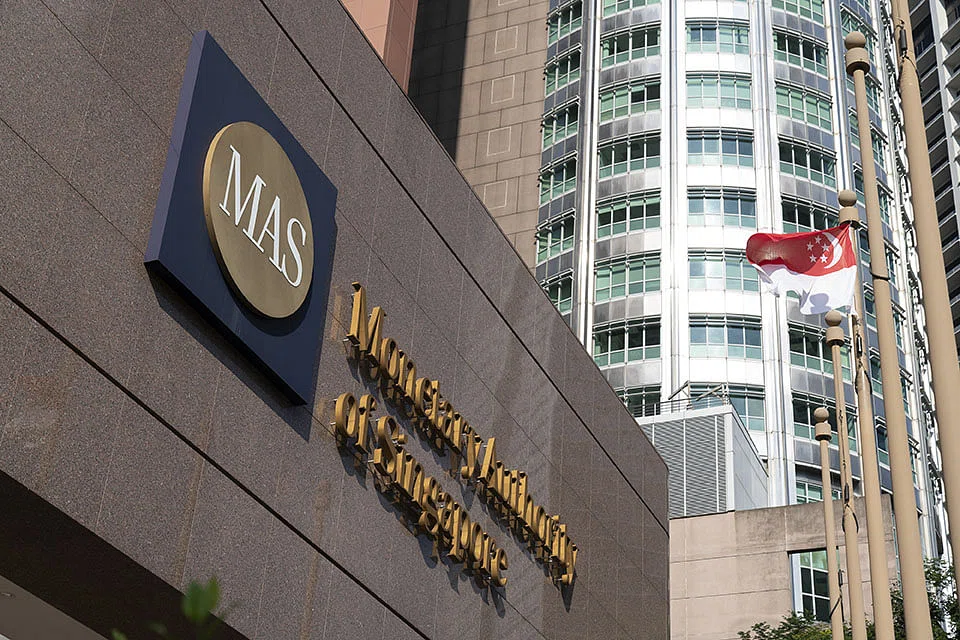
The Monetary Authority of Singapore (MAS) on Wednesday (Nov 10) released its annual survey of asset management. The industry's AUM overall expanded by 17 per cent to S$4.7 trillion in 2020, helped by continuing growth in discretionary and alternative assets. Discretionary assets accounted for about 51 per cent.
Thanks to improved risk sentiment, the industry saw net inflows of S$387 billion, the highest net inflow since 2014 when S$458 billion of net inflows were recorded.
Alternative assets grew by 31 per cent to S$947 billion from S$721 billion in 2019. The private equity (PE) segment's AUM came to S$375 billion, giving it a 40 per cent share of alternative AUM. The second-largest segment was real estate with S$221 billion. Venture capital (VC) assets came to S$16 billion.
The MAS noted that capital raising was robust as PE and VC managers reported S$39 billion and S$5 billion of dry powder, respectively. This is equivalent to 10 and 32 per cent of drawn-down AUM, respectively.
MAS has been working to position Singapore as the Asian centre for capital raising and enterprise financing. Over the past 5 years, PE and VC AUM grew at a compound annual growth rate of 23 per cent, while the number of PE and VC managers grew to 336 as at end-2020.
Private market managers are also stepping up investments in sustainable projects, MAS noted, "as stakeholders such as clients and asset owners place greater emphasis on green investments to mitigate climate change".
Private credit is also increasingly gaining attention as a source of funding for businesses, although the segment is nascent in Asia-Pacific compared to the United States and Europe. MAS noted that private credit has "sizeable" room to grow, "driven by credit market reforms, limited bank lending to small and medium sized enterprises and increased restructuring needs".
The Asia-Pacific private credit market stood at US$64 billion at end-2020, more than double the US$26 billion reflected in 2012.
"With global private debt AUM expected to grow by 11.4 per cent from US$887 billion in 2020 to US$1.46 trillion by 2025, there is opportunity for Singapore to grow private credit as an asset class to support the financing needs of private enterprises in the region, while also developing Singapore as a private credit and full-spectrum private markets hub," said the report.
Covid-19 is expected to accelerate demand for private credit. Dislocations in sectors such as consumer, hospitality and retail raise opportunities for special situations investment. Private credit managers can play a role to help distressed or insolvent companies to restructure their debt, manage liquidation or execute corporate turnaround.
MAS said it is committed to catalysing the growth of private credit, "by anchoring private credit managers and creating awareness of regional investment opportunities, while managing the potential risks... and ensuring investors understand the complex nature of the asset class".
Another potential growth area is infrastructure financing, particularly in a post-Covid world. At end-2020, Singapore-based asset managers' infrastructure investments were valued at around US$15 billion, an increase of more than 7 times since 2015. Renewable energy, digital infrastructure and transportation are key areas of focus for infrastructure managers.
In terms of the variable capital company (VCC) framework, as at mid-October more than 400 VCCs have been incorporated or re-domiciled by close to 300 asset managers.
MAS said it is studying possible enhancements, including facilitating the conversion of existing investment fund structures, such as those set up as a company, into a VCC, and allowing a wider range of entities to set up and manage a VCC.
The VCC structure has enabled leading asset managers such as AIA Investment Management and UOB Venture Management to co-locate their investment management and fund domiciliation activities in Singapore. Managers have also set up exchange-traded funds (ETFs) using the VCC structure for listing on SGX.
TRENDING NOW
In a super-aged Singapore society, we must learn to differentiate independence from dignity
He built the Vingroup empire. Now South-east Asia’s richest man is handing some key roles to his sons
Floods compound Philippine growth woes from public-works scandal
Despite the de-dollarisation debate, demand for dollar liquidity in Asia is growing