

Anbang says chairman can't perform his duties due to personal reasons
Seattle
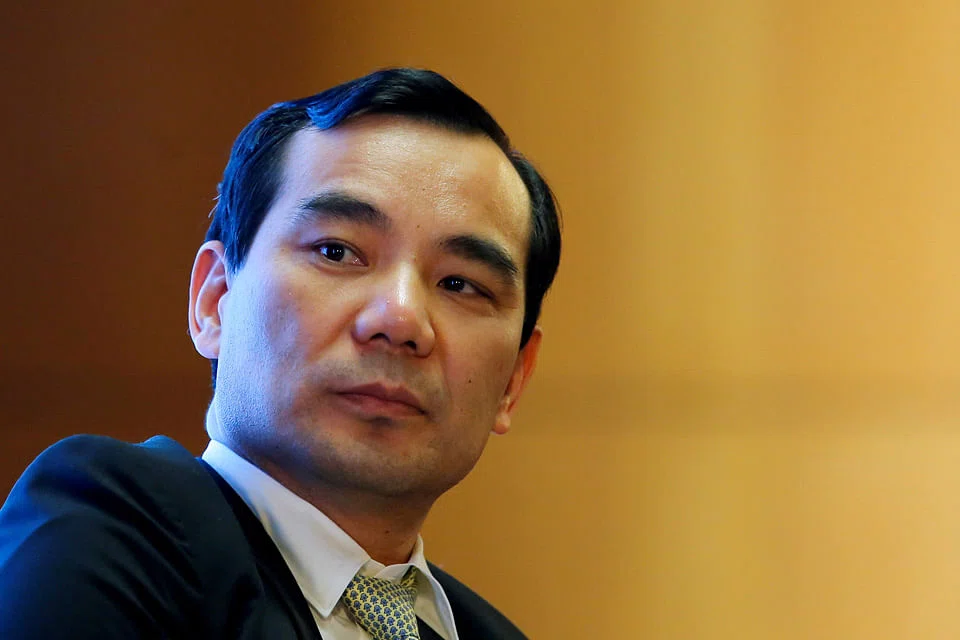
ANBANG Insurance Group Co, the Chinese company that has curtailed a global acquisition spree amid questions about its ownership and financing, said chairman Wu Xiaohui is unable to perform his duties because of personal reasons.
Other senior managers are authorised to carry out Mr Wu's responsibilities and operations are normal, the Beijing-based company said in a statement posted on its website.
The news, amid a crackdown on financial risk-taking in China, adds to the intrigue surrounding one of the country's most aggressive overseas dealmakers, which only came into being in 2004.
Since it embarked on a global takeover spree three years ago, Anbang has drawn attention for making preemptive offers and disrupting transactions already in place. Mr Wu has personally negotiated deals without using traditional investment banks.
Caijing magazine reported on its website late on Tuesday that Mr Wu was taken away by Chinese authorities on June 9, citing unidentified people. The report said that officials from the China Insurance Regulatory Commission (CIRC) met a small group of Anbang staff on June 10 and didn't provide specific reasons for Mr Wu being taken.
The report, which said it wasn't clear whether Mr Wu was assisting with a government investigation, was later deleted from the magazine's website.
Caijing didn't immediately answer calls and emails requesting comment before regular business hours in Beijing.
A person familiar with the matter told the South China Morning Post that Mr Wu had been "assisting relevant investigations" and previously had always returned to his office or home after a few hours of questioning. Mr Wu hasn't returned since he was taken away at the end of last week, the person added.
Anbang on June 2 denied a Financial Times report that said Mr Wu was barred by Chinese authorities from leaving the country.
CIRC declined to comment to Caijing, and Bloomberg's phone calls to CIRC spokesman Zhang Zhongning outside business hours weren't answered. Anbang's US representatives said they had no immediate comment.
Anbang drew worldwide attention in 2014, as it snapped up real estate and financial-services companies in Asia, the US and Europe, often at large premiums. In October that year it agreed to buy the landmark Waldorf Astoria in New York for US$1.95 billion, a record for a single American hotel, and later closed the property while it converts most of the rooms to luxury condominiums.
Mr Wu, who married the granddaughter of reform leader Deng Xiaoping, doesn't speak English and often travels with translators. The vast majority of Anbang is collectively owned by relatives of Mr Wu or his wife, Zhuo Ran, The New York Times has reported.
Anbang had been in talks to invest in the proposed redevelopment of 666 Fifth Ave in New York, the marquee holding of Kushner Cos, the family company of US President Donald Trump's son-in-law Jared Kushner. Talks broke off in March.
Mr Wu has done deals with Blackstone Group LP, whose chairman and chief executive officer, Stephen Schwarzman, has helped endow a scholarship at Beijing's Tsinghua University. China's sovereign wealth fund owns a minority stake in Blackstone.
In early 2016, Anbang agreed to buy Strategic Hotels & Resorts, owner of 16 high-end hotels in the US, from Blackstone for about US$6.5 billion. One hotel next to a major naval base later dropped out of the purchase amid national security concerns.
About the same time as Anbang agreed to the Strategic purchase, it made a surprise US$14 billion offer for Starwood Hotels & Resorts Worldwide, starting a bidding war with Marriott International Inc.
A few weeks later, Anbang walked away from the bid with scant explanation, having forced Marriott to increase its offer by about US$1 billion.
Last month, an investor group including funds affiliated with Blackstone agreed to acquire Fidelity & Guaranty Life.
Anbang's earlier agreement to buy the company was cancelled in April after the Chinese company failed to meet transaction deadlines. BLOOMBERG
TRENDING NOW

South-east Asia has lost Nvidia’s best salesman

Higher rates, weaker spending: Is the Philippines entering stagflation?
Who is Leo KoGuan, the Singapore-based billionaire backing Nvidia’s Jensen Huang?

Demand, tech capabilities position Apac and AI as Skyscanner’s next growth frontiers: CEO Bryan Batista

