

Argentina nears new currency swap deal with China: central bank
 Add BT as a preferred source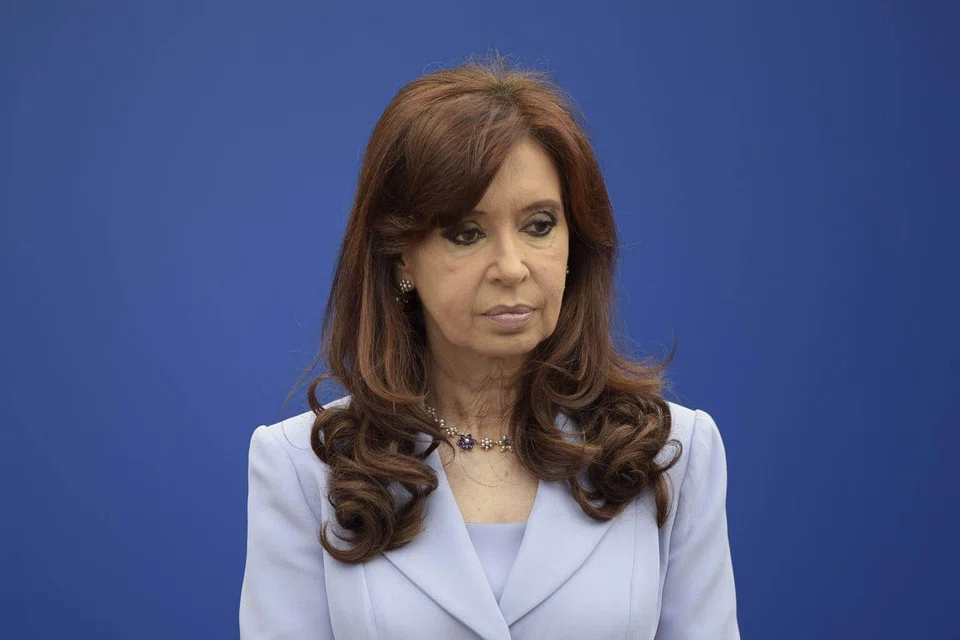
[BUENOS AIRES] Argentina has "nearly closed" a new currency swap deal with China that will add the equivalent of US$9 billion to the South American country's reserves, the central bank said on Sunday.
Argentina and China first agreed to a swap programme in 2009 to boost the South American country's dwindling reserves under former President Cristina Fernandez. Last year, the center-right government of President Mauricio Macri and China agreed to extend the programme for three more years.
The US$9 billion expansion of the swap programme was first reported by local newspaper La Nacion.
"A US$9 billion expansion of the 'swap' with China is practically closed," Argentina's central bank chief Guido Sandleris was quoted saying in an interview with La Nacion published on Sunday.
A spokesman for the central bank confirmed the accuracy of Mr Sandleris' quotes in La Nacion.
The amount under negotiation is higher than the US$4 billion reported by local media in August.
Mr Sandleris was named Argentina's new central bank chief on Tuesday after his predecessor unexpectedly resigned in the middle of negotiations with the International Monetary Funds on a more than US$50 billion stand-by loan.
The shake-up comes as Argentina's central bank has struggled to contain a more than 50 per cent slide in the peso and inflation set to rise 40 per cent this year.
On Friday, the peso depreciated 3.87 per cent to 41.25/41.3 per US dollar and the country's risk level as estimated by JP Morgan rose 29 points.
Mr Sandleris said it would likely take a "couple weeks" for the bank's new rules on market intervention to contain volatility.
"Whenever a new programme is implemented there's a period of transition and adaptation by the market, until it gets used to the new rules and signals given by the central bank," Mr Sandleris said in La Nacion.
As part of an additional US$7.1 billion in financing from the IMF announced on Wednesday, the central bank has agreed not intervene in the local spot market unless the peso veers outside of a target band of between 34 and 44 pesos per US dollar.
"It's a rule we're going to respect," Mr Sandleris said in the interview.
The bank is aiming to eliminate growth in the country's monetary base through June of next year, Mr Sandleris said. The monetary base has been growing by about 2 per cent per month.
"Inflation is going to start to come down in coming months. Not in September...maybe not in October either," Mr Sandleris said, adding that the bank's plan should yield results after that.
REUTERS
Share with us your feedback on BT's products and services
TRENDING NOW

ABSD deadline extended to up to 7 years for developers of large en bloc sites to encourage reuse of land

15-month wait-out curb lifted for private property owners buying HDB resale flats

Mortgagee-sale listings hit six-year high in H1 2026 as financing conditions tighten

Knight Frank winds down real estate agency unit, agents to move to OrangeTee & Tie

