

Asia billionaire wealth up 36%; tech, healthcare players pull ahead of peers
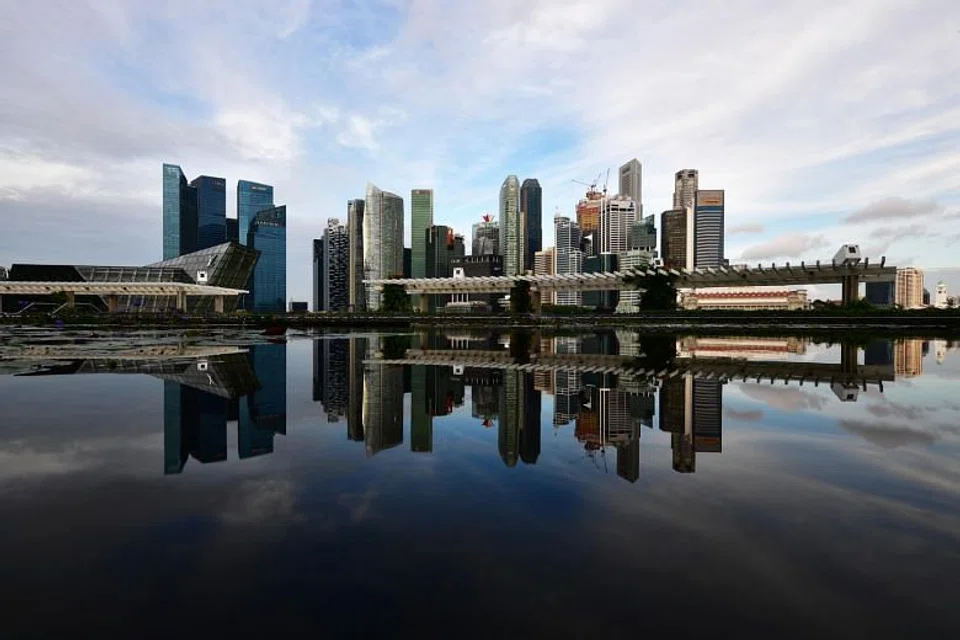
Singapore
THE fortunes of Asia's wealthiest have grown more polarising, with billionaires in the booming tech and healthcare sectors pulling ahead of their peers as the Covid-19 crisis accelerates the divergence.
Total billionaire wealth in the region rebounded by 36 per cent to US$3.3 trillion from April to end-July this year, showing signs of a post-pandemic recovery, fresh data from UBS and PwC's annual billionaire report showed on Wednesday.
But Asia billionaires identified as disruptors and innovators grew their wealth by 23 per cent to US$1.4 trillion from 2018 through to end-July 2020, compared with a smaller 13 per cent increase to US$1.2 trillion among traditional billionaires over the same period.
About 94 per cent of tech entrepreneurs and 71 per cent of healthcare entrepreneurs fall under this "disruptors and innovators" category.
"Social distancing accelerated the ascendance of digital businesses, compressing several years' evolution into a few months," said the report. "Other billionaires, on the wrong side of economic, technological, societal and environmental trends, are becoming less wealthy."
One such sector is real estate. Once a leading wealth driver, the pandemic had undermined demand for commercial real estate, and an increasingly digital economy undermined demand for physical space.
"If the real estate situation looks bad from the outside in, it's actually worse from the inside," said a Thai billionaire in the report.
Asia, home to nearly 40 per cent of the world's richest with 831 billionaires as at end-July, has taken the lead on tech and healthcare innovations amid the changing business climate.
The region has the highest share of billionaires in tech and healthcare, with 181 billionaires or 8 per cent of the total billionaire population. This is compared with 7 per cent from the Americas and 4 per cent from EMEA (Europe, the Middle East and Africa).
From artificial intelligence and 3D printing to nanotechnology and biotechnology, there is a wealth of emerging technologies that scientists and serial entrepreneurs are applying to develop new products and services and leapfrog incumbent businesses, according to the report. Some of these entrepreneurs go on to become billionaires.
In the last decade, the wealth of billionaires in the tech sector grew 5.7 times, while that of the financial services sector only grew 2.3 times.
"It is interesting but not surprising that wealth in the tech and healthcare sectors surged ahead at a faster rate than other sectors," said Anuj Kagalwala, a partner at PwC Singapore.
As at end-July 2020, 17 per cent of Asia's billionaires are in consumer and retail, 16 per cent in the tech field, and 14 per cent in materials.
While most billionaires in Singapore come from more traditional industries such as real estate, banking and hospitality, UBS is seeing more diversification into "new age" sectors, according to Anurag Mahesh, Asia-Pacific co-head of global family office at UBS. In a virtual briefing, he told reporters that the more traditional billionaires here have also been "tech-enabling" their existing businesses.
The top three wealth driving industries in Singapore as at end-July were consumer and retail, industrials, and health industries.
The Republic has 25 billionaires as at end-July, from 17 in 2015. Their total wealth jumped 30 per cent to US$102.6 billion from April to July this year, in line with regional trends.
Globally, total billionaire wealth grew by 27.5 per cent to reach a new high of US$10.2 trillion, surpassing the previous peak of US$8.9 trillion at the end of 2017.
Overall, Asia's wealthiest appear to be more resilient than their global counterparts. From 2019 to early April this year after the stock market sell-off, Asian billionaire wealth only fell 2.1 per cent to US$2.4 trillion. This is compared with a 10.1 per cent drop in EMEA and a 7.4 per cent fall in the Americas.
Female billionaires in Asia also more than doubled from 26 in 2013 to 68, representing the highest growth among all regions. Their assets have grown by over 25 per cent to US$269.9 billion from April to end-July this year.
TRENDING NOW

World’s largest offshore wind platform by Seatrium consortium on track to be completed by 2028

Is stamp collecting enjoying an analogue revival or are its best days over?

GovTech retrenches another 38 staff in second round of layoffs
MBS adjusted property Ebitda falls 20.6% in Q3 with fewer high-roller visits, weaker hold

