Asian central banks face little impact from US, Europe banking crisis
But Fed pauses could give the region some breathing room for policy tightening

Tessa Oh
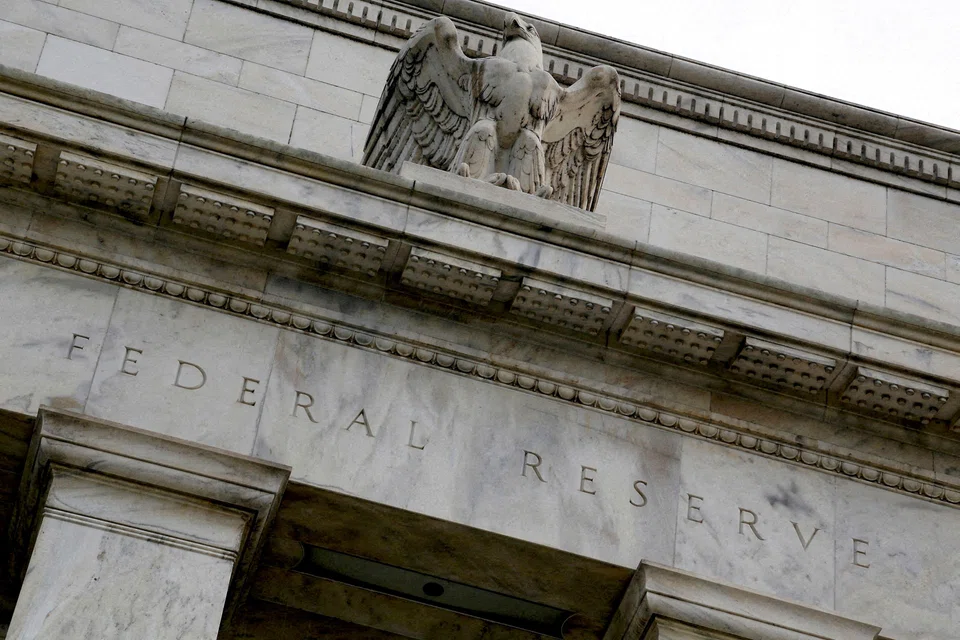
CENTRAL banks in Asia are unlikely to be greatly influenced by the banking crisis in the United States and Europe – but could feel less pressure to tighten policy if the United States Federal Reserve itself holds off on further rate hikes amid the fallout, said private-sector economists.
On Mar 10, Silicon Valley Bank (SVB) became the largest US bank to fail since the 2008 financial crisis, after a plan to raise capital and shore up its balance sheet led to a run on the bank.
Separately, over the weekend, UBS agreed to buy ailing rival Credit Suisse for three billion Swiss francs (S$4.3 billion), in an emergency deal orchestrated by Swiss regulators to stem financial market panic.
“The spillover impact from the SVB collapse on Asia is expected to be manageable, given the region’s small direct exposure,” said Khoon Goh, ANZ’s head of Asia research, who does not expect the Credit Suisse developments to have much impact.
Most of the effect will be felt through volatility in financial markets and portfolio flows, he added.
Any impact on central banks in Asia will not be direct, but instead via the Fed’s decision this week, said analysts. Some believe the ongoing crisis may prompt the Fed to slow down or hit the brakes temporarily, giving Asian central banks more breathing room for their own monetary policy moves.
“The two US banks that failed over the past week and the liquidity problems at some other US lenders and Credit Suisse are early symptoms that the central bank rate hikes are starting to bite, especially in the weakest parts of the economy,” analysts from Standard Chartered’s wealth management chief investment office said in a Mar 17 research note.
“As such, we believe we are in the late stage of the economic cycle, which implies we are near, if not at, the peak of interest rates,” they added.
Before this possibility emerged, Asian central banks had to either follow the Fed’s hiking path, or bear the pressure of higher rates on foreign exchange and portfolio flows while refraining from their own hikes, noted Natixis analysts in a Mar 15 note.
“But after the (SVB collapse) led to a rethinking of the Fed’s appetite to destabilise the financial system, the pressure is much less as hikes have largely been priced out,” they added.
Moody’s Analytics’ base case is that the Fed will pause at this week’s meeting, as financial institutions respond to the failure of SVB – as well as crypto-friendly banks Silvergate Capital and Signature – by tightening both underwriting standards and credit availability.
The news of Credit Suisse’s buyout is further confirmation that central banks in the US and Europe “will do everything they can to contain the risks from these bank failures”, the research house’s chief Apac economist Steven Cochrane told The Business Times.
This will give central banks in the Asia-Pacific “a little more breathing room” and may prompt some to pause their hikes, at least in the near term, “as the risk of currency devaluation would diminish if the Fed does not tighten”, said Cochrane in a Mar 16 note.
The Fed is not the only factor
Yet even if the Fed does pause – which is not guaranteed – and provide more breathing room, Asian central banks may not waver.
Central banks that have yet to tame inflation — in Australia, India, the Philippines and Vietnam — may continue to raise rates as expected “while watching to see if tightening of lending standards does some of the heavy lifting for them”, said Cochrane.
ANZ’s Goh does not believe the repricing of US rates will end the tightening cycle in the Philippines and India, where he expects hikes “unless there is a further deterioration in the global outlook”. But they may get to a pause sooner than previously thought, he added.
Other economists argue that Asian central bank rate decisions are largely informed by domestic issues.
“(Asian central banks’) rate decisions are unlikely to be affected directly by the banking crisis in the US and Europe unless there is a dramatic escalation in the crisis in the coming days,” said Vijay Yadav, an associate professor at Essec Business School Asia-Pacific. “Their decisions will depend mainly on their domestic inflation and growth concerns.”
Oxford Economics chief Asia economist Arup Raha wrote in a Mar 17 note that even before the recent turmoil, Indonesia, South Korea and Malaysia had already paused or perhaps even ended their tightening cycles.
In Singapore, authorities have said that near-term shocks such as the banking crisis in the US and Europe do not have a direct impact on monetary policy, which is focused on the medium term.
Ahead of its April decision, the Monetary Authority of Singapore will take into account the implications of current global and domestic economic developments for inflation and growth, said Minister of State for Trade and Industry Alvin Tan in Parliament on Monday (Mar 20).
In any case, the Fed itself might not pause, noted UOB economists Alvin Liew and Lee Sue Ann. They believe that contagion risks from the crisis have already been somewhat tamed by the Credit Suisse takeover, as well as top central banks’ decision on Sunday to boost liquidity in US dollar swap arrangements.
Therefore, the Fed and major central banks – including Bangko Sentral ng Pilipinas and the Central Bank of the Republic of China – are likely to continue with hiking cycles to maintain their credibility in the inflation fight, they said.