

Asia's southern flank shines in fight against surging dollar
 Add BT as a preferred source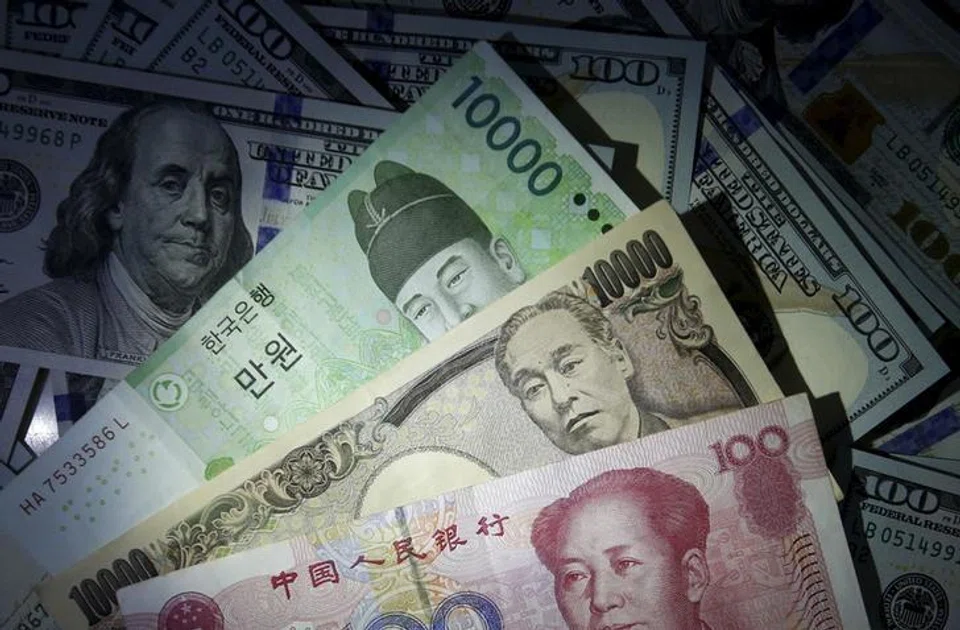
DeeperDive is a beta AI feature. Refer to full articles for the facts.
ASIA’S central banks, alarmed by the surging dollar’s assault on their currencies, are ramping up their resistance with rate rises and market interventions, but it’s the relatively vulnerable economies of South and South-east Asia putting up the best fight.
In Indonesia, high raw materials prices are helping to drive record trade surpluses, while India’s robust growth and large currency reserves have bolstered investor confidence - a far cry from the dollar’s last surge a decade ago when the pair were among the “fragile five” emerging markets pounded by panicked outflows.
Their resilience contrasts with bigger economies in North Asia, where currencies are tumbling, although analysts warn that depleting foreign reserves, budgetary constraints and the dollar’s sustained momentum pose risks for Asia’s southern flank as well.
“In this environment the currencies that used to be very vulnerable to dollar strength - Indonesia in particular - are now actually the most resilient,” said Khoon Goh, head of Asia research at ANZ Bank in Singapore.
“And the rest have become a lot more vulnerable.”
Against a 15 per cent rise in the US dollar index this year, Asian currencies have fallen. But drops of 4.2 per cent for the Singapore dollar, 4.5 per cent for the Indonesian rupiah and 6.7 per cent for the Indian rupee have bettered the yen’s 20 per cent slide and the South Korean won’s 14 per cent drop.
Navigate Asia in
a new global order
Get the insights delivered to your inbox.
Investors are taking note and moving their money.
India pulled US$6.4 billion in foreign funds into equities in August, double the intake for South Korea’s much larger stock market.
“We don’t like North Asia. We think that there is scope for currency weakness,” said Marcelo Assalin, head of emerging markets debt at asset manager William Blair, who is overweight on the Indonesia rupiah and rates, as well as the Malaysian ringgit.
“I think Indonesia is the bright spot in South-east Asia right now, because of the tailwind of commodity prices ... we also like Malaysia, we think it also benefits from the same themes.”
The stronger dollar nevertheless threatens to bring serious economic pain across Asia.
Even for manufacturing exporters, usually a beneficiary of dollar strength because it makes goods relatively cheaper in global markets, the dollar’s surge has taken a nasty turn by inflating the cost of energy and other inputs.
Asian authorities have broadly escalated their responses as the dollar’s upswing becomes more extreme: the dollar index, a measure of the greenback against a basket of its peers, is up more than 4.5 per cent since the middle of August when Fed officials began striking a more hawkish tone.
Chinese authorities have used the yuan’s trading band to curtail weakness driven by economic worries, while monetary policy has bucked the global trend by cutting rates to boost the flagging economy.
South Korean and Japanese officials have threatened currency market intervention, with a weak growth outlook adding to downward pressure on the won and low rates weighing on the yen.
In South-east Asia’s two largest economies, Indonesia and Thailand, the central bank raised interest rates in August for the first time since the start of the pandemic.
India, Indonesia and Singapore have also used dollar reserves to slow their currencies’ slide. Some measures, however, are showing signs of strain.
Currency stockpiles have recorded their steepest declines in years across Asia: India’s are down more than 11 per cent this year to $561 billion, while Singapore’s fell 31 per cent to US$289 billion.
Budgets have also become stretched, notably in Indonesia where the burden of subsidising fuel proved too much to bear and last week it allowed fuel prices to leap 30 per cent.
And it is by no means certain that authorities in South and South-east Asia can hold their currencies steady as US interest rates keep rising.
“We’ve seen in past crises, as well, the Korean won tends to front-run the selloff, after which it stabilises and then South-east Asia and South Asia endure the buffeting,” said Mizuho Bank economist Vishnu Varathan in Singapore.
For the time being, however, investors have been impressed by the relative performance.
“India is back on our radar screens,” said Davis Hall, head of capital markets at Indosuez Wealth Management Asia.
“Normally, when oil prices go up, it’s the worst possible thing for India - importing everything,” he said, but with discounted Russian crude helping to keep inflation in check and growth running higher than interest rates, there is much to like. REUTERS
Decoding Asia newsletter: your guide to navigating Asia in a new global order. Sign up here to get Decoding Asia newsletter. Delivered to your inbox. Free.
Share with us your feedback on BT's products and services
TRENDING NOW

Autobahn Rent A Car directors declared bankrupt over S$50 million each owed to DBS

Higher costs, lower returns: Why are Singaporeans still betting on real estate?

Richard Eu on how core values, customers keep Singapore’s TCM chain Eu Yan Sang relevant

Loyang Valley sold for S$880 million to SingHaiyi-led consortium

