

Australian dollar struggles as China rally fades, RBA a tad dovish
 Add BT as a preferred source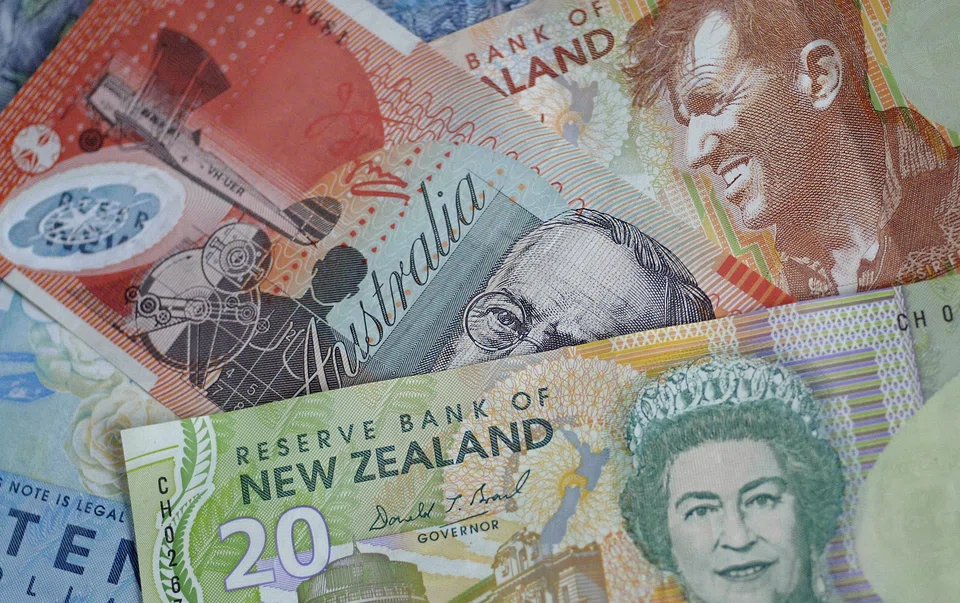
THE Australian dollar fell for a fourth straight session on Tuesday as the nation’s central bank sounded slightly dovish and a post-holiday rally in Chinese stocks lost momentum.
The kiwi was slightly higher, awaiting a rate decision from the Reserve Bank of New Zealand on Wednesday where markets widely expect it to cut interest rates by 50 basis points, even though analysts are somewhat split between a 25 bps and 50 bps move.
The Aussie fell 0.3 per cent to US$0.6736, having lost 0.5 per cent overnight. It is down 2.2 per cent in the past four sessions and came off from a 18-month peak of US$0.6942, with bears targeting the September low of US$0.6622.
The kiwi dollar tacked on 0.1 per cent to US$0.6132, after falling 0.6 per cent overnight. It is finding some support at the key US$0.6107 level after five straight sessions of declines driven by expectations of sharply lower local interest rates.
The recent falls in both Antipodean currencies have been led by a repricing of the Federal Reserve’s near-term policy easing trajectory. Investors have now taken out any chance of a half-point Fed rate cut in November following a blockbuster jobs market report last week.
Sentiment on Tuesday was dampened as the rally in Chinese markets faded a bit with markets disappointed by the absence of specific details on the size of Beijing’s recently unveiled stimulus package. Hong Kong’s Hang Seng index plunged 6 per cent while the mainland markets, which had rallied 10 per cent earlier in the day, pared some of the gains.
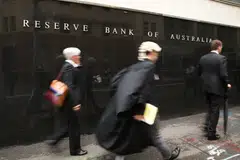
Also on Tuesday, the Reserve Bank of Australia released the minutes of the September policy meeting and outlined the conditions for a future rate cut - namely a weak economy, a deterioration in labour market or simply just inflation proving less persistent than assumed.
It also discussed the scenario for a hike, keeping its option open.
Commonwealth Bank of Australia said the minutes moved in a dovish direction, while ANZ said it is a clear step down in the hawkishness. However, National Australia Bank said the minutes didn’t offer much in the way of fresh policy news.


“Overall, the Minutes today read like a script from the archetypal two-handed economist,” said Gareth Aird, head of Australian economics at CBA.
“We believe the introduction of these two scenarios that would justify less restrictive financial conditions provide an insight into the Board’s reaction function that could see the RBA commence an easing cycle this calendar year.”
Headline inflation had already slowed to 2.7 per cent in August thanks to government’s rebates on electricity, while the core measure also trended lower, and there are signs that the third quarter inflation may have eased further.
Indeed, the closely watched business survey from the National Australia Bank showed price pressures continued to abate in the September quarter, with growth in purchase costs and retail prices slowing sharply.
Consumer sentiment also rebounded to a 2-1/2 year high in October as rate fears eased.
Swaps imply about 48 per cent chance that the RBA could reduce its 4.35 per cent cash rate in December. REUTERS
Decoding Asia newsletter: your guide to navigating Asia in a new global order. Sign up here to get Decoding Asia newsletter. Delivered to your inbox. Free.
Share with us your feedback on BT's products and services
TRENDING NOW

Japan Home closing outlets; staff say Valu$ taking over operations

Timah Partners lands S$60 million facility from lenders including UOB, RHB

ComfortDelGro’s Zig to buy S$10 million worth of BYD cars for private-hire fleet

How BYD disrupted Singapore’s car market – and why the strategy is turning on itself

