

Australian, New Zealand dollars extend breakneck rally on recovery progress
 Add BT as a preferred source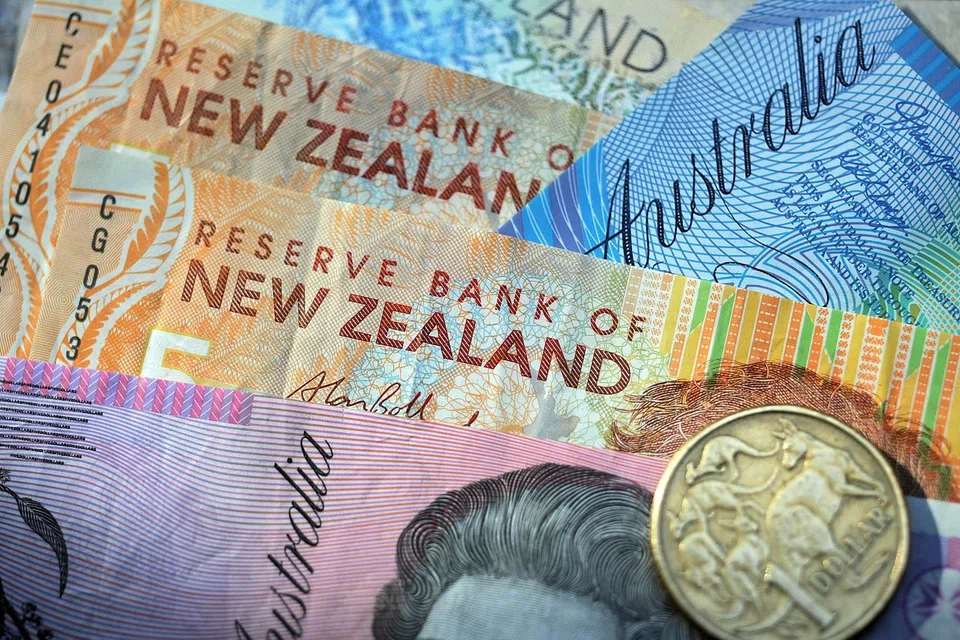
DeeperDive is a beta AI feature. Refer to full articles for the facts.
[SYDNEY] The Australian and New Zealand dollars on Wednesday extended a rally that has delivered gains of 3-4 per cent in just three sessions as progress on opening economies across the globe boosted risk assets.
The Aussie added another 0.6 per cent to US$0.6936 having hit its highest since early January at US$0.6982.
It has now climbed 4.4 per cent in just three sessions as breaks of the 200-day moving average at US$0.6660 and major chart resistance around US$0.6685 triggered a wave of short covering. The next targets are US$0.7000 and a top from December at US$0.7032.
The kiwi dollar jumped 0.6 per cent to US$0.6404 and was challenging its March peak at US$0.6448. It was up 3.5 per cent for the week so far and a world away from the March trough of US$0.5469.
The shift to risk took a heavy toll on the yen as the Aussie shot to a five-month peak at 75.74, bringing gains made just this week to 4.7 per cent.
As a result many economists were hastily revising up their outlook for the Aussie.
Navigate Asia in
a new global order
Get the insights delivered to your inbox.
"With the world economy in the early stages of a long recovery, led by Chinese fiscal stimulus, the prospects for commodity currencies such as AUD/USD have brightened," said Joseph Capurso, an FX analyst at CBA.
"We expect AUD/USD to exceed its pre-coronavirus level of US$0.70 before the end of 2020 and lift to the mid-70s in 2021."
The gains came even as data showed the Australian economy shrank 0.3 per cent in the March quarter, the first fall since early 2011 and just a prelude to a huge drop this quarter as whole sectors shut down to fight the coronavirus.
The decline all but certainly ends the country's three-decade run without a recession, but the downturn still looks mild compared to what many other developed nations are facing.
Weekly data on card spending, consumer sentiment, travel and the like suggest activity has since rebounded as success in containing the virus allows much of the economy to re-open.
After its monthly policy meeting on Tuesday, the Reserve Bank of Australia said the downturn might not be as deep as first feared, curbing speculation it might have to move to negative interest rates.
That saw yields on 10-year bonds rise 7 basis points to 0.978 per cent to near the May high at 1.02 per cent. The 10-year bond future fell 6.5 ticks to 99.0400.
Yet three-year bond yields remain flat at 0.269 per cent, anchored to the RBA's target of 0.25 per cent.
REUTERS
Decoding Asia newsletter: your guide to navigating Asia in a new global order. Sign up here to get Decoding Asia newsletter. Delivered to your inbox. Free.
Share with us your feedback on BT's products and services
TRENDING NOW

Ministry of Home Affairs Permanent Secretary Pang Kin Keong to retire

Shelving S$5 billion office redevelopment plan proved ‘wise’ as geopolitical risks mount: OCBC chairman

Richard Eu on how core values, customers keep Singapore’s TCM chain Eu Yan Sang relevant

China pips the US if Asean is forced to choose, but analysts warn against reading it like a sports result

