

Australian, New Zealand dollars lose ground again, bonds extend bounce
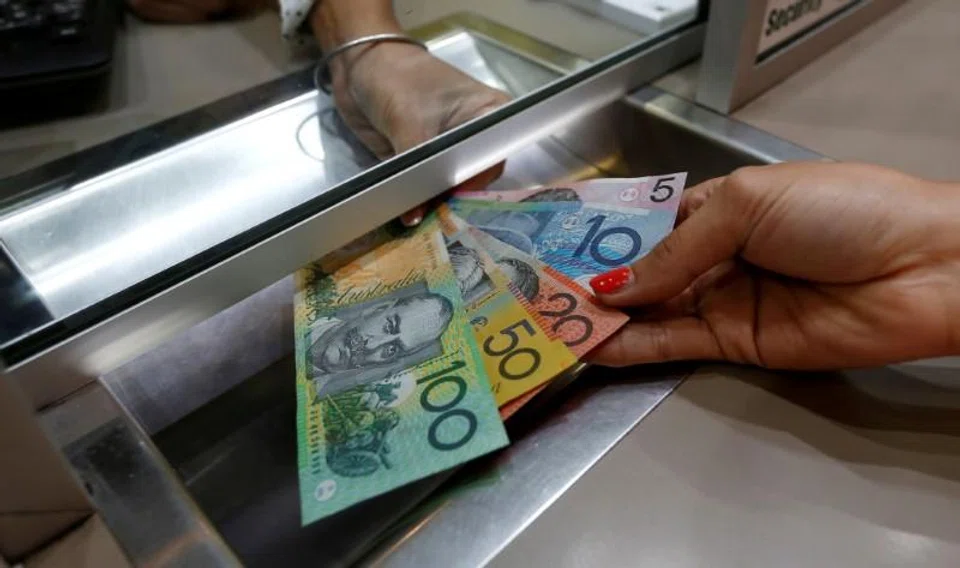
THE Australian and New Zealand dollars were back on the defensive on Wednesday as global markets resumed fretting about recession risks, though bonds enjoyed a third day of gains.
The Aussie eased 0.3 per cent to US$0.6943, having topped out around US$0.6995 for two sessions in a row.
Charts show a narrowing wedge that could yield a large move when it breaks, with US$0.6985 and $0.7000 the major trigger levels. The kiwi dollar faded to US$0.6297 and looks at risk of moving a lot lower after cracking support at US$0.6300.
The Aussie also dipped back to 94.70 yen, running into profit taking from Japanese investors after it jumped 1.4 per cent overnight to as high as 95.41.
Minutes of the Bank of Japan’s last policy meeting showed members discussed the yen’s recent rapid decline but decided to stick with super-easy policies.
The spread between Australian 10-year yields and Japanese yields has yawned out by a huge 70 basis points this month to 3.81 per cent, levels last seen in 2011.
Local yields have eased a little after Reserve Bank of Australia (RBA) Governor Philip Lowe all but ruled out a hike of 75 basis points next month, saying the choice would be either 25 or 50 basis points.
Lowe also found it unlikely the 0.85 per cent cash rate would rise as far as 4 per cent by the end of the year, as the market had been predicting. That triggered a rally in rate futures which now imply rates of 3.38 per cent by Christmas.
Three-year bond yields fell 8 basis points to 3.576 per cent and away from a recent decade high of 3.767 per cent.

“Calling a top in bond yields this year has been a perilous exercise,” said Nomura economist Andrew Ticehurst. “But with the RBA’s communication, current market pricing for aggressive rate hikes, and the risk of recession in a number of countries, we think we are close to the peak in terms of short-end yields.”
He sees the cash rate rising to 3.1 per cent by the end of the year and staying there until the end of 2023, when rate cuts will be on the cards. REUTERS
Decoding Asia newsletter: your guide to navigating Asia in a new global order. Sign up here to get Decoding Asia newsletter. Delivered to your inbox. Free.
Share with us your feedback on BT's products and services
TRENDING NOW

Knight Frank’s Tan Tee Khoon leaves firm, Nicholas Keong takes over auction business

Keppel Energy, Sembcorp Utilities and Tuas Power to supply biomethane in pilot project

GovTech retrenches another 38 staff in second round of layoffs

Take-up of new private homes dives 45% in Q3 as prices accelerate with 1.4% rise

