

Australian, New Zealand dollars struggle to shake virus fears
 Add BT as a preferred source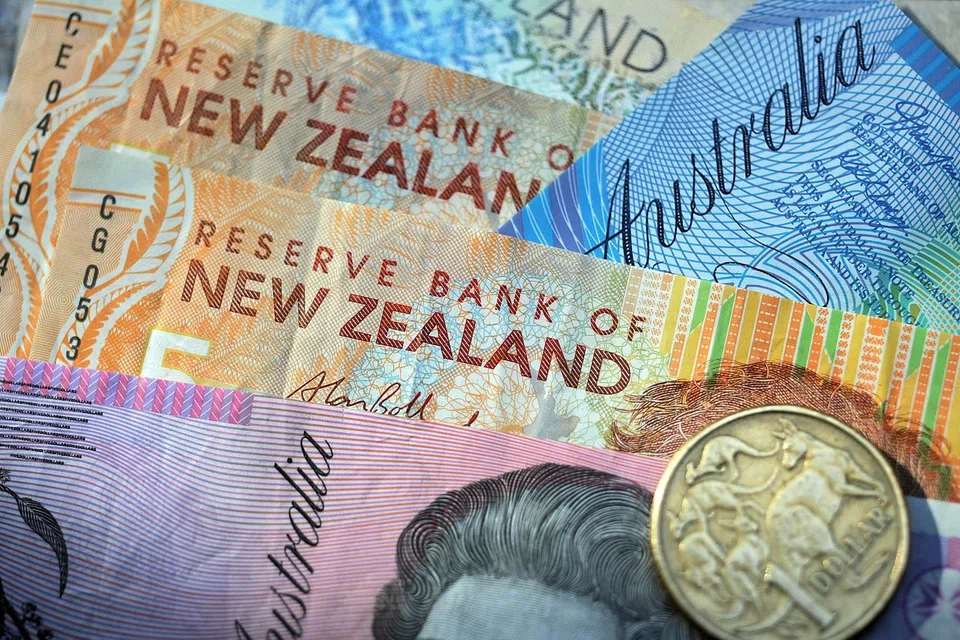
[SYDNEY] The Australian and New Zealand dollars were on the defensive on Thursday as concerns about the economic fallout from the coronavirus kept investors on edge.
The Aussie lapsed to US$0.6742 and was threatening the three-month low around US$0.6735, a break of which would open the way to support at US$0.6725 and US$0.6710.
The lack of any bounce after a steep drop early in the week meant risks were mounting for a retreat all the way to last year's decade-low around US$0.6670.
The kiwi dollar was stuck at US$0.6515, just above its recent two-month trough of US$0.6505. A break there could see a pullback to support in the US$0.6425/40 area.
Both have been dumped as liquid proxies for Chinese assets, especially as markets there are closed all week, and as analysts struggle to assess the impact of the virus on local economies.
"The most direct impact on the Australian economy will be fewer international visitors from China," said Hayden Dimes, a market economist at ANZ. "This will be material, as China now accounts for almost 16 per cent of international visitors and 27 per cent of total visitor expenditure."
His current estimate was that the loss to tourism could amount to around A$4.5 billion (S$4.13 billion) and shave 0.2 percentage points off economic growth in the first and second quarters.
"We think if the situation worsens materially, it would be appropriate for fiscal support, given only moderate growth and a cash rate that is already close to the effective lower bound."
The cash rate is at an all-time low of 0.75 per cent following three cuts from the Reserve Bank of Australia (RBA) last year.
The bank has signalled that 0.25 per cent would be the limit for rates and any action after that would entail unconventional measures such as buying government bonds.
The RBA holds its first policy meeting of the year next week and is now considered unlikely to ease, in part because of a welcome fall in unemployment in recent months.
Analysts at National Australia Bank on Thursday became the latest to give up on a February rate cut, instead predicting an easing in April.
"Unless the RBA wishes to move against market expectations, the February cut appears off the table," said NAB chief economist Alan Oster.
"The framework for policy still suggests that rates should be lower," he added. "Inflationary pressure remains weak and recent headwinds - particularly for consumption and business investment - are likely to persist."
Investors have sharply widened the odds on a cut in the last couple of weeks and futures now imply only a 10 per cent chance of a move on Feb 4. That rises to 60 per cent by April and 86 per cent by May.
Australian government bonds benefited from the general mood of risk aversion with the three-year bond future rising 4.5 ticks to 99.375. Cash yields of 0.63 per cent were again approaching the all-time low of 0.567 per cent.
The 10-year contract firmed 5 ticks to 99.025, as yields dropped under 1 per cent.
REUTERS
Share with us your feedback on BT's products and services
TRENDING NOW

Malaysian tycoon Vincent Tan’s sell-downs point to pruning rather than an exit plan

Ohmyhome Ltd sells real estate business for token US$1 due to poor business and continued losses

Surbana Jurong group CEO Sean Chiao to step down; search for successor under way

What’s wrong with Orchard Road? Experts weigh in on the street’s cachet and its future

